
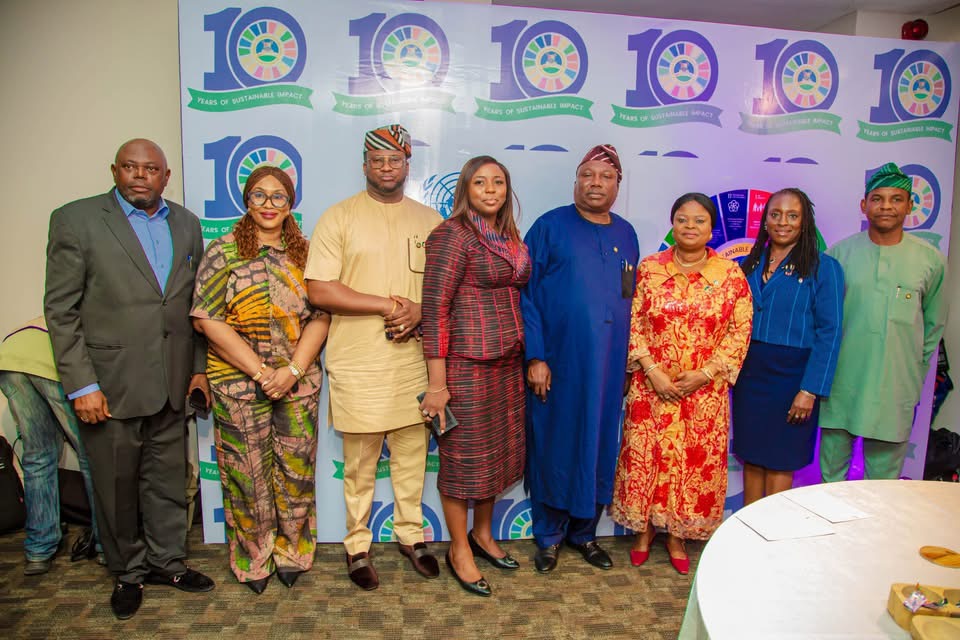
LAGOS HOSTS ANNUAL STAKEHOLDERS’ MEETING, RALLIES GLOBAL PARTNERS TO ACCELERATE SDGs (PHOTOS)
Read Time:3 Minute, 25 Second
By: Sefiu Ajape
The Lagos State Government through the Office of Sustainable Development Goals (SDGs) on Tuesday, held its annual Stakeholders’ Breakfast Meeting on Sustainable Development Goals.
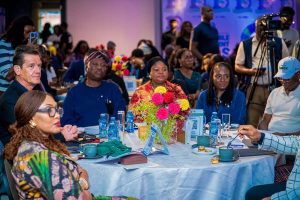
The event, themed: “Accelerating SDGs Through Strategic Partnerships,” took place at the Wheatbaker Hotel, Ikoyi, and brought together diplomats, social entrepreneurs, development organisations, civil society actors, and government officials for robust discussions on policy alignment, investment prospects, and inclusive progress.
Delivering the keynote address, the Deputy Governor, Dr. Kadri Obafemi Hamzat, highlighted the crucial role of collaboration in promoting sustainable development. He stressed the importance of a multi-stakeholder framework to expand cooperation, increase impact, and create “shared value across public and private sectors.”
According to him, the breakfast meeting represents a “partnership that is strategic in unlocking opportunities, bridging gaps, pooling resources and amplifying impact.”
“Lagos is a resilient and sustainable city where no one is left behind, and has intentionally aligned the State Development Plans with the SDGs. Our THEMES Plus Agenda integrates social inclusion, gender equality, and youth empowerment as core policy pillars.”
The Deputy Governor, represented by the Honourable Commissioner for Tertiary Education, Mr. Tolani Sule, highlighted Lagos State’s multi-sectoral achievements in critical areas such as education, the green economy, transportation, and digital innovation.
He referenced key milestones including the completion of the Blue Rail Line, ongoing construction on the Red Line, integration of technology in classrooms, and the government’s strategic focus on youth employment through skills development and enterprise empowerment.
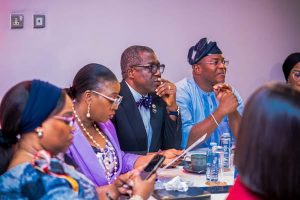
Encouraging stakeholders to leverage the wide array of partnership prospects Lagos provides to advance the SDGs, the Deputy Governor stressed the imperative for both state and non-state actors to embed the SDGs within their operational strategies.
Delivering her goodwill message, the Senior Special Assistant to the President on SDGs, Princess Adejoke Orelope-Adefulire, acknowledged that although the global development landscape faces numerous hurdles, Nigeria remains firmly committed to the 2030 Agenda.
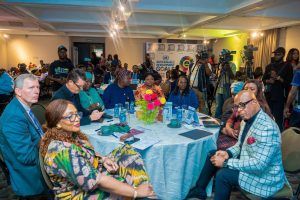
She pointed out that measurable gains have been recorded in poverty alleviation, access to quality education, and gender equality, all driven by deliberate, multi-sectoral policies at both national and sub-national levels.
Orelope-Adefulire further noted that global disruptions — including the COVID-19 pandemic, regional unrest, and ongoing international conflicts — have significantly slowed the advancement of the Sustainable Development Goals.
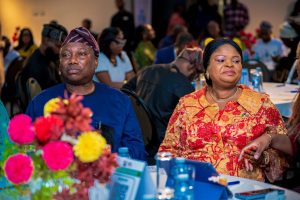
Nonetheless, she reaffirmed the Federal Government’s resolve to maintain momentum by reinforcing partnerships across governmental tiers to ensure inclusive, evidence-based, and results-focused implementation of the SDGs.
Commending Lagos for its innovation and leadership, she praised the state for embedding the SDGs through policy instruments, institutional mechanisms, and multi-stakeholder engagements. She described Lagos as “a model for how subnational governments can drive SDG impact through data, innovation, and inclusive partnerships.”
In her welcome remarks, the Special Adviser to the Governor on SDGs, Dr. Oreoluwa Finnih, described the gathering as a strategic avenue for open dialogue, deeper collaboration, and strengthened partnerships that deliver measurable outcomes.
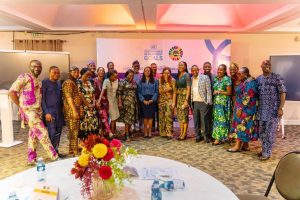
Dr. Finnih noted that while dialogue is essential, “the true measure of progress lies in the shift from dialogue to co-creation,” highlighting the significance of collective responsibility and systems-based approaches in solving complex development issues at scale.
She described Lagos as a distinct development environment where the SDGs must be contextually tailored, scaled, and sustained in alignment with local realities.
Assuring stakeholders of continued leadership, she reiterated that the Office of SDGs would remain “a convener, connector, and catalyst” for sustainable development in the state. She also acknowledged that achieving the SDGs would require sustained effort due to their ambitious nature and the evolving challenges ahead.
The meeting’s high point was the unified commitment by stakeholders to support Lagos State’s ambitious drive toward accelerating SDG outcomes and building long-term resilience for its people.
Attendees included Permanent Secretaries, Director-Generals, and General Managers of MDAs, as well as Consular-Generals, members of the diplomatic community, development agencies, representatives of the private sector, academia, and philanthropic organizations.
The forum served as a platform for reinforcing international collaboration, harmonizing development priorities, and reviewing progress toward the United Nations 2030 Sustainable Development Goals in both Lagos State and Nigeria.


Happy
0 %

Sad
0 %

Excited
0 %

Sleepy
0 %

Angry
0 %

Surprise
0 %
 0
0
 0
0