
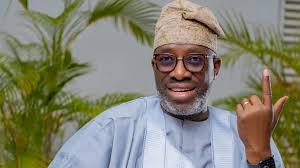
SOWUNMI SLAMS MEHDI HASAN’S CONDUCT DURING BWALA INTERVIEW
Read Time:2 Minute, 16 Second
By: Fasasi Hammad
The Convener of The Alternative Movement, Otunba Segun Sowunmi, has criticized journalist Mehdi Hasan over his recent interview with Nigerian Presidential spokesperson Daniel Bwala, calling the exchange “hostile” rather than an example of professional journalism.
In a statement issued in Abeokuta, Sowunmi argued that the interview crossed the line between rigorous questioning and what he described as an “attempted public ambush.”
“There is a clear difference between tough journalism and outright hostility. One serves the public interest, the other serves the ego of the interviewer,” he said.
Sowunmi added that viewers were not presented with a substantive discussion of public policy. Instead, the session was confrontational, with Bwala repeatedly interrupted and denied the chance to fully explain his positions.
“What viewers saw was not a serious interview; it was an attempted public ambush,” he said.
According to Sowunmi, the tone of the interview was “aggressively confrontational” from the start, with questions framed less to clarify governance issues and more as “prosecutorial traps.”
READ MORE…
EVRA SLAMS SCHOLES, NEVILLE, KEANE IN EPL DEBATE, DEFENDS CARRICK
A chieftain of the Peoples Democratic Party, Sowunmi emphasized that effective journalism demands discipline and balance, particularly when engaging public officials on complex national matters.
“The craft of interviewing requires asking tough questions while allowing the guest to provide answers. It requires intellectual confidence sufficient to permit disagreement without descending into hostility,” he explained.
He noted that Nigeria is facing critical challenges, including economic restructuring, security, and governance reforms, which should have been the focus of the discussion.
“Nigeria is confronting serious national issues. A responsible journalist would interrogate the administration’s policies: What strategies are being implemented? What reforms are in progress? What results should citizens expect?”
Instead, Sowunmi said, the interview was dominated by “selective outrage and repetitive interruption.”
He also defended the normalcy of political realignments, pushing back against suggestions that such shifts are inherently suspect.
“Democratic politics involves evolving alliances. Former opponents often become partners when circumstances demand cooperation. This is neither shocking nor dishonorable; it is a fundamental aspect of democratic life,” he said.
Sowunmi warned that when journalists cross into ridicule or public humiliation, it undermines the credibility of the profession.
“A journalist who openly ridicules or seeks to humiliate a guest crosses a professional boundary. The role of the interviewer is to hold power accountable, not to create viral ‘gotcha’ moments,” he said.
He concluded by urging journalists worldwide to prioritize substance and professionalism over theatrics.
“Audiences deserve interviews that illuminate policy and probe governance. Respectful engagement does not weaken journalism; it strengthens it,” Sowunmi said, stressing that the purpose of journalism is to inform the public, not to stage confrontational spectacles.


Happy
0 %

Sad
0 %

Excited
0 %

Sleepy
0 %

Angry
0 %

Surprise
0 %
 0
0
 0
0