
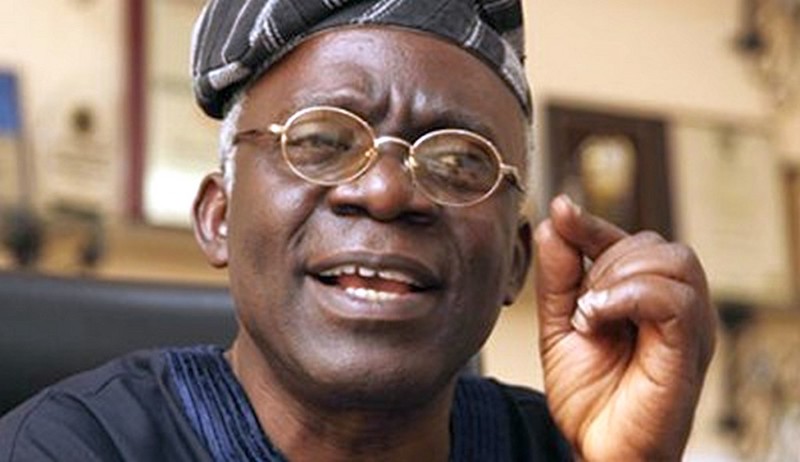
FALANA WARNS AGAINST EARLY POLITICAL CAMPAIGNS, CITES RISK TO GOVERNANCE
Read Time:2 Minute, 25 Second
By: Balogun Ibrahim
Human rights lawyer and Senior Advocate of Nigeria, Femi Falana, has urged the immediate halt of ongoing political campaigns, warning that premature politicking is eroding governance and exacerbating insecurity across the country.
Falana’s statement follows the Independent National Electoral Commission’s announcement scheduling the presidential and National Assembly elections for January 16, 2027, and the governorship and state Houses of Assembly polls for February 6, 2027, according to a release he issued Wednesday morning.
Despite the elections being nearly 10 months away, Falana expressed concern that political parties and elected officials have already ramped up campaigns, neglecting governance and public service delivery.
“It is common knowledge that some political parties have commenced political campaigns even though elections will not hold until 10 months’ time,” Falana said.
“The governance of the country has been neglected in favor of celebrating defections by elected governors and legislators, as well as other political campaigns,” Falana said.
The senior lawyer warned that this disregard for governance is contributing to worsening insecurity, pointing to the rising incidents of kidnappings and killings across the country.
In recent years, Nigeria has faced persistent security challenges, including banditry in the North-West, insurgency in the North-East, and increasing urban crime, all of which have undermined public confidence in government institutions.
Falana also condemned what he called the misplacement of priorities by political actors, noting that public funds are being spent on “illegal campaigns” rather than essential sectors such as education.
“It is troubling that while vast public funds are being squandered on illegal political campaigns, authorities in the Federal Capital Territory and many states have refused to provide the counterpart funding needed to access the N98 billion matching grant from the Universal Basic Education Commission,” Falana said.
The UBEC fund is intended to support basic education across Nigeria, but several states have historically failed to tap into it due to their inability to provide the required counterpart financing, raising concerns about declining education standards in Africa’s most populous nation.
Citing legal provisions, Falana reminded political parties of the Electoral Act, which governs campaign timelines.
“Section 98(1) of the Electoral Act, 2026, clearly states that campaigning shall begin 150 days before polling day and end 24 hours prior to that day,” he said.
He therefore called on INEC, the Nigeria Police Force, and the State Security Service to ensure strict compliance with the law.
“We urge the relevant authorities to immediately halt further political campaigns in full accordance with the provisions of the Electoral Act,” Falana added.
Political analysts observe that early campaigning has increasingly become a recurring feature of Nigeria’s electoral cycle, often blurring the distinction between governance and electioneering. With a population exceeding 200 million and mounting socio-economic challenges, experts warn that prolonged political distractions could further delay essential reforms in security, education, and economic management ahead of the 2027 elections.


Happy
0 %

Sad
0 %

Excited
0 %

Sleepy
0 %

Angry
0 %

Surprise
0 %
 0
0
 0
0