
EASTER: FG OPENS 15KM SECTION OF ENUGU–ONITSHA HIGHWAY TO EASE TRAFFIC CONGESTION
Read Time:3 Minute, 59 Second
By: Balogun Ibrahim
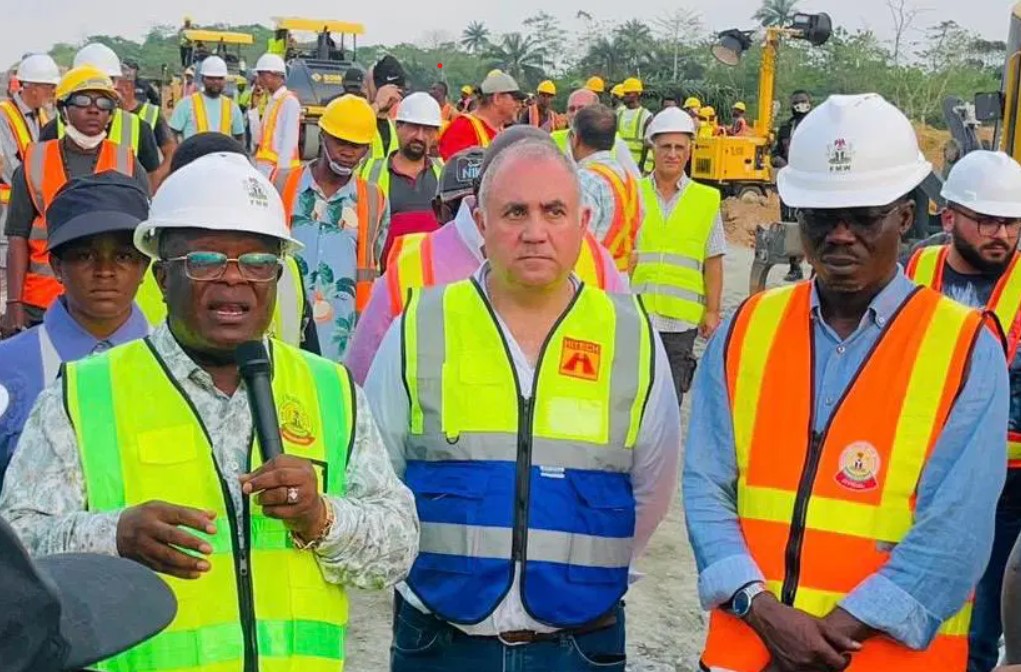
The Federal Government has announced the opening of a 15-kilometre stretch of the 9th Mile–Abakpa section of the Enugu–Onitsha highway as part of efforts to ease traffic congestion during the Easter period, describing the move as a “special intervention” for residents of the South-East.
The Minister of Works, David Umahi, disclosed this on Thursday during an inspection of the project at the Ugwu-Onyeama 9th Mile axis. He expressed satisfaction with the quality of work and reiterated the government’s commitment to providing immediate relief for road users.
According to him, the decision to open the stretch aligns with the Federal Government’s broader objective of offering short-term traffic relief while maintaining long-term infrastructure standards. He also revealed plans to install solar-powered streetlights along the corridor.
Umahi further highlighted the strategic importance of the Enugu–Onitsha and Enugu–Port Harcourt routes, noting that both corridors have long been affected by heavy traffic congestion, frequent tanker accidents, and poor road conditions.
Recalling the previously poor condition of the road, the Minister of Works, David Umahi, said commuters once spent over seven hours travelling between Enugu and Onitsha due to prolonged neglect and abandoned construction works.
He stated that the newly opened 15-kilometre stretch of reinforced concrete pavement is intended to ease traffic during the Easter period, noting that the section is about 97 per cent completed.
Umahi added that, prior to the current administration, travel time along the corridor was significantly prolonged as a result of stalled projects and deteriorating infrastructure.
The Minister of Works, David Umahi, said the Enugu–Onitsha road project was awarded several years before 2023 but remained largely abandoned for nearly eight years. Originally executed under a tax credit arrangement involving MTN and RCC, the project experienced significant delays until President Bola Tinubu directed its acceleration and the redesign of critical sections.
He explained that the Federal Government reviewed the initial ₦202 billion contract, retaining part of it while isolating a 72-kilometre stretch for reconstruction using reinforced concrete pavement.
According to Umahi, the redesigned section—valued at about ₦150 billion—is being constructed to higher durability standards comparable to those deployed on the Lagos–Calabar Coastal Highway. He added that the total cost of reconstructing the Enugu–Onitsha road has now exceeded ₦350 billion.
Providing updates on ongoing work, the minister noted that an additional 18-kilometre stretch is currently under construction towards Anambra State, while another 39-kilometre segment from the Niger Bridge axis is also in progress.
He further disclosed that contractors handling asphalt sections have been instructed to transition to concrete for the remaining 23 kilometres, citing its superior lifespan and reduced maintenance needs.
Umahi emphasised that while asphalt deteriorates over time, concrete can last between 50 and 100 years with minimal maintenance, adding that at least half of the highway will be completed using reinforced concrete to enhance durability and lower long-term costs.
The Minister of Works, David Umahi, also outlined a number of ongoing federal infrastructure projects across the South-East under the Tinubu administration. These include rehabilitation works on sections of the Enugu–Port Harcourt Expressway, the dualisation of the Enugu–Abakaliki road, and the reconstruction of the Afikpo–Abia–Okigwe corridor under a tax credit scheme.
He further highlighted major upgrades on the Aba–Port Harcourt road, as well as the development of access roads and bypasses linked to the Second Niger Bridge. In addition, Umahi noted the construction of several flyovers in the region, including one of the longest in the country.
Previously collapsed bridges along the Enugu–Onitsha corridor have been reconstructed within nine months and are now fitted with solar-powered lighting systems, according to the Minister of Works, David Umahi. He added that major national projects, including the Lagos–Calabar Coastal Highway and a proposed route linking Calabar through Ebonyi and Benue to Abuja, are expected to significantly reduce travel time between the South-East and the Federal Capital Territory.
Responding to concerns about alleged abandoned projects, Umahi urged the public to rely on verified information, stressing that ongoing projects are progressing steadily. He also clarified that the proposed eastern rail corridor from Port Harcourt to Maiduguri falls under the Ministry of Transport, with procurement processes currently underway.
The minister called on political leaders and stakeholders in the South-East to support the Tinubu administration, noting that governance should be assessed based on tangible development outcomes, particularly in infrastructure.
Umahi expressed optimism that the Enugu–Onitsha road project will be fully completed by 2026, stating that it will significantly improve mobility, enhance road safety, and stimulate economic growth in the region.
He added that the project marks the beginning of a broader transformation in transportation across the South-East.


Happy
0 %

Sad
0 %

Excited
0 %

Sleepy
0 %

Angry
0 %

Surprise
0 %
 0
0
 0
0