
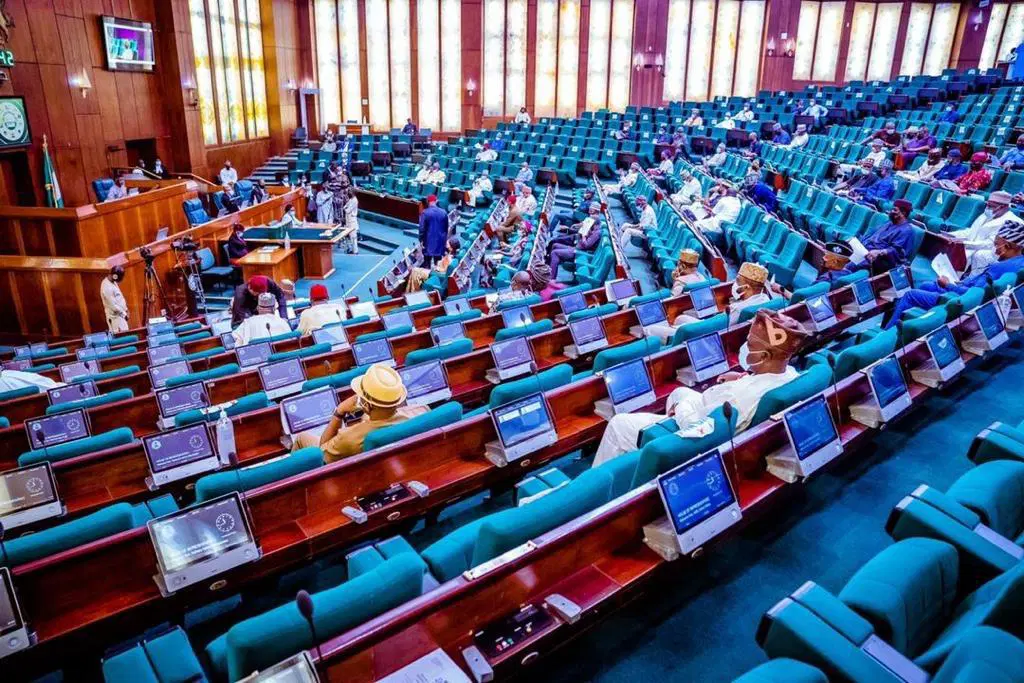
HOUSE OF REPS APPROVES NEW ELECTORAL LAW ENDING PETITIONS AT APPEAL COURT
Read Time:2 Minute, 40 Second
By: Balogun Ibrahim
The House of Representatives on Wednesday approved amendments to the Electoral Act 2026, providing that election petitions for governorship and National Assembly elections will now end at the Court of Appeal.
The reform is part of wider changes aimed at introducing technology-driven processes for serving election petition documents, including electronic service via email, SMS, and other digital platforms. The goal is to reduce delays, minimise technical objections, and improve efficiency in electoral dispute resolution.
The decision followed the adoption of a report by the House Committee on Electoral Matters at the Committee of the Whole.
Earlier in plenary, lawmakers passed two related bills through second reading and referred them to the Committee of the Whole, chaired by Deputy Speaker Dr Benjamin Kalu.
Presenting the general principles of the bills, the Chairman of the Committee on Electoral Matters, Adebayo Balogun, said the reforms were designed to provide clarity on court jurisdiction in pre-election matters, speed up adjudication processes, introduce flexible electronic service options, and reduce procedural delays and technical disputes.
The first bill amends Section 29(8), requiring candidates to provide both physical and electronic contact details, including email addresses and phone numbers.
It also recognises multiple methods of service such as personal delivery, registered post, and electronic transmission through email, SMS, and other digital channels, with service deemed effective upon proof of transmission.
READ MORE…
NIGERIA–MALAYSIA TRADE HITS N1.82 TRILLION IN FIVE YEARS, SAYS CUSTOMS
The amendment further validates electronic proof of service, including delivery confirmations and system-generated records, while stating that failure to acknowledge receipt does not invalidate service.
The second bill addresses jurisdiction in pre-election matters by introducing a new Section 29A. It assigns original jurisdiction over National Assembly, state assembly, and governorship pre-election cases to the Federal High Court, while stipulating that appeals will terminate at the Court of Appeal.
For presidential pre-election matters, the Court of Appeal is granted original jurisdiction, with final appeals lying at the Supreme Court. The amendment also bars courts from hearing such cases outside the prescribed jurisdiction.
Balogun explained that reliance solely on physical service had become outdated and prone to manipulation, delays, and logistical challenges, adding that technological alternatives offer more reliable and verifiable options.
He also noted inconsistencies in the current legal framework that have led to conflicting court decisions, as well as delays in serving processes that hinder timely resolution of disputes.
According to him, the amendments align with Section 285 of the 1999 Constitution (as amended) and international best practices in electoral justice and judicial efficiency.
Lawmakers further argued that clearly defining jurisdiction would reduce preliminary objections and speed up the hearing of pre-election matters, while assigning presidential disputes to the Court of Appeal reflects their urgency and importance.
The committee maintained that the reforms would improve electoral justice by clarifying jurisdictional boundaries, embracing technology, reducing delays, discouraging frivolous objections, and strengthening public confidence in the electoral process.
However, concerns raised by Sokoto lawmaker Abdussamad Dasuki regarding the risk of electronic mail being diverted to spam folders were dismissed, as lawmakers insisted that electronic service would complement rather than replace physical service.


Happy
0 %

Sad
0 %

Excited
0 %

Sleepy
0 %

Angry
0 %

Surprise
0 %
 0
0
 0
0