
2027: OGUN APC CHIEFTAIN QUESTIONS ATIKU’S PLAN TO SUBSIDISE LOCALLY REFINED PETROL
Read Time:3 Minute, 45 Second
By ‘Balogun Ibrahim
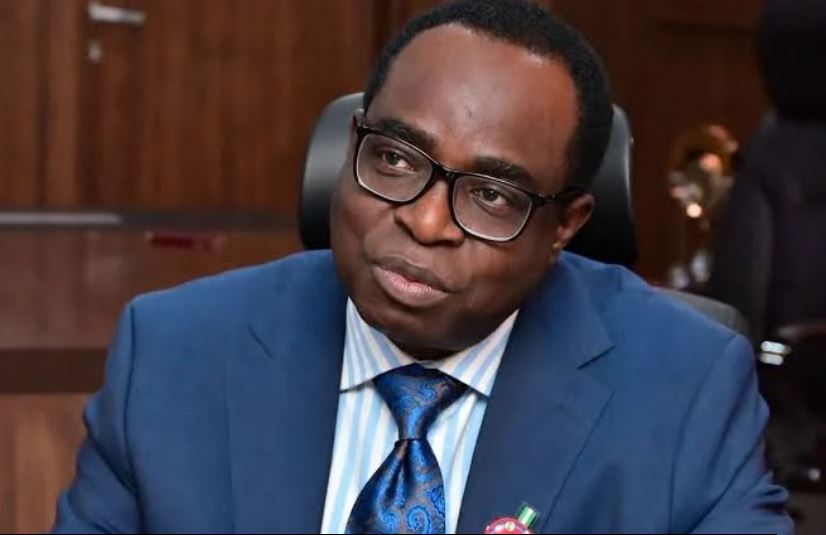
The Chairman of the Planning Committee of the 2027 APC Presidential and Governorship Campaign Committee in Ogun State, Kayode Oladele, has criticised the proposed fuel subsidy programme unveiled by the African Democratic Congress presidential candidate, Atiku Abubakar, describing it as a repackaging of an old policy under a different name.
Oladele, a former federal lawmaker, made the comments in a statement on Sunday while reacting to Atiku’s proposal for a “capped, budgeted production subsidy” on petrol refined domestically.
He argued that changing the description from consumption subsidy to production subsidy did not address fundamental questions about the policy, particularly who would ultimately bear the cost and the financial implications for taxpayers.
READ MORE…
INDIA PROTESTS: THOUSANDS DEMAND ELECTION COMMISSION CHIEF’S EXIT
Atiku, a former Vice President and the ADC presidential candidate for the 2027 election, had proposed that only petrol refined locally, including products from modular refineries, should qualify for the intervention, while imported petrol would be excluded.
He also promised that the costs and payments under the programme would be made public and independently audited.
However, Oladele said the central issue was not the terminology used to describe the proposal but the source of funding and the amount that would ultimately be borne by the Nigerian government.
“A subsidy remains a subsidy. You may call it production subsidy, targeted subsidy, capped subsidy or give it any sophisticated economic description you like. Once the government is required to absorb part of the cost of petrol so that it can be sold below what the market would otherwise determine, public resources are being committed to make up the difference,” he said.
Oladele questioned the proposed subsidy rate, the volume of petrol that would qualify, the annual spending limit, the source of funding and the mechanisms that would ensure that any government support to refiners translated into benefits for consumers.
The former acting Chairman of the Federal Character Commission said similar questions had been raised by the APC Presidential Campaign Council, which asked Atiku to disclose the proposed subsidy rate, spending ceiling, eligible volumes, funding source and safeguards against diversion and fraudulent claims.
He also said the campaign council had questioned how the proposed intervention would operate within Section 205(1) of the Petroleum Industry Act, which provides for market-based pricing of petroleum products.
Oladele contrasted Atiku’s proposal with President Bola Tinubu’s approach, arguing that the administration was seeking to restructure the energy and transportation sectors rather than continue government support for petrol consumption.
“The fundamental difference between President Bola Ahmed Tinubu’s approach and Atiku’s proposal is that the President is attempting to restructure the energy and transportation economy rather than return government to permanently underwriting fuel consumption,” he said.
Oladele acknowledged that the reforms had created adjustment pressures, but said Nigerians should consider whether introducing another subsidy programme was the appropriate response to the challenges facing the country.
“What Nigerians should therefore ask Atiku is simple: after all our experience with subsidy, is the solution really to create another subsidy programme?” he asked.
He also criticised Atiku’s position on the Federal Government’s transportation initiatives, saying the former Vice President was overlooking efforts to diversify Nigeria’s transportation energy sources through Compressed Natural Gas and other alternatives to petrol.
According to Oladele, while Atiku’s proposal would involve government absorbing part of the cost of petrol, the Tinubu administration’s approach was focused on expanding alternatives and reducing dependence on petrol for commercial transportation.
He said Atiku was entitled to present an alternative economic programme, but argued that Nigerians should demand details on how the proposed policies would be financed.
“It is very easy during an election season to promise cheaper petrol, cheaper food, cheaper electricity and cheaper transportation. The harder question is how these promises will be financed without recreating the very fiscal problems Nigeria has spent years trying to escape,” Oladele said.
He added that the Tinubu administration should also be assessed based on measurable outcomes, including the reach and impact of its transportation initiatives and whether they result in lower commuting costs.
Oladele said the government must demonstrate results while opposition parties should present detailed alternatives, adding that proposals involving subsidies should be accompanied by clear financial projections.
“The country has travelled the subsidy road before. Before anybody asks Nigerians to travel that road again, even under a different name, he owes them something more substantial than campaign promises. He owes them the numbers,” he said.


Happy
0 %

Sad
0 %

Excited
0 %

Sleepy
0 %

Angry
0 %

Surprise
0 %
 0
0
 0
0