
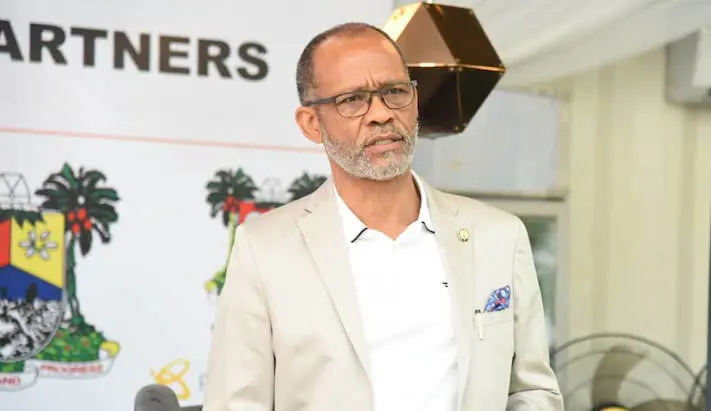
LAGOS MOVES TO HARMONISE SICKLE CELL FOUNDATIONS, NGOs FOR STRONGER DISEASE CONTROL
Read Time:3 Minute, 44 Second

-
As Health Commissioner Calls for Coordinated Action, Pledges Specialised Care Centres Across the State
The Lagos State Government has taken a bold step to strengthen the fight against sickle cell disorder by convening a harmonisation meeting of foundations and NGOs working in the sector.
The session, which took place on September 16, 2025, at the Conference Room of the Lagos State Ministry of Health, brought together over 25 groups under the Chairmanship of the Honourable Commissioner for Health, Prof. Akin Abayomi.
Prof. Abayomi, in his opening remarks, emphasised the urgent need for coordinated action to tackle what he described as one of the most pressing public health challenges in Lagos and Nigeria.
He noted that while the number of associations has increased to about 25 in Lagos, scattered efforts without alignment risk-limiting real impact.
The Commissioner observed that one in four Nigerians carries the sickle cell gene, with two to three per cent living with the full-blown disease.
He explained that the persistence of the gene had historic roots linked to malaria but stressed that with Lagos already winning the fight against malaria, deliberate steps must now be taken to reduce the sickle cell burden.
To this end, he announced plans to establish haematology daycare centres across all local governments where patients can receive immediate, specialised care during crises.
He recalled that the State built 10 oxygen triage centres during COVID-19, some of which could be converted into facilities for sickle cell management.
Prof. Abayomi further stated that the government is keen on reducing the genetic burden through informed counselling for couples while promoting advances in research and treatment.
He pointed out that Lagos has opportunities to extend insurance coverage to sickle cell patients through the State Health Scheme, ensuring access to life-saving interventions such as hydroxyurea.
On a forward-looking note, the Commissioner pledged that the soon-to-be-completed Massey Specialist Children’s Hospital will be developed into a hub for sickle cell research and advanced care, including hydroxyurea therapy, gene therapy, and stem cell transplantation.
He stressed the importance of developing a coalition strategy document with clear targets and timelines for collaborative implementation.
In her intervention, Chairperson of the Coalition and CEO of CrimsonBow Sickle Cell Initiative, Ms. Timi Edwin, described the high number of births with sickle cell annually as unacceptable.
She appealed for equity in access to healthcare, stressing that hydroxyurea, though a proven therapy, remains scarce and expensive for many patients.
She thanked the State Government for plans to establish sickle cell clinics but urged stronger collaboration on funding, including co-writing grants and engaging the private sector through corporate social responsibility investments.
According to her, sickle cell is not only a health challenge but a development and human dignity issue linked with poverty and productivity losses.
Edwin also promised that the coalition would remain accountable, submitting reports and engaging with the State regularly.
She emphasised the importance of partnerships, especially with schools, hospitals, and pharmaceutical firms, to expand genotype testing, early detection, and affordable treatment options.
Dr. Abosede Wellington, the Lagos State Sickle Cell Disorder Control Programme Coordinator, underscored the scale of the burden, citing Nigeria’s 40 million carriers and 150,000 new cases annually, making it the global epicentre of the disease.
She warned that SCD contributes to 9% of under-five deaths in sub-Saharan Africa, with Lagos bearing a significant share.
She highlighted the State’s strategic pillars of advocacy, awareness, screening, treatment, and research. Since 2021, newborn screening has expanded to 75 health facilities, with over 7,600 babies screened and more than 280 positive cases referred for care, averting severe outcomes for families.
Dr. Wellington further revealed that more than 500 health workers have been trained in newborn screening and crisis management, while collaborations with NGOs and international partners have improved service delivery.
She, however, cautioned that funding gaps, patient follow-up, and workforce retention remain key challenges.
She called for intensified community sensitisation, sustainable financing mechanisms, and the completion of a comprehensive State sickle cell registry.
She stressed that only through robust data, partnerships, and policy-driven interventions can Lagos effectively manage the disease and reduce its devastating impact.
The meeting ended with a consensus on the need for stronger coordination, policy backing, and funding partnerships to scale up interventions. Stakeholders resolved to work with the Ministry of Health to develop a harmonised strategy document, positioning Lagos as a model State in the fight against sickle cell disorder.


Happy
0 %

Sad
0 %

Excited
0 %

Sleepy
0 %

Angry
0 %

Surprise
0 %
 0
0
 0
0