
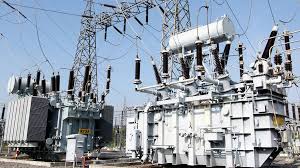
WHAT WENT WRONG WITH THE FG’S $2.3BN ELECTRICITY PROJECT
Read Time:3 Minute, 40 Second
By: Fasasi Hammad
Despite the injection of €2.3 billion (about N3.7 trillion) into the Presidential Power Initiative (PPI), the Federal Government’s flagship electricity project has effectively stalled.
Findings show that the five-year programme, designed to increase Nigeria’s electricity output to 25,000 megawatts between 2020 and 2025, has formally ended without achieving its targets. Power generation has failed to reach even 7,000MW.
The €2.3 billion project, implemented by FGN Power in partnership with Siemens of Germany, was structured in phases to strengthen electricity generation, transmission and distribution. The roadmap targeted 7,000MW by 2021, 11,000MW by 2023, and 25,000MW by 2025.
However, data from the Nigerian Independent System Operator (NISO) indicates that Nigeria still struggles to generate about 5,000MW, transmit just over 4,000MW, and distribute roughly 3,000MW of electricity to a population exceeding 200 million people.
Industry experts attribute the shortfall to several long-standing challenges in the power sector, including weak infrastructure, high technical and commercial losses, poor metering coverage and persistent liquidity problems.
READ MORE…
2027 ELECTIONS: PARTIES RACE AGAINST TIME TO FULFILL ELECTORAL ACT OBLIGATIONS
They noted that although installed generation capacity is officially above 12,000MW, the amount of electricity actually available and transmitted remains limited due to gas shortages, grid instability and weak distribution networks.
FGN Power, however, maintains that the project is still progressing through its financing and implementation stages.
According to the agency, securing funding arrangements required lengthy negotiations and due diligence to ensure transparency and long-term value for Nigeria.
It stated that Phase 1 Batch 1 projects include five substations in Abeokuta, Ayede, Onitsha, Sokoto and Offa, expected to be completed between 2026 and 2027, which will add about 984MW to the transmission network.
Under Phase 1 Batch 2, contracts for 12 additional substations are expected to be signed in May 2026, with completion targeted for 2028.
Energy law expert Prof. Yemi Oke of the University of Lagos said the country’s electricity problems are largely concentrated in the transmission and distribution segments.
According to him, distribution remains the weakest part of the power value chain due to issues such as metering gaps, estimated billing, electricity theft, tariff collection difficulties and high commercial losses.
He also highlighted persistent transmission problems, including frequent grid collapses, vandalism of power lines, infrastructure weaknesses and load rejection.
Oke noted that Nigeria’s transmission network has struggled to handle more than 5,000MW, with attempts to increase capacity often leading to system instability.
He therefore recommended reducing dependence on the national grid and expanding decentralised energy systems such as mini-grids, embedded generation and regional power networks.
The Lagos Chamber of Commerce and Industry (LCCI) warned that the failure to meet the PPI targets has imposed significant costs on the economy.
LCCI Director-General Dr. Chinyere Almona said businesses continue to rely heavily on diesel and petrol generators, increasing production costs and reducing competitiveness.
She added that unreliable electricity supply discourages foreign direct investment, while small and medium-scale enterprises suffer from lower productivity and limited growth opportunities.
According to her, the gap between electricity targets and actual output stems from weaknesses across the entire power value chain, including gas supply limitations, inadequate transmission capacity and financial challenges in the distribution segment.
The Centre for the Promotion of Private Enterprise (CPPE) also warned that persistent electricity shortages threaten Nigeria’s industrialisation and job creation.
The group noted that businesses forced to rely on expensive alternative power sources face higher production costs, making their goods less affordable for consumers.
It added that the country’s weak power supply could undermine its ability to compete effectively under the African Continental Free Trade Area (AfCFTA).
Meanwhile, President Bola Tinubu has approved the creation of a Grid Assets Management Company (GAMCO) aimed at addressing transmission and grid management challenges.
The 11-member committee inaugurated to establish the company will review existing laws and regulatory frameworks in the electricity sector and examine how the proposed structure will interact with existing institutions.
The government hopes the initiative will help unlock stranded power capacity and improve electricity transmission, particularly along the Benin–Lagos corridor.
However, power advocacy group PowerUp Nigeria has raised concerns about potential overlaps between GAMCO and existing initiatives such as the Presidential Power Initiative, calling for clearer roles and coordination among institutions in the sector.


Happy
0 %

Sad
0 %

Excited
0 %

Sleepy
0 %

Angry
0 %

Surprise
0 %
 0
0
 0
0