
DANGOTE ASSURES SUFFICIENT DOMESTIC FUEL SUPPLY
Read Time:4 Minute, 22 Second

By: Balogun Ibrahim
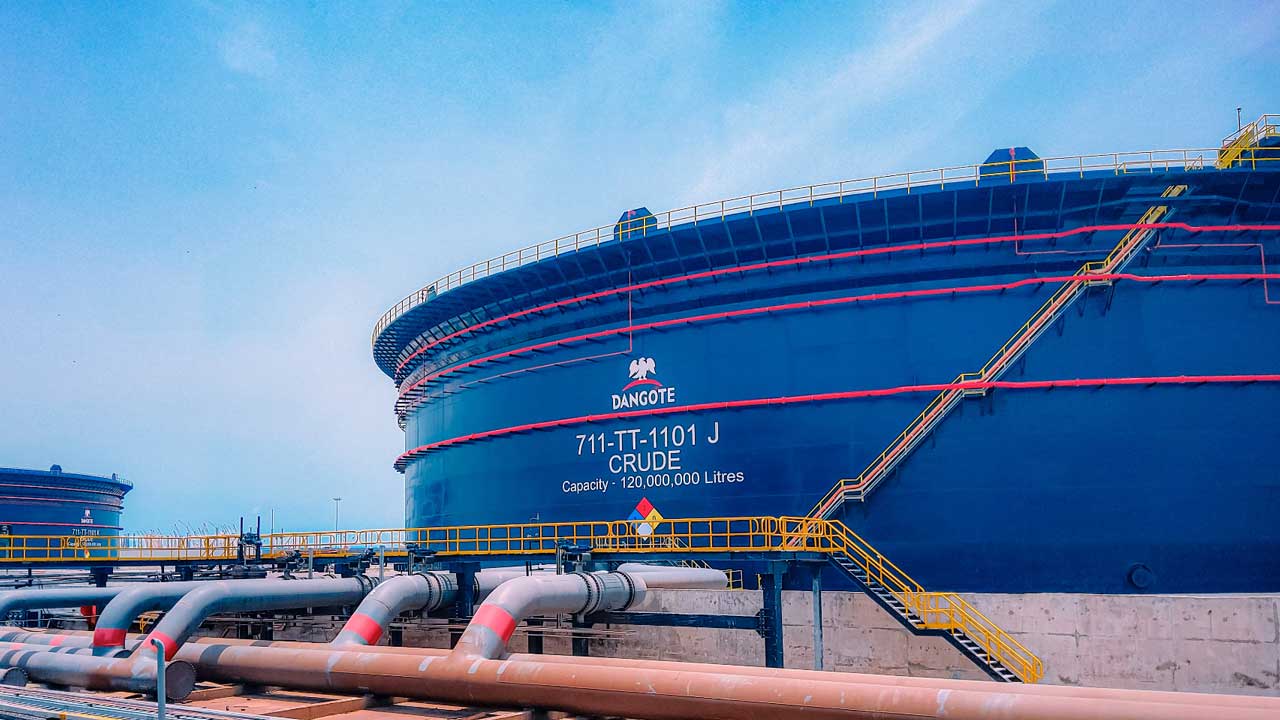
The Dangote Petroleum Refinery has assured Nigerians of adequate fuel supply, while urging the government to ensure sufficient crude oil allocation to its Lekki-based facility.
The company warned that it may be forced to export its refined products if it continues to rely on imported crude for production.
President of the Dangote Group, Aliko Dangote, disclosed in an interview with Al Jazeera that the refinery was nearing depletion of aviation fuel and diesel, although it currently has surplus petrol.
Amid disruptions to global petroleum supply caused by the US-Iran conflict, African countries are increasingly depending on the 650,000-barrel-per-day refinery located in Lekki, Lagos State.
“The demand is extremely high. At the moment, we have almost sold out our jet fuel and gas oil. The only product we currently have in excess is gasoline, known as Premium Motor Spirit (PMS),” Aliko Dangote said.
The disclosure has raised concerns among stakeholders in the aviation sector and manufacturers who depend on diesel for power generation and transportation.
However, a senior management official of the Dangote Group, who spoke on condition of anonymity due to the sensitivity of the issue, assured that the refinery would continue to meet Nigeria’s needs despite rising global fuel demand.
A senior official of the Dangote Group said the refinery’s ability to meet local demand depends largely on the availability of domestic crude, stressing, “We will not starve Nigeria as long as we continue to receive crude supply.”
The official confirmed that discussions are ongoing with the Nigerian National Petroleum Company Limited and other oil producers following concerns that the refinery receives less than five million barrels monthly, far below its estimated requirement of 19.7 million barrels.
He warned that the refinery may resort to exporting its products if it has to rely on imported crude. “Yes, talks are ongoing. If we are forced to import crude, then we will have to export the refined products,” he said.
The refinery currently produces about 75 million litres of petrol, 25 million litres of diesel, and 20 million litres of aviation fuel daily, and has recently exported 12 cargoes totalling 456,000 tonnes to countries including Côte d’Ivoire, Cameroon, Tanzania, Ghana, and Togo.
Reports indicate that buyers from Europe, Asia, and South America are also seeking supplies from the refinery, which is grappling with crude shortages and exploring alternative sourcing options.
Meanwhile, the Chief Executive Officer of the refinery, David Bird, disclosed during a live programme on Arise News that the facility has been purchasing Nigerian crude from international markets at higher prices after initially requesting it locally before export.
According to David Bird, the company is receiving significantly less crude oil than agreed under the Federal Government’s naira-for-crude arrangement.
He noted that the refinery currently receives only about five cargoes of crude per month, far below the expected 13 to 15 cargoes.
David Bird said the supply shortfall has hindered the refinery’s ability to maximise local crude usage, forcing it to continue importing feedstock from other countries.
“What we should be receiving under the agreement is about 13 to 15 cargoes monthly, which would enable us to meet Nigeria’s domestic fuel needs. However, we are currently getting only five, representing a significant shortfall from the agreed volume,” he said.
Diesel prices surge
Meanwhile, Nigeria has recorded one of the sharpest increases in diesel prices globally amid tensions linked to the US-Iran conflict, ranking second among countries with the highest surge.
Data from InvestorSight shows that diesel prices in Nigeria have risen by 78.3 per cent since the crisis began, placing it just behind the Philippines, which recorded the highest increase of 81.6 per cent.
The report indicated that several Asian countries experienced steep price hikes, with Malaysia and Vietnam recording increases of 57.9 per cent and 45.9 per cent, respectively.
Nigeria’s rise surpassed those in advanced economies, including the United States (41.2 per cent), Germany (30.9 per cent), and the United Kingdom (18.0 per cent).
In contrast, oil-producing nations in the Middle East recorded relatively modest changes, with Saudi Arabia and India showing no increase, while the United Arab Emirates and Qatar posted 7.9 per cent increases each.
The development underscores Nigeria’s vulnerability to global fuel market shocks despite being an oil-producing nation. Diesel remains essential for industries, transportation, manufacturing, and power generation, particularly as many businesses depend on generators due to unstable electricity supply.
Prices have surged from about N900 to N1,600 per litre following the Middle East crisis that began on February 28, with analysts warning that rising diesel costs often lead to higher logistics expenses, increased production costs, and mounting inflation as businesses pass the burden on to consumers.
“Despite local refining, fuel prices in Nigeria are rising faster than in many other countries, placing us in a difficult position,” a major marketer said, while another noted that no other West African country appears to be as affected.
However, some marketers previously argued that prices could have climbed as high as N3,000 per litre if not for the stabilising effect of the Dangote Petroleum Refinery.


Happy
0 %

Sad
0 %

Excited
0 %

Sleepy
0 %

Angry
0 %

Surprise
0 %
 0
0
 0
0