
BACKLASH AS FG RENAMES SIXTH PUBLIC FACILITY AFTER TINUBU
Read Time:4 Minute, 9 Second
By ‘Sefiu Ajape
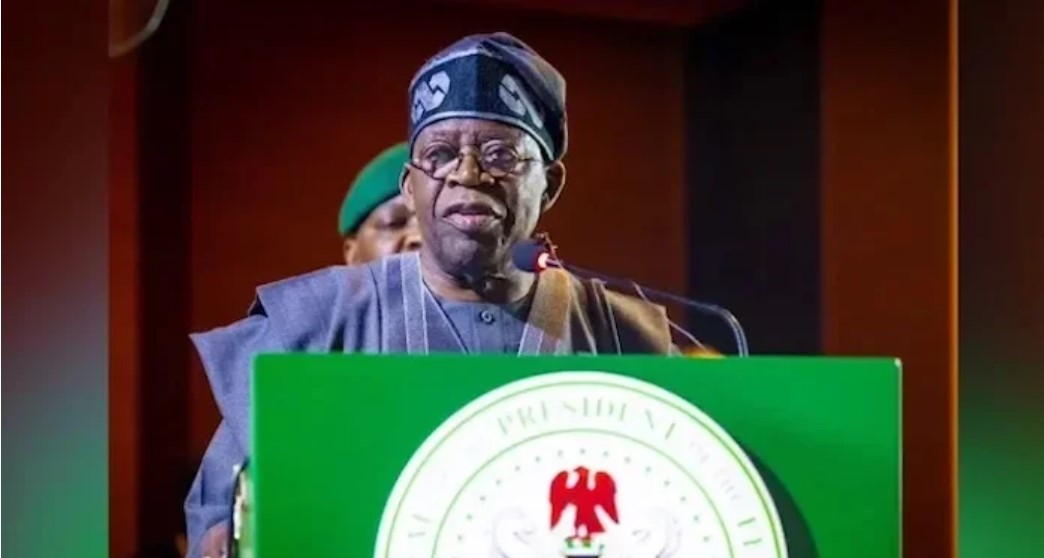
The Federal Government’s decision to rename the Lagos-Calabar Coastal Highway after President Bola Tinubu has sparked criticism, with opponents accusing the administration of personalising public infrastructure and encouraging sycophancy.
The Minister of Works, David Umahi, announced the renaming on Thursday during a media briefing in Abuja, making the coastal highway the sixth public facility to bear Tinubu’s name since he assumed office in 2023.
In May 2024, the National Assembly renamed its library the Senator Bola Ahmed Tinubu Building, while the Nigeria Immigration Service named its Command and Control Centre in Abuja the Bola Ahmed Tinubu Technology Innovation Complex in December 2024.
Similarly, the Nigerian Army named its newly completed barracks in Asokoro after the President in January 2025, while the Federal Government approved the establishment of the Bola Ahmed Tinubu Polytechnic in Gwarinpa, Abuja.
In June 2025, the Minister of the Federal Capital Territory renamed the Abuja International Conference Centre the President Bola Ahmed Tinubu International Conference Centre.
Earlier, in March 2024, Niger State Governor Umar Bago renamed the Abubakar Imam International Airport in Minna after Tinubu.
Reacting to the development, the National Publicity Secretary of the African Democratic Congress (ADC), Bolaji Abdullahi, described it as “the highest form of sycophancy” and accused the All Progressives Congress-led government of treating public assets as personal property.
He said, “You cannot be using public money to build public infrastructure and personalising it. But this APC government has turned the state to personal property and everything around President Bola Tinubu.
“It is the highest form of sycophancy that we have ever witnessed, not even under military rule. It is also indecent. You cannot be naming things after yourself. When you serve the nation, the nation names things after you. It is very wrong.”
Also, the National Coordinator of the Obidient Movement, Dr Yinusa Tanko, criticised the decision, particularly because the coastal highway project is still under construction.
“It doesn’t make sense at all. It goes to tell you the kind of will for power and control. Even the project has not been completed and you are naming it after yourself. It has not even gotten up to a quarter,” Tanko said.
He urged the President to reject the renaming, arguing that public infrastructure belongs to the state and not an individual.
Similarly, a former Deputy National Chairman of the Peoples Democratic Party (PDP), Bode George, urged the President to take things slowly while raising concerns about the environmental implications of the project.
“Kadan kadan, wanyo wanyo, e te jeje oo (Take it easy). Calabar to Lagos is a long journey. So, I don’t know what is the hurry,” George said.
He urged the government to prioritise the security of lives and property while expressing concern over flooding and possible sea incursion in parts of Lagos.
Human rights lawyer Inibehe Effiong also described the decision as “completely misguided” and accused the administration of personalising governance.
He said, “It is usually what autocratic and dictatorial leaders behave in this manner. What they are doing is personalisation of governance.
“The fact that an incumbent President is obsessed with having national monuments, institutions and infrastructure named after him during his tenure is a reinforcement of the diabolical ‘Emilokan’ ideology.”
Effiong argued that the President should allow history to judge his administration instead of seeking to have public infrastructure named after him while still in office.
He also questioned the urgency surrounding the coastal highway project, saying it had generated controversy amid concerns over the country’s limited resources and other pressing challenges.
The Executive Director of the International Society for Social Justice and Human Rights, Jackson Omenazu, also said naming national infrastructure after a serving President should be based on the leader’s social and economic impact on the country.
He urged Tinubu to focus on improving Nigerians’ welfare and addressing the country’s economic challenges rather than accepting accolades from political appointees.
However, the President of the Nigerian Society of International Affairs, Prof Hassan Saliu, said the issue could be viewed from two perspectives.
Saliu noted that African leaders often have sycophants around them and suggested that the President might not have initiated the renaming.
He added that naming public institutions after leaders was not unusual in Nigeria and across Africa.
“It is a symbolic gesture that is acquiring political colouration now, given the way politics is heated up in Nigeria,” he said.
Supporters of the decision, however, dismissed the controversy.
A former Deputy Governor of Oyo State and PDP governorship candidate, Hazeem Gbolarumi, said he saw nothing wrong with the renaming and suggested that the President might not have initiated it.
Similarly, 2027 presidential candidate Professor Christopher Imumolen said Nigerians should focus on the economic benefits of the project rather than its name.
The Kwara State APC Chairman, Prince Sunday Fagbemi, also said the identity of the individual after whom the project was named was immaterial, urging Nigerians to focus instead on the completion of the highway.


Happy
0 %

Sad
0 %

Excited
0 %

Sleepy
0 %

Angry
0 %

Surprise
0 %
 0
0
 0
0