
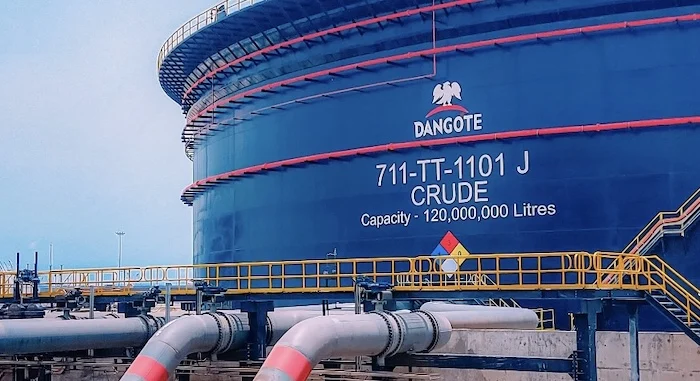
DANGOTE REFINERY CONSIDERS CUTTING PETROL SUPPLY TO IMPORTING MARKETERS
Read Time:2 Minute, 32 Second
By: Muftau Fatimo
The Dangote Petroleum Refinery and Petrochemicals is considering halting petrol sales to major marketers that continue to import Premium Motor Spirit (PMS) into Nigeria.
The proposed move is reportedly driven by concerns over product quality and the blending of imported petrol with products supplied by the Dangote refinery.
Sources familiar with the development said the measure could take effect as early as this week, subject to further consultations and any last-minute intervention.
The immediate concern is the alleged practice by some marketers of mixing imported PMS with petrol purchased from the Dangote refinery before distributing the blended product to consumers.
The refinery is reportedly worried that such practices could make it difficult to distinguish its products from fuel that has been subsequently blended or handled by third parties.
A senior official at the $20bn Lekki-based refinery, who spoke on condition of anonymity because he was not authorised to comment on the matter, said the company was concerned about the potential reputational impact of such practices.
The official said it was difficult for the refinery to justify investing heavily in producing high-quality petroleum products only for them to be mixed with imported products of uncertain quality, with the resulting fuel still being associated with Dangote.
The refinery has also expressed concerns over what it described as the absence of standard laboratory facilities and adequate quality-control infrastructure for imported petroleum products.
According to the refinery, there is a need for sufficient capacity to independently verify and certify the specifications of petroleum products imported into the Nigerian market.
The latest development comes shortly after the Dangote refinery raised concerns over rising petrol imports, saying the trend was forcing it to export excess stocks despite having the capacity to meet Nigeria’s domestic demand.
The refinery said imported PMS accounted for about 43 per cent of petrol supplied to the Nigerian market in July.
It argued that the continued issuance of petrol import licences had created uncertainty around domestic demand, making production and inventory planning increasingly difficult.
Dangote said it had consistently maintained adequate inventory and reserved product volumes to ensure uninterrupted supply to the local market.
However, the company said maintaining large stocks indefinitely was becoming commercially unsustainable because of the uncertainty over the volume of imported petrol that could enter the country.
The refinery stated that while it had always maintained sufficient reserves to meet local demand, continued imports through licences issued by the regulator, coupled with limited visibility on future import volumes, made it difficult to justify holding excess inventory indefinitely.
As a result, the refinery said surplus petrol that could not be absorbed by the domestic market would have to be exported to regional and international markets.
The proposed restriction on sales to marketers that continue importing petrol represents a new dimension to Dangote Refinery’s concerns, as the company moves beyond highlighting the commercial impact of rising imports to considering measures that could prevent marketers from purchasing its petrol while simultaneously bringing competing products into the country.


Happy
0 %

Sad
0 %

Excited
0 %

Sleepy
0 %

Angry
0 %

Surprise
0 %
 0
0
 0
0