
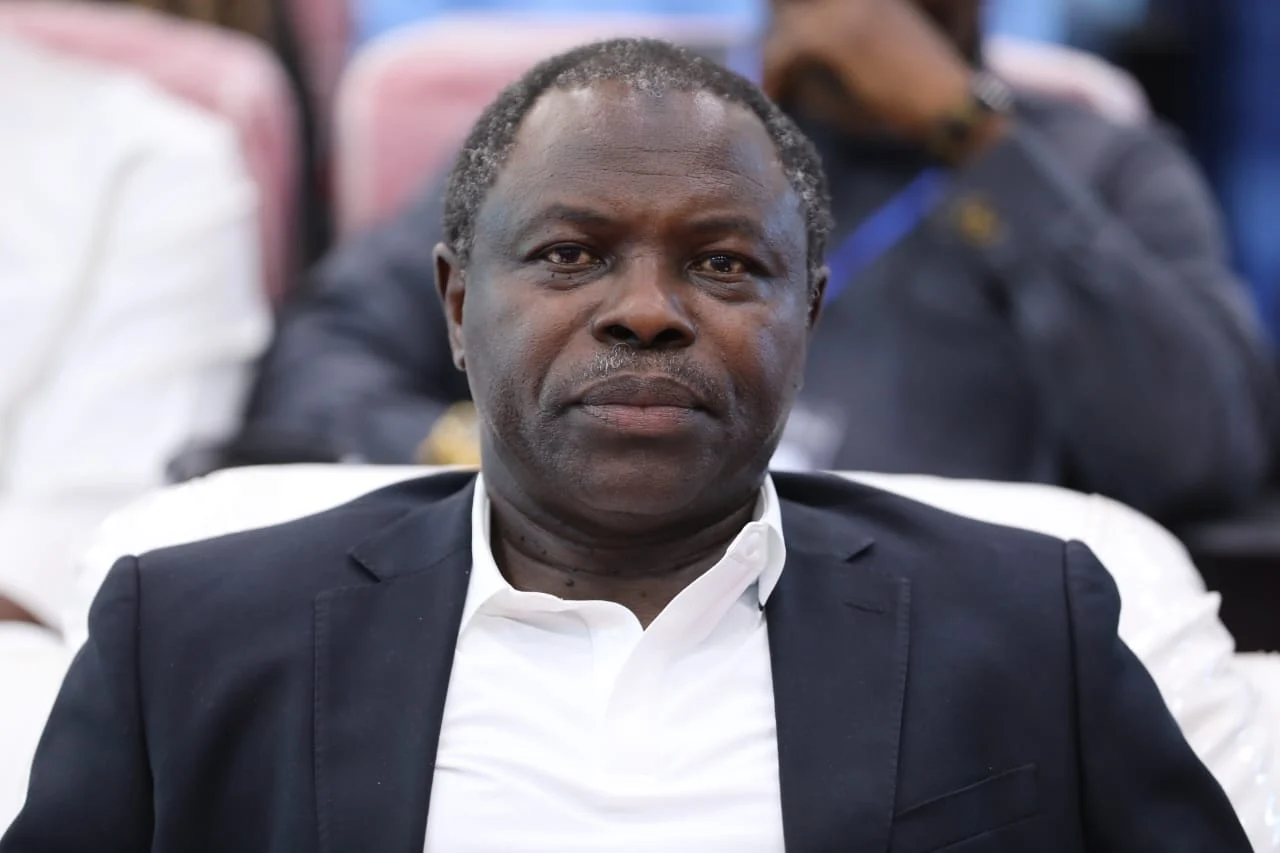
NIGERIA MUST END DEPENDENCE ON FOREIGN WEAPONS — DIAN SCRIBE
Read Time:3 Minute, 5 Second
By: Muftau Fatimo
The General Secretary of the Defence Industrial Association of Nigeria, Kola Balogun, has called on Nigeria to intentionally reduce its dependence on imported military hardware and prioritise investment in locally produced defence equipment tailored to the country’s security challenges.
Balogun, who also serves as Chairman and Chief Executive Officer of [Equipment and Protective Applications International Limited](https://epailgroup.com?utm_source=chatgpt.com), warned that continued reliance on foreign defence systems many developed for different operational conditions was weakening the effectiveness of security operations and placing personnel at avoidable risk.
Speaking with journalists in Abuja on Sunday, he urged the government to focus on procuring equipment specifically designed to address realities on the ground in Nigeria.
No two wars are exactly the same, and no two security environments are identical. We must therefore develop solutions tailored to our peculiar realities rather than relying solely on imported systems designed for completely different operational environments,” Balogun said.
He cited a particularly alarming example of the consequences of foreign dependency, noting that Nigeria had witnessed situations where equipment designed for open desert warfare was deployed in dense forest terrains, with devastating consequences for operational effectiveness.
Balogun argued that local manufacturers already possessed the capacity to produce virtually every category of defence equipment required by Nigeria’s security agencies.
“This is why I strongly believe that a private sector-led defence industry should serve as the engine room for defence acquisition and capability development in Nigeria,” he said, adding that the government must create deliberate policies and incentives to enable indigenous manufacturers to thrive.
Balogun said a major step forward had already been taken with President Bola Tinubu’s assent to the amended DICON Act, which opened the door to meaningful private sector participation in defence production a development he described as the result of years of advocacy.
“It took us several years of engagement and advocacy to push for amendments to the Act. Today, we are grateful that President Bola Tinubu has assented to the amended DICON Act, creating opportunities for meaningful private sector participation,” he said.
However, he stressed that legislation alone was not enough, calling on government institutions to back the Nigeria First policy with concrete procurement action.
“The Nigeria First policy is commendable, but it must go beyond policy declarations to actual implementation. We must ask ourselves: how often do government institutions procure locally manufactured products when such products are available in Nigeria?” he queried.
The DIAN scribe also tackled the deeply entrenched perception that foreign solutions were inherently superior to local ones, challenging Nigerians to trust in their own capacity.
“Do we truly believe that Nigerians can solve Nigerian problems?” he asked.
Balogun further linked the country’s insecurity crisis to weak governance at the grassroots level, arguing that the absence of visible government presence in many communities created fertile ground for criminality and insurgency.
He noted that in many local government areas, the presence of government remains minimal or largely absent, creating conditions that allow insecurity to thrive. He therefore urged local councils to strengthen community security efforts by investing in locally manufactured protective equipment.
Balogun expressed optimism that with effective policies and sustained backing for indigenous manufacturers, Nigeria could establish a self-sustaining and internationally competitive defence industry.
He added that by embracing local capacity, supporting domestic producers, and creating an enabling policy environment, the country could develop a resilient defence sector capable of addressing its national security demands.
His remarks follow comments by the Minister of Defence, Gen. Christopher Musa (retd.), who on Saturday revealed that the ongoing Iran–Israel and Russia–Ukraine conflicts are significantly disrupting the global supply of arms and military hardware.


Happy
0 %

Sad
0 %

Excited
0 %

Sleepy
0 %

Angry
0 %

Surprise
0 %
 0
0
 0
0