
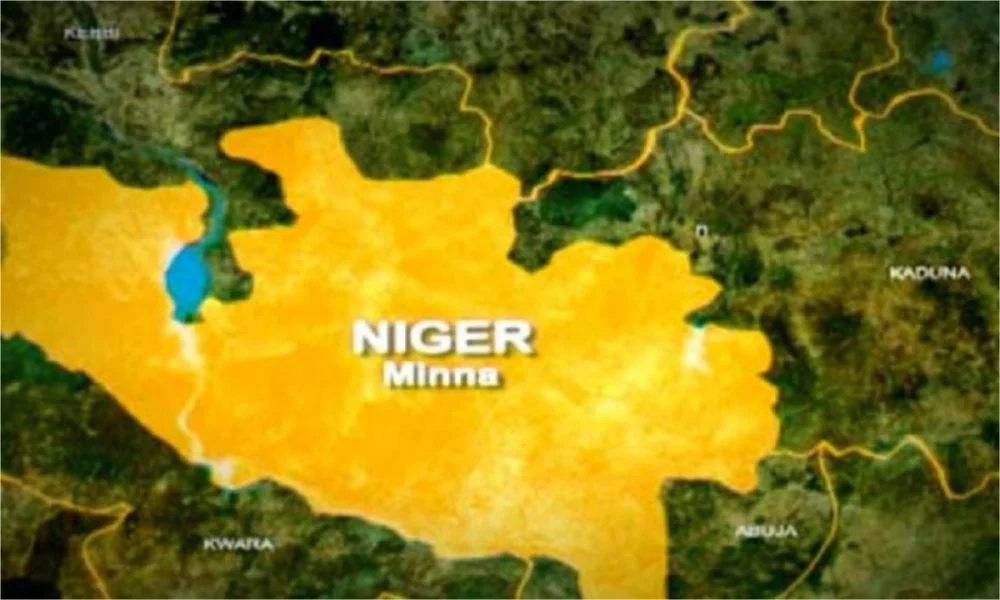
NIGER’S FOOD ECONOMY UNDER THREAT AS ATTACKS DRIVE FARMERS, TRADERS OFF ROADS
Read Time:8 Minute, 22 Second
By:Tajudeen Aminat
Although the roads have reopened, many farmers, traders and commercial drivers in parts of Niger State remain fearful, with insecurity continuing to disrupt movement and economic activities.
Earlier this month, commercial drivers operating along the Mokwa-New Bussa axis suspended operations and blocked the roads in protest against repeated attacks, kidnappings and killings involving motorists and passengers.
The action disrupted transportation along the route until police intervention led to the reopening of the roads on August 10.
However, the resumption of vehicular movement has yet to restore normal economic activities across the affected communities.
In Borgu, farmers said insecurity had made it difficult to access their farms and transport harvested crops to markets, while traders who previously travelled to rural communities to purchase food items were increasingly avoiding the routes.
The disruption has triggered a chain of economic losses, with farmers struggling to move their produce, traders avoiding dangerous routes and drivers losing passengers and income. Consumers, in turn, face higher prices when food supplies become limited.
The Niger State chapter of the National Union of Road Transport Workers said the situation had become increasingly difficult for its members.
The union’s state treasurer, Alhaji Danladi Abdullahi, said executives in New Bussa and Wawa alerted the state leadership after drivers became increasingly concerned about attacks along the routes.
According to him, drivers eventually stopped loading passengers because of frequent kidnappings and killings.
He disclosed that six drivers had been killed, while about eight others remained in captivity. The union paid ransom for four victims, while another managed to escape.
Abdullahi said the union was yet to determine the total amount spent on ransom because the incidents occurred in different locations, including Mokwa, Wawa, Gufanti and New Bussa.
He said the union sometimes spent more than N3 million to secure the release of a victim, adding that kidnappers occasionally demanded motorcycles in addition to ransom.
In one instance, the attackers reportedly demanded N80 million.
Abdullahi explained that drivers were often targeted first because their abduction also exposed passengers to danger.
He added that attackers sometimes placed large stones on the roads to force vehicles to stop.
The Chairman of the Niger State chapter of the National Association of Road Transport Owners, Alhaji Alhassan Usman Shiroro, also expressed concern over the increasing kidnappings and appealed to drivers to remain calm, assuring them that the government was working to improve security along the routes.
The Niger State Police Command acknowledged that highway kidnapping incidents had occurred in the state but said it could not provide specific figures covering the attacks over time.
The Police Public Relations Officer, SP Wasiu Abiodun, said the police, military and other security agencies had carried out joint clearance operations and patrols along vulnerable routes.
He added that operational bases had been established at strategic locations, while armoured personnel carriers, patrol vehicles and other security equipment had been deployed.
According to him, increased security presence had improved response time to distress calls and helped reduce attacks.
Abiodun said arrests had been made, some terrorists neutralised during operations, while weapons, ammunition and abducted victims had also been recovered.
The police spokesman assured residents that the security measures would be intensified.
Abdullahi said the intervention had also improved the situation, noting that security personnel had been deployed along affected routes, particularly around Babana and areas close to the national park.
He said patrol vehicles were provided by the state government, Mokwa Local Government, the area commander and the emir to support security operations.
Following the intervention, NURTW officials met with Governor Mohammed Umaru Bago and later engaged drivers, urging them to resume operations.
The union leaders also continued to share information on unsafe routes and advised drivers to report suspicious activities to security agencies and local authorities.
Despite the improved security presence, residents said fear remained widespread.
A Wawa resident, Malam Abubakar, said the situation had improved following the deployment of security personnel, particularly around the national park.
He said there had been no recent reports of kidnapping in his immediate area, but residents remained apprehensive about travelling.
“Many people don’t want to travel that route for now. There is a lot of panic among our people,” he said.
The fragile sense of security was tested again on August 21 when the police said suspected terrorists invaded Gidan-Zana and Kpenya villages in Dekara District of Borgu.
The attackers later stormed Kpenya Mosque during prayers and abducted an unspecified number of worshippers, while others escaped into a nearby forest.
The police said no life was lost and that a joint security team had been deployed to assess the situation and rescue the abducted victims.
For farmers in Borgu communities, insecurity has affected both access to farmland and the ability to sell their produce.
A farmer, Musa Hamidu, said farmers sometimes transported their crops to markets in groups or depended on drivers who were willing to operate along the affected routes.
He said drivers often took the produce to markets and handed it over to traders, who sold the goods before returning the proceeds to the farmers.
However, he noted that when insecurity intensified, some farmers stopped taking their produce to market altogether.
“When there are a lot of products in a market, prices could drop. When they are scarce because farmers are unable to bring them to the market, it raises the prices,” he said.
Hamidu explained that farmers could also be forced to sell at low prices when they transported their produce to markets but buyers failed to show up.
He added that farmers in security-prone parts of Borgu Kingdom, including Borgu and Agwara Local Government Areas, were cultivating fewer farms, while some had completely lost access to their farmlands because bandits and terrorists had taken control of parts of their communities.
Another resident, Hadiza Zubairu, said markets in the affected areas were no longer as busy because farmers could not transport their produce.
She added that some farmers were now relying on farmland belonging to other people after losing access to their own farms.
The insecurity has also altered the way food traders in Minna source their goods.
A Chanchaga-based trader, Hajiya Jummai, said she previously travelled to Babana and other rural markets across Borgu to purchase grains and other food items.
However, she stopped visiting some of the markets because of insecurity.
“I usually go to Babana and others such as Mariga and Kontagora in the state, but the security situation made us stop,” she said.
Jummai said traders feared attacks on markets and recalled incidents in the Borgu area where people were killed or abducted.
She also disclosed that a fellow market woman was kidnapped in a Shiroro market more than two years ago and had yet to return.
Another trader, Mama James, said many traders, particularly yam dealers, had stopped travelling to distant village markets.
She said many farmers who previously supplied yams had also fled their communities because of insecurity.
As traders withdraw from some rural markets, those closer to Minna have increasingly become alternative sources of food supplies.
Mama James said traders now depend on markets such as Tungan-Goro, Chanchaga, Kasuwan Alert, Beji and Paiko.
A grain seller at Kure Ultra Modern Market, Mallam Bello, said traders now wait for farmers to bring their produce closer to the city.
He said traders either buy and store the goods or place orders for farmers to deliver them directly.
The shift in trading patterns has created some benefits for urban consumers but increased costs for farmers.
Buyers at Kasuwan-Gwadabe in Kure market said increased supplies could push prices down when farmers brought large quantities of produce to the city.
However, farmers said the arrangement came at their expense because they now had to bear higher transportation costs.
A maize seller, Mrs Hajara, said farmers were spending more to transport their produce because traders who previously travelled to their communities had stopped doing so.
She said the additional transportation costs were reducing farmers’ profits.
The impact of insecurity is also evident in traditional rural markets.
Wawa holds its market on Wednesdays, Babana on Mondays and Gufanti on Sundays, while New Bussa hosts markets on Mondays and Sundays.
Residents said the markets previously attracted buyers from different parts of Niger State, the South-East and South-West, as well as neighbouring countries.
They came to purchase maize, guinea corn, beans, cattle, rams and agricultural inputs.
However, residents said the markets were no longer as busy as they used to be.
For commercial drivers, the decline in passenger movement has translated into reduced earnings.
Mohammed, a driver who has operated on the affected routes for more than a decade, said insecurity had significantly altered the economics of transportation.
He said fewer people were willing to travel because of fear, making it increasingly difficult for drivers to earn enough to support their families.
Transport officials at Abuja Park in Minna, Lapai and Kpakungu also said insecurity had reduced passenger movement along affected routes and worsened the financial difficulties faced by drivers.
While farmers, traders and transporters have adopted coping strategies such as using alternative markets, travelling in groups and relying on trusted drivers, these measures remain temporary solutions.
In Borgu, security agencies have increased patrols and deployments, while transport unions are sharing information and warning drivers about dangerous routes.
Farmers and traders have equally developed alternative channels to keep food moving from rural communities to urban markets.
However, the August 21 attack at Kpenya Mosque underscored the fragility of the security situation.
For farmers, traders and drivers, the real sign of recovery will not simply be the return of vehicles to the roads. It will be the restoration of confidence that allows farmers to safely access their farms, traders to return to rural markets and drivers to transport people and goods without fear.
Until that happens, the reopening of the roads will remain only a partial recovery, as insecurity continues to disrupt the movement of food from farms to markets and increase the burden on consumers.


Happy
0 %

Sad
0 %

Excited
0 %

Sleepy
0 %

Angry
0 %

Surprise
0 %
 0
0
 0
0