
OIL PRICES CLIMB AS US-IRAN ATTACKS SPARK FRESH SUPPLY FEARS
Read Time:4 Minute, 9 Second
Agency Report
Oil prices surged on Monday following a fresh escalation in the US-Iran conflict, while global equities recorded mixed performances as investors increased expectations of a possible US interest rate hike after hawkish remarks by Federal Reserve Chair Kevin Warsh.
Persistent inflation, driven partly by elevated energy prices, has placed renewed pressure on the US central bank to tighten monetary policy. Warsh’s reluctance to offer clear guidance on the Fed’s next move has also added to market uncertainty.
However, in a closely watched address at the Jackson Hole gathering of central bankers and economists in Wyoming, Warsh appeared to signal that further increases in borrowing costs remained possible.
He said policymakers needed to be confident that underlying inflation was moving towards the Fed’s target “clearly and at sufficient speed”, otherwise, “we have work to do.”
Warsh described the current inflation rate of 3.7 per cent, nearly twice the Federal Reserve’s two per cent target, as “concerning.” He also said he would be “hard-pressed” to characterise current financial conditions as restrictive, a comment interpreted by some investors as a possible indication that rate increases could be considered.
However, he stopped short of committing to a rate hike, saying, “I stand here today committed to a discipline, not to a decision.”
All three major US stock indexes closed lower on Friday following the speech. Short-term Treasury yields, which are closely linked to expectations for monetary policy, climbed, while the dollar strengthened against major currencies. Gold prices, which typically benefit from lower interest rates, declined.
Asian markets initially struggled on Monday, although some recovered later in the session. Tokyo, Hong Kong, Sydney, Taipei, Jakarta and Mumbai closed lower, while Seoul, Shanghai, Singapore, Bangkok and Wellington recorded gains.
European markets also opened mixed, with Paris advancing and Frankfurt slipping. London’s market remained closed for a public holiday.
Investors are now turning their attention to key economic data expected over the next two weeks before the Federal Reserve makes its next policy decision. US employment figures are due this week, followed by consumer price inflation data next week.
Chris Weston of Pepperstone said a broadly expected payrolls report could leave the upcoming core Consumer Price Index figures as the key factor shaping market expectations about the Fed’s next move.
He warned that volatility across interest rates, foreign exchange and equities could be significant around the inflation figures.
David Chao of Invesco, however, said the Jackson Hole speech had increased the possibility of a rate hike but argued that a September increase was unlikely.
He said Warsh appeared focused on reducing forward guidance and had stopped short of explicitly signalling a September move, adding that upcoming inflation and employment figures would be crucial.
The Fed’s efforts to control inflation have been further complicated by the conflict involving Iran, which has contributed to renewed pressure on oil prices.
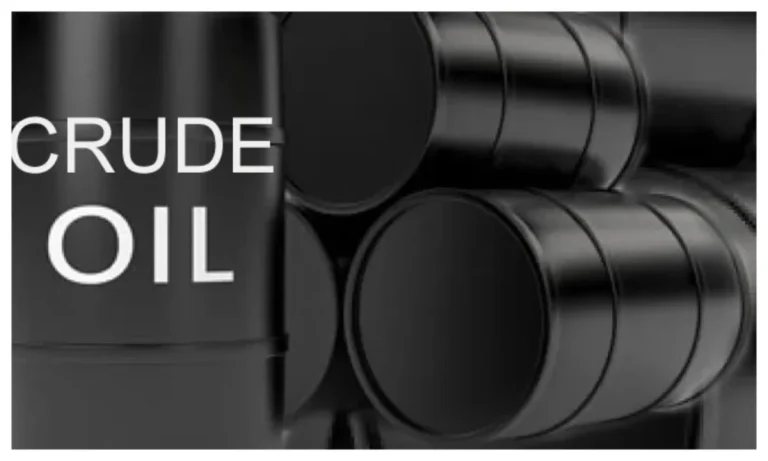
Crude prices, which had fallen for much of the previous week, jumped on Monday after the United States said it had attacked Iranian rocket launchers on a small island in the Strait of Hormuz. The strike marked the first US attacks on Iran in about a month.
Iran responded by striking US military positions in Jordan, triggering renewed concerns about a broader escalation.
Both major crude benchmarks gained more than two per cent during Monday’s trading session.
The latest exchange of attacks came as the US-Iran conflict entered its sixth month, with hopes of a diplomatic breakthrough fading and the Strait of Hormuz remaining largely closed.
The strategic waterway is a crucial route for global energy supplies, carrying roughly one-fifth of the world’s crude oil and natural gas.
US officials have vowed to impose further economic pressure on Iran in an effort to force the reopening of the waterway.
Quintex Intel analyst Stephen Innes said the latest developments showed how quickly geopolitical risks could return to the oil market.
He noted that oil traders had begun reducing the geopolitical premium as physical flows through the Strait of Hormuz improved, but the latest confrontation demonstrated how vulnerable those gains remained.
At about 0715 GMT, Tokyo’s Nikkei 225 closed 0.1 per cent lower at 66,311.93 points, while Hong Kong’s Hang Seng Index declined 0.2 per cent to 25,530.19.
Shanghai’s Composite Index, however, gained 0.9 per cent to close at 3,986.30 points.
West Texas Intermediate crude climbed 2.5 per cent to $85.51 per barrel, while Brent crude rose 2.8 per cent to $90.53 per barrel.
In currency trading, the dollar weakened slightly to 159.87 yen from 160.07 yen on Friday, while the euro edged down to $1.1586.
The pound rose to $1.3538, while the euro traded at 85.57 pence against the pound, compared with 85.58 pence on Friday.
On Wall Street, the Dow Jones Industrial Average ended almost unchanged at 53,559.99 points.


Happy
0 %

Sad
0 %

Excited
0 %

Sleepy
0 %

Angry
0 %

Surprise
0 %
 0
0
 0
0