
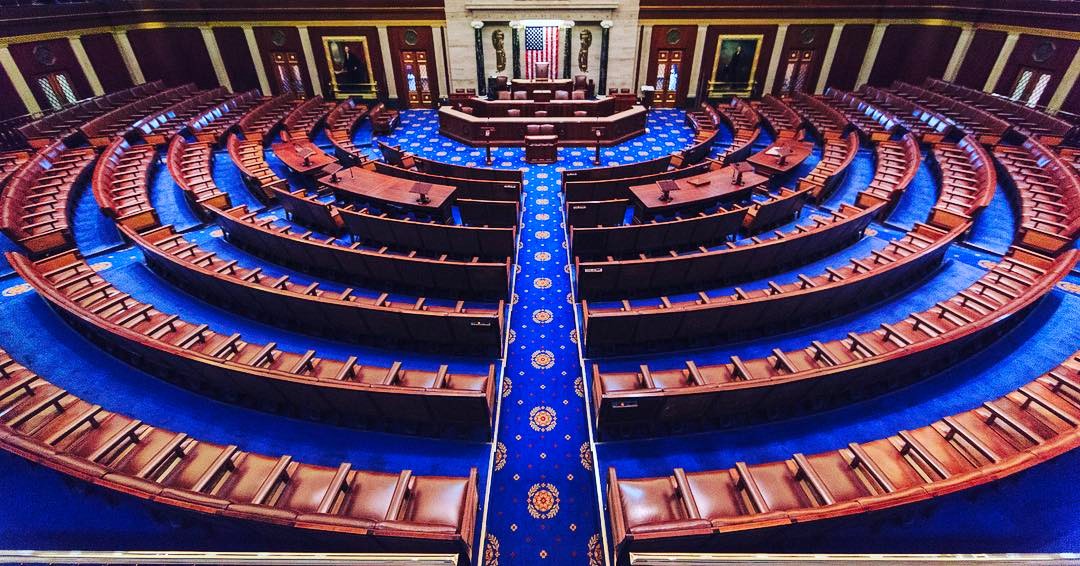
US HOUSE DEALS TRUMP RARE DEFEAT, PASSES RESOLUTION TO CURB IRAN WAR POWERS
Read Time:1 Minute, 39 Second
By Aishat Momoh. O.
The United States House of Representatives on Wednesday delivered a significant political setback to President Donald Trump after approving a war powers resolution aimed at limiting continued US military involvement in Iran without congressional authorization.
Lawmakers voted 215 to 208 in favour of the measure, with four Republican representatives crossing party lines to support Democrats in backing the resolution. Those Republicans were Thomas Massie of Kentucky, Brian Fitzpatrick of Pennsylvania, Warren Davidson of Ohio, and Tom Barrett of Michigan.
The vote came nearly two weeks after House Republican leaders postponed an earlier scheduled vote amid concerns that there were insufficient numbers to defeat the proposal.
The resolution now heads to the Senate, where lawmakers are expected to consider similar efforts to require congressional approval for continued military action involving Iran.
In a joint reaction following the vote, House Democratic leaders described the development as an effort to reassert congressional authority over war-making powers and increase accountability over the administration’s handling of the conflict.
The vote marked the first successful House passage of a measure seeking to restrict the president’s authority over the Iran conflict after previous attempts failed to secure enough support.
At the centre of the debate is the 1973 War Powers Resolution, which places limits on how long a president can continue military hostilities without authorization from Congress. Supporters of the latest measure argue that continued military action requires legislative approval, while the White House has maintained that circumstances surrounding the conflict and ceasefire arrangements justify its position.
Although the practical impact of the House vote remains uncertain and legal interpretations differ over its enforceability, the development is widely seen as a notable indication of growing bipartisan concern over the direction and cost of the conflict.
The vote also comes amid broader political pressure on the administration as negotiations aimed at resolving the conflict continue and public concern persists over economic consequences linked to the crisis, including energy costs and regional instability.


Happy
0 %

Sad
0 %

Excited
0 %

Sleepy
0 %

Angry
0 %

Surprise
0 %
 0
0
 0
0