
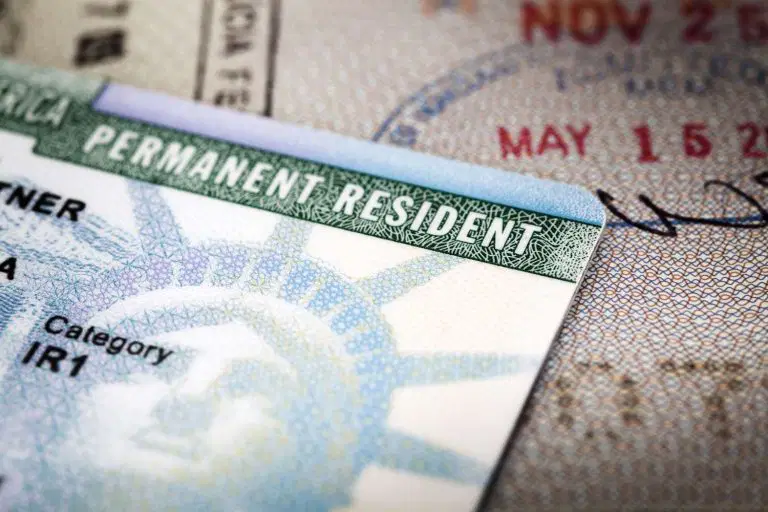
US INTRODUCES NEW GREEN CARD POLICY REQUIRING MOST APPLICANTS TO APPLY FROM OUTSIDE THE COUNTRY
Read Time:1 Minute, 27 Second
By Aishat Momoh. O.
The United States has introduced a major change to its immigration system, requiring most immigrants applying for green cards to complete their applications from outside the country, in what marks a significant shift in permanent residency processing rules.
The policy was announced by the US Citizenship and Immigration Services and generally requires applicants to return to their home countries and process green card applications through U.S. embassies or consulates abroad.
Under the new directive, most applicants will no longer be able to adjust their immigration status while remaining inside the United States, except in limited “extraordinary circumstances.”
According to officials, the change closes what they describe as a long-standing loophole that previously allowed certain visa holders and visitors to apply for permanent residency without leaving the country while their applications were processed.
The policy directly affects international students, temporary workers, and tourists on non-immigrant visas, who must now undergo consular processing abroad if they wish to obtain permanent residency.
However, the rule provides limited exceptions. Some applicants may still be allowed to complete the process within the U.S. if their cases are considered to serve economic interests or are deemed to be in the national interest, though such approvals are expected to be rare and assessed individually.
Critics have raised concerns that the policy could disrupt families and force applicants to leave the country for extended periods during lengthy processing times, with more than a million people reportedly already awaiting green card decisions.
Officials from the United States Department of Homeland Security argue that the change will improve efficiency and bring the system into closer alignment with immigration law, while critics warn it could increase uncertainty and reduce lawful pathways to permanent residency.


Happy
0 %

Sad
100 %

Excited
0 %

Sleepy
0 %

Angry
0 %

Surprise
0 %
 0
0
 0
0