
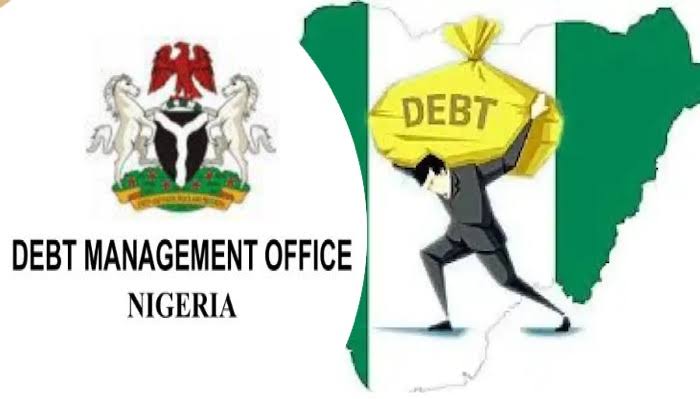
NIGERIA’S PUBLIC DEBT HITS N149.39TN IN Q1 2025, UP BY N27.72TN YEAR-ON-YEAR
Read Time:2 Minute, 56 Second
By: Sefiu Ajape
Nigeria’s total public debt reached N149.39 trillion as of March 31, 2025, reflecting a year-on-year rise of N27.72 trillion or 22.8% compared to N121.67 trillion recorded in the same period of 2024.
The figure, released by the Debt Management Office (DMO) on Friday, also indicates a quarter-on-quarter increase of N4.72 trillion or 3.3% from N144.67 trillion at the end of December 2024.
The continuous growth in the debt stock is largely driven by fresh borrowings by the Federal Government and the weakening of the naira, which has inflated the naira value of external obligations.
This sharp increase comes amid ongoing fiscal challenges and Nigeria’s sustained dependence on both domestic and external borrowing to finance public spending.
External debt stood at N70.63 trillion ($45.98 billion) at the end of Q1 2025, up from N56.02 trillion ($42.12 billion) in Q1 2024—an increase of N14.61 trillion or 26.1% year-on-year.
On a quarterly basis, external debt rose marginally by N344 billion or 0.5% from N70.29 trillion in December 2024.
While the actual year-on-year increase in dollar terms was just $3.86 billion, the depreciation of the naira significantly magnified the rise when converted to local currency.
For context, the Central Bank of Nigeria used an exchange rate of N1,330.26/$1 to convert external debt in Q1 2024.
Although the exact rate used for Q1 2025 was not disclosed in the DMO statement, the higher naira value suggests a weaker exchange rate was applied, reflecting currency volatility.
Nigeria’s external borrowings include loans from multilateral lenders such as the World Bank and African Development Bank, bilateral arrangements, and commercial debt instruments, including Eurobonds.
The increase in debt servicing costs, driven by naira depreciation, has raised concerns about the strain on government finances, especially as the country struggles to improve foreign exchange liquidity and stabilise the currency.
On the domestic front, Nigeria’s debt stock climbed to N78.76tn ($51.26bn) in March 2025, up from N65.65tn ($49.35bn) a year earlier.
This represents a year-on-year increase of N13.11tn or 20 per cent. Compared to Q4 2024, domestic debt rose by N4.38tn or 5.9 per cent, up from N74.38tn.
Of the total domestic debt, the Federal Government accounted for N74.89tn, while subnational governments and the FCT held N3.87tn.
This marks a slight decline in state-level domestic debt from N3.97tn in the previous quarter and N4.07tn in Q1 2024, potentially indicating improved debt servicing or a slowdown in fresh borrowings by states.
Domestic debt in Nigeria comprises instruments such as Federal Government Bonds, Treasury Bills, Sukuk, and Green Bonds.
These are primarily used to finance budget deficits and, while less exposed to exchange rate volatility, they come with interest cost burdens and the risk of crowding out private sector borrowing.
As of March 2025, domestic debt made up 52.7% of Nigeria’s total debt portfolio, while external debt accounted for 47.3%.
This marks a slight shift from March 2024, when domestic debt stood at 54% and external debt at 46%.
The rising share of external debt—particularly in naira terms—highlights Nigeria’s growing vulnerability to currency depreciation.
Meanwhile, the consistent increase in domestic borrowing reflects the government’s intensified reliance on the local capital market, despite challenges such as elevated interest rates and shifting investor sentiment.


Happy
0 %

Sad
0 %

Excited
0 %

Sleepy
0 %

Angry
0 %

Surprise
0 %
 0
0
 0
0