
FG DECRIES SLOW PACE OF FREE ELECTRICITY METER DISTRIBUTION
Read Time:3 Minute, 51 Second
BY JENN NOMAMIUKOR
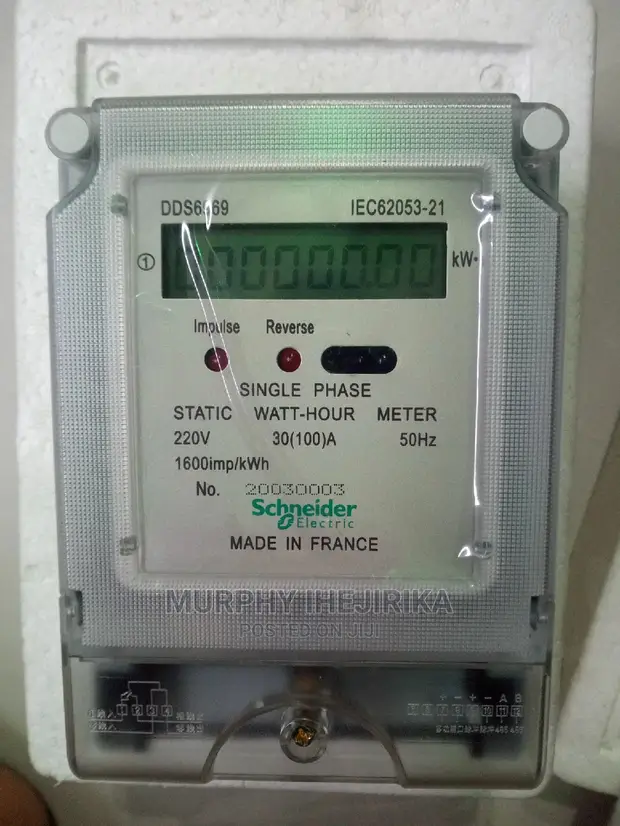
Only about 200,000 smart meters have been installed so far under the Federal Government’s $500 million World Bank-supported Distribution Sector Recovery Programme, DISREP. Officials admitted on Wednesday that the pace of deployment remains slow.
Although nearly 700,000 meters have already been delivered to the country under the programme aimed at addressing Nigeria’s estimated 5.66 million metering gap, installation by electricity distribution companies has lagged, according to officials from the Bureau of Public Enterprises and other power sector regulators.
At a press briefing in Abuja, the Director-General of the Bureau of Public Enterprises, Ayodeji Gbeleyi, reviewed progress and addressed public concerns around funding and deployment, involving the Nigerian Electricity Regulatory Commission, the Ministry of Power, the National Mass Metering Initiative, and managing directors of DisCos.
“This is a landmark transaction for the country,” Gbeleyi said. “Under DISREP, we are importing meters at scale to bridge the metering gap and ensure consumers are billed accurately.
“The meters and installation are provided free of charge to customers, and the costs have been paid to the contractor. Revenue will be recovered through the Multi-Year Tariff Order, regulated by NERC.”
He explained that DISREP aims to roll out 3.2 million smart meters over four years through international and local competitive bidding.
Phase one involved importing 1,437,500 meters, both single- and three-phase, with about 700,000 already in the country, while local manufacturers are supplying another 217,000 meters.
Phase two will see an additional 1.55 million meters imported.
“The collaborative effort is ongoing, and all stakeholders, including NEMSA, TCN, and NEC, are verifying and testing meters before deployment,” Gbeleyi said.
“Our goal is clear: reliable electricity supply, improved industry sustainability, and closing the metering gap as a matter of national priority.”
The Chief Technical Adviser to the Minister of Power, Adedayo Olowoniyi, described the installation numbers as “not an encouraging statistic,” noting that just 150,000 to 200,000 meters had been deployed so far.
READ MORE…
OYO GOVT ARRESTS 19 ILLEGAL SCAVENGERS, SHUTS DOWN FOOD FACILITY
He said the programme was critical to fixing the distribution segment, widely regarded as the weakest link in the power value chain.
“The meter gap must be closed during this administration, and the distribution segment must support the program,” Olowoniyi said.
“These meters are not meant to be paid for by customers. Structures exist for cost recovery, just as there are structures for any grid assets.
The focus is on closing the gap efficiently and with the lowest cost of capital available.”
Also speaking, NERC Chairman Musiliu Olalekan Oseni, stressed the role of metering in rebuilding trust between consumers and utilities.
“Meters serve as revenue assurance for utilities and confidence-building for consumers. They allow customers to see that they are being billed accurately for what they consume,” he said.
“Unfortunately, misinformation has circulated in the media, and this briefing aims to correct that.”
Officials noted that DISREP aligns with other initiatives, such as the Presidential Metering Initiative and the Meter Acquisition Fund, all of which aim to accelerate meter deployment nationwide.
Under the programme’s financing structure, the World Bank is providing $500m in concessional funding, split evenly between investment financing for meters, data systems and technical assistance, and a results-based component to drive performance and governance reforms.
Aisha Tukur, Director of the Energy Sector Department at the BPE, said DISREP goes beyond metering. “DISREP is about creating operational efficiency, financial viability, and transparency across the electricity value chain,” she said. “It supports DisCos with technical assistance, training, and systems to strengthen operations while ensuring consumers are metered and billed accurately.”
Even though officials gave some promises, they admitted that the slow progress by the power companies is still a big problem. Many thousands of meters are still waiting to be put in place.
At the meeting, the top bosses of these companies promised to work faster to install the meters.
But they also told people not to cheat by getting around the meters or trying to tamper with them. They said these actions hurt how much money the companies get and make the power system even worse.
In February 2021, the World Bank agreed to provide $500 million for a program called the Distribution Sector Recovery Programme in Nigeria.
This program helps with big efforts to install meters and make changes in how electricity is distributed.
The money was meant to help improve how power services are given, make the system more organized, and fix the long time problem of not enough meters in Nigeria.


Happy
0 %

Sad
0 %

Excited
0 %

Sleepy
0 %

Angry
0 %

Surprise
0 %
 0
0
 0
0