
KADUNA IS NOW BETTER THAN I MET IT, SAYS GOV. UBA SANI
Read Time:6 Minute, 9 Second
By:Tajudeen Aminat
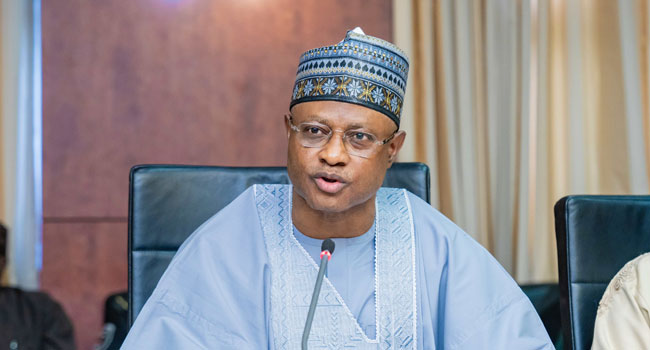
Governor Uba Sani of Kaduna State has said he took over a state with significant potential but one that was facing serious security issues, infrastructure deficiencies, and social challenges that demanded immediate action.
The governor made the remarks during a workshop for senior government officials organised by the Nigerian Institute of Public Relations (NIPR), held as part of the Nigeria Public Relations Week, Croc City 2026, in Kaduna.
The event, themed “From Policy To Public Trust: Strategic Communication For Vision Alignment And Governance Delivery For Renewed Hope,” brought together commissioners, special advisers, councillors, permanent secretaries, and other top government officials.
Speaking at the gathering, Governor Sani stated that Kaduna had made significant progress, stressing that the state is now in a better position than before and continues to advance steadily toward greater development and higher achievements.
He explained that his administration recognised from the beginning that gradual adjustments would not be enough to move the state forward, stressing that a disciplined restructuring of governance was necessary.
He added that his government resolved that its vision must produce tangible results, otherwise it would remain nothing more than an ambition.
“We established a performance framework based on Key Performance Indicators, ensuring that every ministry, department, and agency works with clear objectives and is held accountable for results,” he added.
The governor explained that upon taking office in 2023, he organised his development agenda around seven strategic pillars, noting that positive results have begun to emerge over the past two and a half years.
He listed the pillars as safety and security, infrastructure development, institutional strengthening, trade and investment, agriculture, human capital development, and citizen engagement.
Governor Uba Sani further stated that these priorities are interconnected rather than separate efforts, describing them as a coordinated system in which each pillar supports the others toward achieving the broader goal of transforming Kaduna State into a secure, prosperous, and inclusive society.
He emphasised that security remains the foundation of all development, adding that without it, farmers cannot work their land, businesses cannot invest, and communities cannot flourish.
The governor revealed that he collaborated with the Office of the National Security Adviser and the military leadership to set up new military bases in vulnerable areas such as Giwa, Birnin Gwari, and Southern Kaduna.
He added that security operations were strengthened through the provision of more than 150 operational vehicles and 500 motorcycles to security agencies. He also noted that a Joint Task Force was established in urban areas, which has helped to significantly reduce cases of street crime and banditry.
Governor Uba Sani further explained that his administration has also achieved key structural results, including the recovery of over 20,000 hectares of previously inaccessible farmland, allowing farmers to resume agricultural activities in areas like Birnin Gwari, Giwa, and Kargarko.
He said more than 1,000 displaced persons have been resettled, while over 117,000 internally displaced persons continue to receive targeted support, especially women and children.
The governor also disclosed that his administration established the first forensic laboratory in Northern Nigeria, enhancing investigative capabilities. He added that the Kaduna Incident Report Centre (KAD-IR) now operates a 24-hour emergency response system, supported by early warning mechanisms designed to prevent escalation of crises.
According to him, the state has institutionalised peace dialogues, set up local peace councils, and introduced a rehabilitation and reintegration programme focused on skills acquisition rather than financial handouts as part of its non-kinetic approach to peacebuilding.
He noted that while the outcomes are not yet perfect, security has improved, public confidence is returning, and economic activities are gradually picking up in areas that were previously inaccessible. He described these developments as part of what is now referred to as the Kaduna Peace Model.
Governor Uba Sani also highlighted significant progress in the education sector, saying his administration has made deliberate investments to expand access and improve quality.
He stated that 736 new classrooms have been built, while over 1,200 existing ones have been renovated. In addition, 10,000 teachers have been recruited and more than 33,000 education personnel trained in modern teaching methods and digital skills.
He further revealed that one of the administration’s most notable achievements is the reduction in the number of out-of-school children, which has dropped from about 550,000 to 187,720 within two years. He attributed the progress to investment, coordination, data-driven strategies, and sustained community engagement.
The governor added that his administration is also aligning the education system with the needs of a modern economy. He said the establishment of the Institute of Vocational Training and Skills Development represents a major step toward bridging the gap between education and employment.
According to him, training programmes in ICT, mechatronics, renewable energy, and other high-demand fields are being used to prepare young people not only for jobs but also for productivity and innovation.
He also noted that access to healthcare has been expanded, health facilities upgraded, and overall health systems strengthened over the past two and a half years.
He said his administration has upgraded 255 Primary Healthcare Centres to Level-2 facilities and established 23 Centres of Excellence, one in each local government area. He also noted that a 300-bed specialist hospital has been delivered to provide advanced medical care within the state and reduce the need for expensive medical travel.
On infrastructure, the governor stated that about 150 road projects covering more than 1,300 kilometres have been launched across all 23 local government areas. He explained that the projects are part of a deliberate plan to link rural production hubs with urban markets, cut travel time, and boost commercial activity.
Governor Uba Sani also disclosed that the agricultural budget was increased from ₦1.48 billion in 2023 to over ₦74 billion this year. He added that over 900 truckloads of fertiliser have been distributed to farmers, while more than 100,000 smallholder farmers have been enrolled in crop insurance schemes to mitigate risks.
He further stated that through the Special Agro-Industrial Processing Zones in Chikun and Kubau, the state is transitioning from subsistence farming to value-added agribusiness, aimed at creating jobs, increasing incomes, and improving export capacity.
According to him, Kaduna State has also created a favourable environment for private sector-driven growth, recording 23 completed investments worth over $743 million between 2023 and 2025 across agriculture, manufacturing, energy, and other key sectors.
He added that the state has also built a pipeline of investments estimated at about $2.77 billion, bringing the total investment portfolio to over $3.5 billion, which he said reflects growing investor confidence in Kaduna.
The governor also noted that his administration has recorded notable progress in social protection and inclusion by opening over 2.5 million new bank accounts for previously underbanked residents, thereby expanding financial inclusion across the state.
He added that more than ₦18 billion has been disbursed as targeted support to households, farmers, and small-scale businesses.
According to him, the free CNG mass transit initiative has already served over 1.4 million passengers, helping to reduce transportation costs and ease financial pressure on families.
Governor Uba Sani further explained that under Project 255, the government is committing ₦100 million in public investment to each ward to ensure that development is evenly distributed across both rural and urban communities.


Happy
0 %

Sad
0 %

Excited
0 %

Sleepy
0 %

Angry
0 %

Surprise
0 %
 0
0
 0
0