
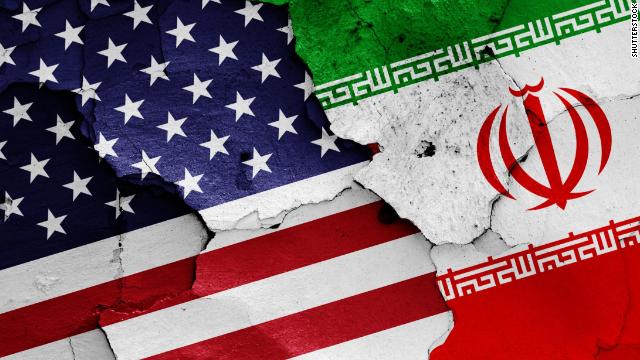
IRAN HUNTS US CREW AFTER JET DOWNED BY AIR DEFENCE SYSTEMS
Read Time:3 Minute, 13 Second

By: Fasasi Hammad
Iran has launched a search for the U.S. crew of a jet reportedly shot down by the country’s air defence systems on Friday, deploying troops and offering a reward for their capture.
U.S. media reported that one of the two crew members had been rescued by American special forces, while Iranian state television in Kohgiluyeh and Boyer-Ahmad province broadcast footage it claimed showed the wreckage of the downed aircraft.
The conflict, now over a month old, began with U.S.-Israeli strikes on Iran that killed Supreme Leader Ali Khamenei, triggering retaliatory attacks that have spread across the Middle East, disrupted global energy markets, and affected millions worldwide.
U.S. Central Command (CENTCOM), responsible for military operations in the region, did not immediately comment on what would be the first known U.S. jet loss inside Iran since former President Donald Trump ordered the war.
On state television, an Iranian reporter offered a reward, saying, “Dear and honourable people of Kohgiluyeh and Boyer-Ahmad province, if you capture the enemy pilot or pilots alive and hand them over to the police and military forces, you will receive a valuable reward and bonus.”
READ MORE…
JUST IN: PASTORE CALLS CRITICISM AND PUNISHMENT OF FERNÁNDEZ “COMPLETELY UNFAIR”
The report of the downed plane coincided with fresh strikes on Israel, Iran, Lebanon, and Gulf countries. In northern Tehran, large explosions were reported, with Israel claiming responsibility for attacks in the Iranian capital alongside parallel strikes in Beirut.
Earlier, Israel reported a missile salvo from Iran, prompting activation of its air defences. Targeting of economic and industrial sites by all sides has raised fears of wider disruptions to global energy supplies.
Former U.S. President Trump, posting on Truth Social, warned that the U.S. military “hasn’t even started destroying what’s left in Iran. Bridges next, then Electric Power Plants!” after U.S. strikes damaged Iran’s tallest bridge in Karaj. Observers reported damage to residential buildings nearby, though no military installations were hit.
The deputy governor of Alborz province said the bridge attack killed eight civilians and injured 95. Israel reported that roughly 70 percent of Iran’s steel production has been disrupted. In Abu Dhabi, Emirates Global Aluminium announced that repairs could take up to a year after Iranian strikes damaged its facilities.
Former Iranian Foreign Minister Mohammad Javad Zarif wrote in Foreign Affairs that Tehran should negotiate with the U.S. to end the war, offering to curb its nuclear program and reopen the Strait of Hormuz in exchange for sanctions relief. The strait, a key global oil and gas route, has been largely blocked since the conflict began.
Maritime data shows a 94 percent drop in shipping traffic compared to peacetime, though a few ships—including the Maltese-flagged Kribi operated by French group CMA CGM—have managed to transit.
Iranian military spokesperson Ebrahim Zolfaghari warned that, in response to Trump’s threats, Iran would escalate attacks on regional energy infrastructure. Recent strikes have caused fires at a Kuwait refinery, damaged a power and desalination complex, and shut a gas plant in Abu Dhabi.
Meanwhile, the Israeli military reported hitting more than 3,500 targets across Lebanon since fighting with Iran-backed Hezbollah began, including plans to strike two bridges in the Bekaa Valley to prevent the movement of reinforcements and equipment.
Lebanon’s health ministry reported 1,345 deaths and 4,040 injuries since the conflict began, including healthcare workers, while UN peacekeepers were also wounded in recent blasts.
The war’s economic fallout is affecting global energy markets. In Lahore, Pakistan, fuel price protests erupted, with residents decrying steep increases. Meanwhile, the White House proposed a $1.5 billion increase to the U.S. defence budget—a 42 percent year-on-year hike, the largest since World War II.


Happy
0 %

Sad
0 %

Excited
0 %

Sleepy
0 %

Angry
0 %

Surprise
0 %
 0
0
 0
0