
EXPLAINER: HOW THE FG SHARED AND SPENT N15.8TN SUBSIDY SAVINGS
Read Time:3 Minute, 16 Second
By; Sunmola Ganiyat
The Federal Government has explained how resources generated from petrol subsidy removal and foreign exchange reforms were distributed and spent between June 2023 and December 2025.
According to the Federal Ministry of Finance’s Nigeria Reform Scorecard, the reforms generated N15.8tn in subsidy savings for the Federation during the period.
However, the entire amount did not go to the Federal Government, as the funds were distributed among the three tiers of government through the statutory allocation system.
How was the N15.8tn shared?
The Federal Government received N5.4tn, representing 34 per cent of the total savings.
States received N6.5tn, or 41 per cent, while local governments received N3.9tn, representing 24 per cent.
In total, the Federal Government received N5.4tn, while N10.4tn went to state and local governments.
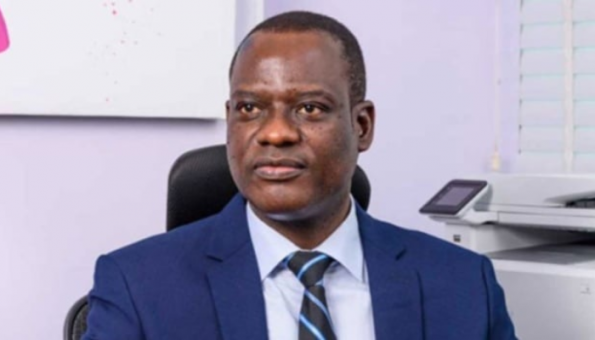
Finance Minister and Coordinating Minister of the Economy, Taiwo Oyedele, explained that subsidy savings did not appear as a separate item labelled “subsidy savings” in the Federation Account.
He said the savings were reflected through increased revenue collections resulting from the reforms.
What happened to the Federal Government’s N5.4tn?
The N5.4tn received by the Federal Government was part of a larger pool of additional resources available during the period.
The government recorded N3.1tn in other incremental revenue, mainly from remittances by government-owned entities, while N11.9tn came from additional borrowing.
Combined, the N5.4tn subsidy savings, N3.1tn additional revenue and N11.9tn borrowing brought the Federal Government’s total incremental resources to N20.4tn.
Borrowing accounted for the largest portion at N11.9tn, or 58 per cent. Subsidy savings contributed N5.4tn, representing 27 per cent, while other revenue accounted for N3.1tn, or 15 per cent.
How was the money spent?
The ministry said total incremental expenditure during the period amounted to N30.64tn.
Wage adjustments accounted for the largest expenditure, at N9.39tn. This covered the minimum wage, wage awards and allowances.
External debt servicing followed closely at N9.37tn, with the ministry attributing the increase largely to the impact of exchange rate depreciation.
The government also spent N6.47tn on strategic infrastructure development.
Another N3.14tn was allocated to the additional cost of electricity subsidies, while N1.24tn went towards domestic debt servicing linked to higher monetary policy rates.
Other expenditures included N423.8bn for social welfare transfers, N419.1bn for FCT development, the Ecological Fund and natural resource investments, as well as N201.26bn representing higher naira costs of foreign obligations.
Where did the remaining money come from?
The ministry’s figures show that the N30.64tn spent during the period was not funded entirely from the N20.4tn in additional resources.
Of the total expenditure, N20.404tn was funded from incremental resources, while N10.236tn came from the government’s existing revenue base.
Therefore, the Federal Government’s N5.4tn share of the subsidy savings formed part of a broader pool of N20.4tn in additional resources used to finance government expenditure.
What does the government say the reforms achieved?
The Finance Ministry also presented an assessment of Nigeria’s economic performance since the reforms and compared it with what it estimated could have occurred without them.
According to the ministry, the debt-service-to-revenue ratio declined from about 100 per cent in 2022 to a projected 50 per cent in 2026.
It also said the number of states unable to pay salaries fell from 27 in 2023 to zero in 2026.
The government further reported improvements in foreign exchange reserves, capital importation, GDP growth and oil production.
However, it acknowledged that household welfare remains a major concern, with poverty still high and the cost of living rising significantly following the reforms.
The government said its next priorities include reducing inflation, maintaining a unified exchange rate, tackling poverty, improving food security and ensuring that the gains from the reforms translate into better living conditions for Nigerians.


Happy
0 %

Sad
0 %

Excited
0 %

Sleepy
0 %

Angry
0 %

Surprise
0 %
 0
0
 0
0