
MOSES ADEJUMO: FATHER OF THE MORDERN NIGERIAN COMEDY
Read Time:3 Minute, 32 Second
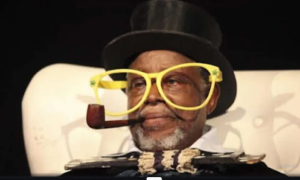
MOSES Olaiya Adejumo was born on May 18, 1936. He was known by all and sundry by his “Baba Sala,” was a Nigerian comedian, dramatist, and actor. Baba Sala revolutionised comic theatre in Nigeria by turning comedy into the main focus, not just an element of drama. His performances combined slapstick, exaggerated costumes, witty dialogue, and satire, making comedy accessible to all classes. He successfully transitioned comedy from travelling theatre to film and television, especially in the 1970s–1990s.
Moses Adejumo often acted the role of a comical elderly man: Naive, talkative, stubborn, and witty, especially in radio dramas, stage plays, and early TV performances. In one particularly popular role, the character was called Bàbá Sàláwá, shortened to Bàbá Ṣàlá.
As his fame grew with the Aláwàdà Theatre Group and later film productions, he embraced the nickname professionally, using it as his official stage name because it was already synonymous with laughter and comed. By the 1970s and 1980s, “Bàbá Sálà” was no longer just a character but had become his identity and brand, to the point that many Nigerians never knew his real name.
Many Nigerian comedians and comic actors (especially in the Yoruba theatre tradition) trace their style and inspiration to him.
A Yorùbá from Ilésà, Baba Sala, alongside other dramatists like Hubert Ogunde, Kola Ogunmola, Oyin Adejobi, and Dúró Ladipo popularised theatre and television acting in Nigeria.
He was a prolific filmmaker.
Baba Sala began his career in show business as a Highlife musician, fronting in 1964 a group known as the Federal Rhythm Dandies where he tutored and guided people like King Sunny Ade, who was his lead guitar player then. It is safe to say Bàbá Sala trained King Sunny Ade.
Bàbá Sala grew up in the North. His father worked as a teacher and later as an accountant and the family moved quite often, living in Jos and Kano.
As a young boy, Moses Olaiya played the class clown and sometimes dressed outlandishly to please people. While he chose to develop a career in entertainment his parents wanted a path that will lead to a professional career such as in medicine or law.
He worked as a health inspector for the Lagos City Council. His interest in entertainment made him form his musical group, the Federal Rhythm Dandies. The group played briefly before he switched from music to drama, he wrote and staged dramatic plays similar to the style crafted by the forerunners of genre, Ogunde and Ladipo.
However, seeking to do something new, he dabbled into comedy and founded Alawada group. That year, the group won a contest organised by Western Nigeria Television (WNTV), which led to a regular TV show and greatly boosted their popularity.
In 1965, the group got a break when it won a contest organised by Western Nigeria Television, Ìbàdàn now NTA, Ibadan, that led to the creation of a TV show. The group became more known when their comedy sketches were aired on WNTV. Olaiya’s main character in the group was Baba Sala, a pensioner who sometimes wore torn and out sized trousers and a table clock as a wrist watch. He developed the character further with a tendency to be both a miser and a lecher.
In 1982, Olaiya made his big screen debut in Ọ̀run Móoru directed by Ọlá Balogun and co-produced by himself. He played his signature character Baba Sala, a man from a poor background who had built some wealth selling electronics in the city only to lose it to greed assisted by the advice of a dubious herbalist.
The movie was well received but was bootlegged which affected box office receipts. Olaiya then directed and produced his next film, ‘Ààrẹ Àgbáyé’ in 1983. His third film Mosebọ́látán was directed by Ade Folayan with Tunde Kelani as cinematographer.
The movie was artistically and financially successful. In the 1990s, Olaiya dabbled into the home video market with ‘Agba Man’ and ‘Return Match, two slapstick comedies which lacked the technical qualities of his early films.
In October 2018, Baba Sala died of what was referred by his media aide as “old-age related sickness” on October 7, 2018. He was named the ‘Comedian of the Year’ by Best Nollywood Magazine


Happy
0 %

Sad
0 %

Excited
0 %

Sleepy
0 %

Angry
0 %

Surprise
0 %
 0
0
 0
0