
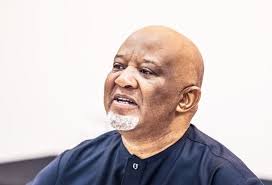
MTN CHAIRMAN CONDEMNS ANTI-IMMIGRANT SENTIMENT IN SOUTH AFRICA
Read Time:2 Minute, 17 Second
By: Fasasi Hammad
South Africa’s economic prospects are deeply connected to the rest of the continent, and the country cannot thrive in isolation from Africa, MTN Group Chairman and former Deputy Finance Minister Mcebisi Jonas has said while strongly condemning xenophobia and anti-immigrant sentiment.
Speaking at the funeral of Zimbabwean-born activist and public servant Thokozani Damasane, Jonas delivered a blunt critique of the belief that expelling foreign nationals would resolve South Africa’s social and economic challenges. He argued that the country’s problems stem largely from governance failures rather than immigration.
“Foreigners can leave tomorrow, but inequality will remain. Foreigners can leave tomorrow, but unemployment will remain. Foreigners can leave tomorrow, but corruption within the police force and political self-interest will still exist,” he said.
Jonas blamed the situation on shortcomings in state institutions, saying poor border management, weak law enforcement and failures in key public services have created conditions that allow politicians to exploit public frustration.
READ MORE…
KADUNA MOB KILLING: AUTHORITIES CONTINUE HUNT FOR REMAINING SUSPECTS
According to him, citizens who bear the consequences of government failures are often susceptible to narratives that wrongly place the blame on foreign nationals. He criticised politicians who, in pursuit of electoral gains, portray immigrants as the source of the country’s challenges.
The MTN chairman also traced modern-day xenophobia and ethnic division to colonial-era policies that deliberately fragmented African societies. He argued that tribalism and identity-based politics continue to fuel discrimination and violence across the region.
Jonas expressed concern that ethnic and tribal identities have increasingly become tools for exclusion, warning that intolerance has evolved beyond nationality to include divisions based on ethnicity and cultural background.
He further criticised liberation movements, including those in South Africa, for perpetuating ethnic loyalties and identity politics, describing ethno-nationalism as a dangerous force that should be rejected.
Reflecting on Damasane’s life, Jonas praised the late activist for embracing South Africa and contributing to its development, saying he became deeply invested in the country’s struggles and aspirations.
He also recalled a conversation in which Damasane suggested that future generations of South Africans might one day consider leaving their homeland in search of better opportunities, a prediction Jonas said now resonates amid persistent inequality, corruption and social exclusion.
Concluding his remarks, Jonas stressed that South Africa’s economic growth and prosperity are inseparable from the success of the African continent.
He said, “South Africa is embedded in Africa, and its future is intertwined with Africa’s future. South Africa is nothing without Africa, just as Africa is nothing without South Africa. We cannot judge people based on where they come from, nor determine their legal status solely by their origin.”


Happy
0 %

Sad
0 %

Excited
0 %

Sleepy
0 %

Angry
0 %

Surprise
0 %
 0
0
 0
0