
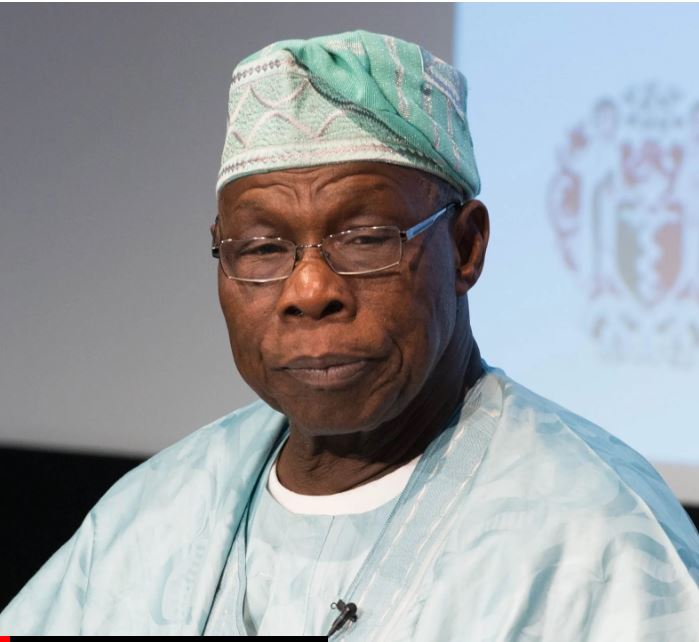
OBASANJO CLAIMS ATIKU SPONSORED IMPEACHMENT PLOT, REJECTS OSOBA’S ALLEGATIONS
Read Time:3 Minute, 34 Second
By: Balogun Ibrahim
Former President Olusegun Obasanjo has dismissed former Ogun State Governor Olusegun Osoba’s account of the political events preceding the 2003 general elections, insisting he never misled the leadership of the Alliance for Democracy (AD).
In a detailed response titled, “Reply to Your Inaccurate Posture: ‘How Obasanjo Deceived Us in 2003’,” Obasanjo described Osoba’s article, published in The Legal Observer on July 20, as inaccurate, incomplete and far removed from the facts.
The former President also alleged that his then Vice-President, Atiku Abubakar, orchestrated an impeachment plot against him during his first term and worked behind the scenes with political actors to frustrate his re-election bid in 2003.
Rejecting Osoba’s claim that he deceived Yoruba political leaders ahead of the election, Obasanjo said he had always been transparent in his dealings.
“I take strong and serious objection to your calling me a deceiver because I deceived nobody. I always presented my case and all issues as I had them and as I understood them, no matter whose ox is gored,” he said.
According to Obasanjo, Osoba was not privy to several high-level discussions between him and the leadership of Afenifere and the Alliance for Democracy, as many of those engagements were handled by senior Yoruba political leaders.
READ MORE…
DELTA POLICE ARREST 22 SUSPECTED DRUG DEALERS, RESCUE TWO MINORS
Defending the outcome of the 2003 governorship elections in the South-West, which saw the Peoples Democratic Party (PDP) win five of the six states previously controlled by the AD, Obasanjo maintained that the election results reflected the will of the electorate.
He argued that the defeated governors genuinely lost their mandates, with the exception of one state where he claimed the results were manipulated.
Obasanjo also alleged that Osoba ran a weak campaign and later apologised to Ogun residents on television for what he described as his perceived arrogance.
Turning to events within his administration, the former President accused Atiku of sponsoring an impeachment move through the then Speaker of the House of Representatives, the late Ghali Na’Abba.
He claimed the plot began while he was away from the office, alleging that the Vice-President invited Na’Abba to a meeting and provided him with N5 million to commence impeachment proceedings.
“From the first day as Vice-President, he raised campaigners for his presidency. On that Friday, he invited Na’Abba and gave him N5 million to begin the impeachment process. It was all noted, recorded and reported to me by my Chief of Staff, a professional intelligence officer,” Obasanjo alleged.
He further claimed that after the impeachment effort failed, Atiku pursued another political arrangement involving the six AD governors, alleging that the plan was to secure their unopposed re-election in 2003 in exchange for their support for Atiku’s presidential ambition in 2007.
Obasanjo insisted he had no involvement in the alleged arrangement and said any suggestion that he promoted the idea was false.
Recalling his return to politics after his release from prison, the former President said he was persuaded by several political groups to contest for office despite initially intending to focus on his family and private life.
He explained that he consulted political leaders across the country’s major regions before eventually joining the PDP, stressing that his approach was driven by national rather than regional interests.
Obasanjo also defended his decision to include members of the Alliance for Democracy in his administration after assuming office in 1999, saying the move was aimed at promoting national unity rather than reflecting political weakness.
He rejected Osoba’s claim that he depended on the support of six AD governors to stabilise his government, arguing that he already enjoyed the backing of the majority of governors, the National Assembly and the Federal Executive Council.
The former President maintained that he had consistently rejected ethnic politics, accusing Afenifere of failing to move beyond regional considerations.
Despite his criticisms, Obasanjo praised Osoba for allocating the land on which the Olusegun Obasanjo Presidential Library was built, describing it as one of the former governor’s most enduring contributions to Ogun State.
He concluded by urging Osoba to embrace humility and preserve personal relationships beyond political differences, noting that political rivalries should never become permanent enmity.


Happy
0 %

Sad
0 %

Excited
0 %

Sleepy
0 %

Angry
0 %

Surprise
0 %
 0
0
 0
0