
TINUBU’S 2027 ALLIANCE WITH WIKE, ADELEKE, SOLUDO SPARKS PARTY TENSIONS
Read Time:14 Minute, 3 Second
By: Fasasi Hammad
The appointment of prominent opposition politicians to President Bola Tinubu’s 2027 re-election campaign council has sparked discontent within the ruling All Progressives Congress (APC) and raised concerns among opposition candidates that the alliances could hurt their electoral chances.
Findings by Sunday PUNCH across several states showed growing dissatisfaction among APC stakeholders in Osun, Anambra and Rivers, where opposition figures have been appointed to coordinate Tinubu’s campaign. Candidates from the affected opposition parties have also expressed fears that the arrangement could undermine their chances in the forthcoming elections.
Some APC members accused the party of sidelining longstanding loyalists in favour of politicians from rival parties. Meanwhile, opposition candidates questioned how their leaders could campaign for Tinubu without compromising their parties’ chances in National Assembly and state legislative elections.
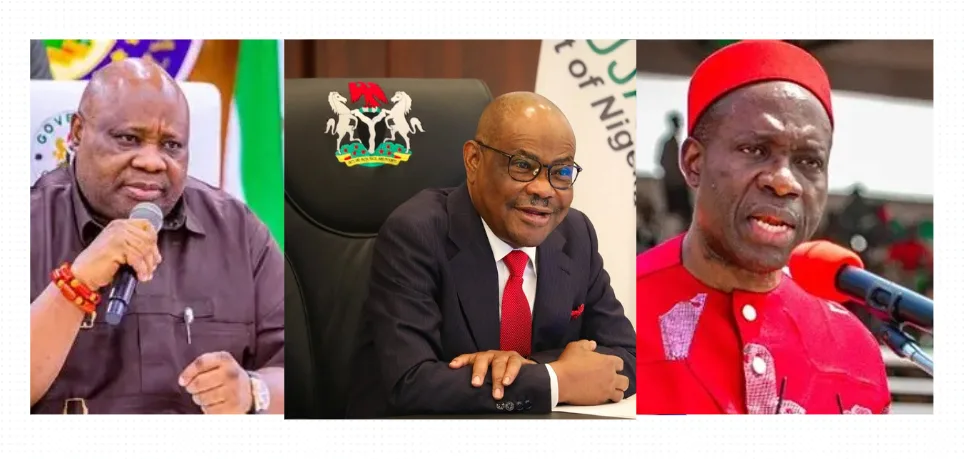
The controversy followed Tuesday’s unveiling of the expanded Tinubu Presidential Campaign Council, which appointed Anambra State Governor, Prof. Chukwuma Soludo; Osun State Governor, Ademola Adeleke; and Minister of the Federal Capital Territory, Nyesom Wike, as campaign coordinators.
Soludo, a member of the All Progressives Grand Alliance (APGA), was appointed coordinator for Anambra State, while Adeleke, who won his governorship election under the Accord Party, was named coordinator for Osun. Wike, a prominent Peoples Democratic Party (PDP) figure, was appointed coordinator for Rivers State and the Federal Capital Territory.
Although the appointments are expected to strengthen Tinubu’s re-election campaign by attracting support from opposition strongholds, they have exposed competing political interests within the APC and opposition parties.
The three politicians are expected to mobilise support for Tinubu, even as their respective parties plan to field candidates against the APC in legislative elections. This has raised concerns about divided loyalties and possible confusion among voters.
The development has also revived memories of the 2003 general elections, when the Alliance for Democracy (AD) supported former President Olusegun Obasanjo’s re-election bid but subsequently lost five of the six South-West states it controlled.
Some senior APC members, who spoke to Sunday PUNCH on condition of anonymity, expressed displeasure over the appointment of opposition figures as state campaign coordinators.
They warned that the decision could weaken the party’s structures and reduce members’ enthusiasm ahead of the elections.
One party source said the appointments had unsettled APC stakeholders in Osun, Rivers and Anambra, where influential members felt overlooked despite their longstanding loyalty to Tinubu and the ruling party.
The source claimed that the Minister of Marine and Blue Economy and former Osun State Governor, Gboyega Oyetola, was unhappy that Adeleke had been appointed to coordinate Tinubu’s presidential campaign in the state.
“This development is unsettling some of our members in the states. For example, the former governor of Osun State, Oyetola, who should ordinarily be the party’s leader in the state, is unhappy that the APC Presidential Campaign Council sidelined him and appointed the incumbent governor, who is a member of the Accord Party, as the state coordinator. Members of the party are also unhappy with the decision,” the source said.
The APC chieftain said similar concerns had emerged in Rivers State, where Wike was appointed campaign coordinator instead of the governor.
“In Anambra State, party leaders who have worked for the President and the APC for years have expressed concerns over the arrangement with the state governor, Charles Soludo, who belongs to the All Progressives Grand Alliance,” the source added.
According to the source, the controversy extends beyond the campaign appointments, as some party members believe opposition politicians are gaining influence at the expense of loyal APC stakeholders.
“This is already causing disaffection and dampening the morale of our members. Some members are no longer willing to give their all because they feel the party does not believe in them.
“They believe the party’s campaign council has overlooked them and instead considered opposition leaders worthy of the appointments. This is causing discontent among party members. How the affected members will work together under this arrangement remains uncertain,” the source stated.
Another APC source warned that the development could weaken grassroots mobilisation if dissatisfied members withdrew from campaign activities.
“There is no way some party members will not feel unhappy about this arrangement. Those who have worked for the party and hoped to be appointed to the campaign council will naturally be disappointed that opposition leaders, who are not even members of the APC, have been given positions they had hoped to occupy.
“This could dampen their morale. My concern is that I hope the President and other APC leaders will find a way to harmonise the arrangement to prevent it from affecting the President himself.
“If party members decide to remain onlookers rather than actively participate in the campaign, it could have serious consequences for the party,” the source warned.
However, Segun Showunmi, a member of the Presidential Campaign Council’s media team, dismissed concerns that the appointments could undermine Tinubu’s re-election bid.
Showunmi said disagreements were inevitable in a large political organisation and expressed confidence that all stakeholders would eventually work together to secure victory for the President.
“All the governors, stakeholders and even opposition leaders appointed as coordinators are expected to deliver their states. All of them are going to work collectively for the President, including APC members at the state, ward and local government levels, where the votes come from. They are going to work in the interest of the President,” he said.
While the appointments have caused discontent within the APC, some opposition candidates fear that their leaders’ support for Tinubu could weaken their chances in legislative elections.
In Anambra State, where APGA has maintained a strong political presence, some party stakeholders warned that Soludo’s participation in Tinubu’s campaign could undermine the party’s identity and electoral prospects.
A senior APGA chieftain in Awka, who spoke anonymously, said the arrangement could confuse voters and weaken the party’s candidates.
“We have laboured to keep APGA as an Igbo identity. If our leader is campaigning for the APC president on the same day our candidates are contesting for Senate under APGA, the electorate will be confused. That is exactly how AD died in 2003,” he said.
An APGA candidate, who also requested anonymity over fears of victimisation, claimed that many candidates were unhappy with the governor’s involvement in Tinubu’s campaign but were reluctant to challenge him publicly.
“Most APGA candidates are not happy and cannot speak out against what the national leader is doing, but they are crying seriously. There is a possibility that they might all lose, even the good candidates among them,” the candidate said.
The candidate also expressed concern that the growing influence of the Nigeria Democratic Congress in Anambra could work against APGA following its alignment with the APC.
An APC chieftain in the state, Bunty Onuigbo, also questioned the political wisdom of the arrangement, alleging that the APGA-led government could use the alliance to strengthen its control of political activities.
However, APGA National Publicity Secretary, Mazi Ejimofor Opara, dismissed suggestions that Soludo’s support for Tinubu would affect the party’s legislative candidates.
He said APGA had already informed its members and supporters that the alliance was limited to the presidential election.
“Our national leader’s involvement in President Tinubu’s campaign council will not affect the chances of our candidates in the NASS elections, as we had already made it clear that APGA remains firmly in support of Tinubu’s re-election and had endorsed him.
“So, while we align with Tinubu’s presidency, in Anambra, it is Tinubu for President, APGA for Senate, House of Representatives, and State House of Assembly,” he said.
Opara explained that the party had communicated its position during a National Executive Committee meeting and Tinubu’s working visit to Anambra on May 8, 2025.
He added that APGA had not fielded a presidential candidate for the 2027 election and expressed confidence that Soludo’s political influence would strengthen the party’s legislative candidates.
Similarly, Anambra APGA Chairman, Ifeatu Obi-Okoye, maintained that the understanding with the APC was restricted to Tinubu’s re-election.
He said the party would field candidates across all three senatorial districts, 11 House of Representatives seats and 30 State House of Assembly constituencies.
“There will be no confusion of any form or manner,” Obi-Okoye said.
In Osun State, Adeleke’s appointment has exposed divisions within the Accord Party, with some leaders warning that his support for Tinubu could undermine the party’s expansion plans and weaken its candidates.
Accord’s presidential candidate, Gbenga Olawepo-Hashim, challenged the assumption that Adeleke’s political influence would automatically translate into votes for Tinubu.
He argued that Osun voters had demonstrated their independence in previous elections and could reject the political preferences of influential leaders.
“Governor Adeleke, the fact that he won his election as governor cannot compel the people of Osun State to vote for President Bola Tinubu,” Olawepo-Hashim said.
He cited the 2011 presidential election, claiming that voters in Osun had previously rejected the political direction of influential leaders and supported their preferred candidate.
“In 2011, when Asiwaju made a deal with Jonathan that he was voting for the PDP instead of Nuhu Ribadu, who was the candidate of his own party, Osun people did not follow him; they voted for Nuhu Ribadu,” he said.
The presidential candidate also criticised what he described as declining party discipline, arguing that political leaders should respect the independence of the platforms through which they attained public office.
“The sanctity of political parties as independent entities is part of the building blocks of our democracy,” he stated.
Ogun State Accord Chairman, Rotimi Oke, also expressed concern that Adeleke’s alliance with Tinubu could weaken the party’s electoral prospects beyond Osun.
Oke said the party had hoped to build on its governorship victory in Osun to expand into Ogun, Lagos and other states, but Adeleke’s appointment had raised doubts about those ambitions.
“The people voted for the Accord Party and not the APC that he is supporting now.
“The victory of the Accord Party in Osun should have an overflow to other states, but that might not happen again since his appointment as a member of the APC presidential campaign committee,” he said.
He disclosed that Accord’s national leadership would meet to assess the implications of Adeleke’s decision and address concerns among dissatisfied members.
However, Accord’s Delta State Chairman and governorship candidate, Fred Obi, defended the participation of opposition figures in Tinubu’s campaign, describing cross-party cooperation as an opportunity to promote national unity.
“Cooperation at the presidential level does not necessarily require the abandonment of legitimate party interests at the legislative level,” Obi said.
Similarly, Accord’s coordinator in Gombe State, Samuel Chuwang, said the party would pursue alliances with other political platforms in areas where it might not field candidates.
He argued that such arrangements could increase the party’s visibility and electoral opportunities rather than weaken its candidates.
Wike’s involvement in Tinubu’s campaign has also generated mixed reactions within the PDP, with some party leaders warning of possible electoral consequences while others insisted the arrangement would not affect their candidates.
In Kaduna State, PDP chieftain and 2027 candidate for the Zonkwa State Constituency, Danjuma Sarki, warned that the participation of Wike, Adeleke and Soludo in Tinubu’s campaign could create challenges for opposition candidates.
“Certainly, the involvement of Wike and his likes, including Adeleke and Soludo, in Tinubu’s re-election campaign will affect the chances of some candidates for legislative seats,” Sarki said.
He argued that the politicians could prioritise Tinubu’s re-election while simultaneously trying to mobilise support for legislative candidates from their respective parties, creating competing political interests.
In Nasarawa State, however, PDP Publicity Secretary, Labaran Shabu, said the party was pursuing a “rainbow coalition” that would allow members to support Tinubu for president while voting for PDP candidates in other elections.
Shabu said the party had already sensitised supporters on how to vote in the presidential and National Assembly elections.
APGA’s Deputy Governorship Candidate in Nasarawa, Ede Osu, also said his party would align with Soludo’s decision to support Tinubu, adding that supporters were being educated on how to vote.
In Edo State, PDP Publicity Secretary, Bob-Manuel Umoru, rejected the idea of sacrificing the party’s electoral interests for political alliances.
Umoru insisted that the PDP remained committed to its presidential candidate and National Assembly candidates.
“There will be no diversion of votes, no conflicting directives, and no unholy political matrimony at the expense of the PDP,” he declared.
In Bauchi State, PDP Secretary, Nazif Likita, maintained that Wike’s support for Tinubu was a personal political decision that would not distract the party from campaigning for its presidential candidate.
Sokoto State PDP Chairman, Hayyatu Tafida, also dismissed fears that the involvement of opposition politicians in Tinubu’s campaign would undermine the party’s candidates.
He said the PDP retained a strong grassroots structure and remained confident of winning legislative seats.
Similarly, Imo State PDP spokesperson, Lancelot Obiaku, said the party’s candidates would rely on their individual records and local support rather than presidential alliances.
“The people will vote their conscience. Our electorate are wise, and we’re educating them,” Obiaku said.
He maintained that supporting Tinubu at the presidential level would not necessarily prevent PDP members from voting for their party’s legislative candidates.
In Abia State, PDP Deputy Governorship Candidate, Elder Abraham Amah, also played down the concerns.
“The ballot paper is not the same, they are two different elections,” he said, adding that party members would be sensitised to vote accordingly.
Jigawa State PDP Publicity Secretary, Umar Kyari, maintained that the party remained united despite the political developments at the national level.
“There is no cause for alarm, what happened at the national level has nothing to do with the Jigawa PDP. Our party in Jigawa remains strong, united, and focused on victory,” Kyari said.
In Benue State, PDP chieftain Ezekiel Adaji and APGA Chairman Ogli Inalegwu similarly dismissed suggestions that the alliances would necessarily hurt legislative candidates. They argued that voters could make independent choices.
The PDP in Kwara State had yet to declare its position on the implications of the alliances for its National Assembly candidates, while its Publicity Secretary, Olusegun Adewara, had been contacted for comment.
In Kano State, the PDP declined to comment amid a lingering leadership crisis that had resulted in the dissolution of its state executive committee. The immediate past chairman, Yusuf Ado Kibiya, also declined to comment when contacted.
Findings also showed that some opposition chapters had yet to endorse the cross-party arrangements.
In Plateau State, Accord Chairman, Rev. Ankara Umoru, said the party had not formally decided to support any presidential candidate.
He maintained that such a decision should be communicated through the party’s National Executive Committee, adding that no directive had been issued and no NEC meeting had been held on the matter.
Similarly, Abia State APGA Chairman, Sunday Onukwubiri, said he was unaware of the reported inclusion of party leaders in Tinubu’s campaign council.
He argued that an individual’s participation in a presidential campaign did not automatically represent a formal decision by the party.
In Bayelsa State, APGA Chairman, Brisibe Kpodoh, said the party would not field candidates for the presidential and National Assembly elections in the state but would participate in the State House of Assembly contest.
He added that APGA would cooperate with other political parties to support candidates it considered credible.
The controversy surrounding Tinubu’s political alliances has revived memories of the 2003 general elections, when the Alliance for Democracy’s support for former President Olusegun Obasanjo’s re-election was followed by significant electoral losses across the South-West.
The AD, which controlled six South-West states after the 1999 elections, did not field a presidential candidate in 2003. Instead, it aligned with Obasanjo, who was seeking a second term on the PDP platform.
However, the party lost five of its six governorship seats, retaining only Lagos State, where Tinubu was governor.
Those defeated included Lam Adesina in Oyo, Bisi Akande in Osun, Olusegun Osoba in Ogun, Niyi Adebayo in Ekiti and Adebayo Adefarati in Ondo.
Although the defeats were attributed to several factors, including internal divisions, local political grievances and disputes over the conduct of the elections, the experience has remained a warning for opposition parties considering alliances with presidential candidates from rival platforms.
Some opposition stakeholders fear that the arrangements ahead of 2027 could produce similar consequences, particularly where party leaders campaign for Tinubu while their candidates contest against APC candidates in other elections.
Others, however, argue that political circumstances have changed and that voters are informed enough to support candidates from different parties in separate contests.


Happy
0 %

Sad
0 %

Excited
0 %

Sleepy
0 %

Angry
0 %

Surprise
0 %
 0
0
 0
0