
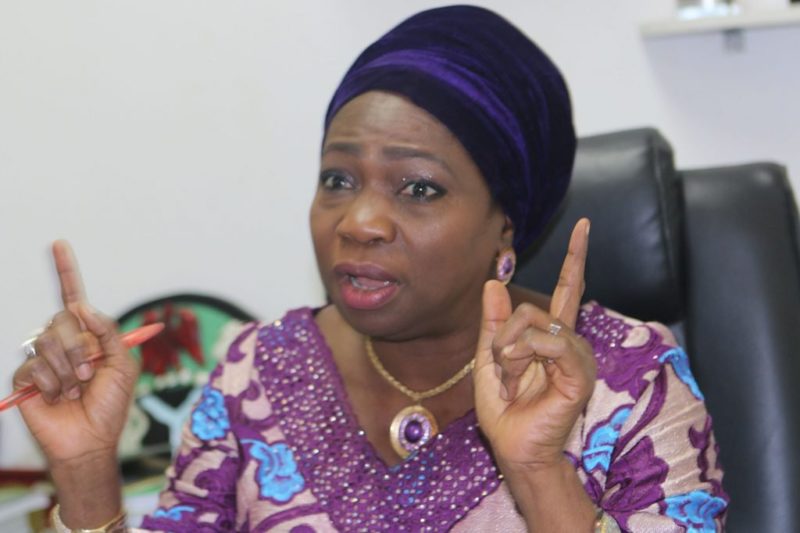
DABIRI-EREWA DEFENDED AGAINST RESIGNATION CALLS OVER FALSE “MONKEY” REMARK CLAIM
Read Time:2 Minute, 26 Second
By Aishat Momoh. O.
Calls for the resignation of Hon. Abike Dabiri-Erewa, Chairman/CEO of the Nigerians in Diaspora Commission (NiDCOM), have been described as baseless and rooted in misinformation, following an opinion piece by journalist Steve Osuji titled “Abike Must Resign.”
Critics insist that Dabiri-Erewa never described Igbos or any ethnic group as “monkeys” or “baboons,” dismissing the allegation as a fabrication deliberately weaponized for ethnic sensationalism.
THE FACTS
The controversy stems from a social media exchange in which an anonymous user repeatedly insulted Dabiri-Erewa, calling her “Mother Ape.” Another account responded with a gorilla analogy, to which Dabiri-Erewa replied with emojis directed at the abuser—not at any ethnic group. Misrepresentation of this exchange, observers argue, gave rise to the false narrative that she mocked the Igbo community.
HER RECORD WITH NDIGBO AND OTHER NIGERIANS
Over the years, Dabiri-Erewa has intervened in several crises affecting Nigerians abroad, including:
Securing the release of South-East youths Alexander Udoma and Eboh Kenneth Chinedu stranded in Bosnia-Herzegovina.
Defending Nigerian traders, many of them Igbos, in Ghana, earning praise from the Nigerian Union of Traders Association Ghana in 2020.
Coordinating evacuation of Nigerian students, including many from the South East, during the Sudan crisis.
Leading interventions during xenophobic attacks in South Africa in 2019, which ensured Nigerian students were evacuated and compensated.
Overseeing the rescue of more than 200 trafficked girls from Ghana, 163 of whom were from the South East.
Prominent Igbo leaders in the diaspora, including Prof. Jude Osakwe (NIDO Africa), Chibuzor Ugochi (NIDO Europe), and Chief Callistus Eleziowua (NIDO Ghana), have also commended her detribalized and humane approach to leadership.
OSUJI’S CREDIBILITY QUESTIONED
Commentators have also questioned Osuji’s credibility, recalling his suspension by the Nigerian Guild of Editors (NGE) in July 2025 for breaching ethics at the Guild’s Biennial National Convention. The NGE described his conduct as unprofessional and damaging to journalistic integrity.
THE DANGER OF FALSE NARRATIVES
Analysts warn that turning social media disputes into ethnic controversies risks deepening divisions in Nigeria. Describing Dabiri-Erewa as running an “anti-Igbo script” was dismissed as unfair and unfounded, given her decades of public service across broadcasting, lawmaking, and diaspora affairs.
A CALL FOR FAIRNESS
Observers urge public discourse to remain anchored in truth rather than sensationalism. As the Ohanaeze Ndigbo Youth Council once noted after her intervention in Ghana:
“We may disagree with government policies but we cannot ignore the fact that Mrs Dabiri-Erewa has stood up for Igbo traders time and again. She has shown empathy and courage when it mattered most.”
BOTTOM LINE
Supporters argue that Dabiri-Erewa does not owe the public a resignation over what they describe as a falsehood. Instead, they insist she deserves recognition for consistently defending Nigerians Igbo, Yoruba, Hausa, and others across the world.
They conclude that history, not social media outrage, will vindicate her.


Happy
0 %

Sad
0 %

Excited
0 %

Sleepy
0 %

Angry
0 %

Surprise
0 %
 0
0
 0
0