
2026 GLOBAL FORENSICS SUMMIT: LAGOS CJ CALLS FOR SCIENCE-DRIVEN CRIMINAL INVESTIGATIONS IN NIGERIA
Read Time:3 Minute, 29 Second
By Aishat Momoh. O.
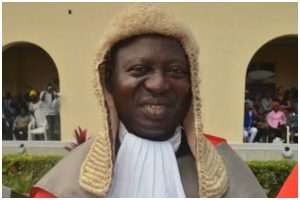
The Chief Judge of Lagos State, Justice Kazeem Olanrewaju Alogba, has called for the adoption of science-driven criminal investigations in Nigeria, stressing that modern justice administration must rely more on forensic evidence, cyber intelligence and data analytics to effectively combat evolving crimes.
Justice Alogba made the call on Tuesday at the opening of the 2026 Global Forensics Summit held in Lagos and organised by the International Academy of Forensics in collaboration with The Guardian Newspaper Nigeria.
Represented by Justice Olutoyin Atinuke Ipaye, the Chief Judge described justice as the foundation of sustainable national development, noting that no nation can attain lasting peace, economic growth or democratic stability without a justice system that enjoys public trust.
He said criminal investigations can no longer depend solely on conventional methods, especially as technology continues to transform the nature of criminal activities.
According to him, the administration of justice extends beyond the courts to include law enforcement agencies, correctional institutions, legal practitioners and all institutions responsible for maintaining law and order.
Justice Alogba identified the justice system’s contributions to nation-building to include the promotion of rule of law, protection of fundamental rights, enhancement of peace and social stability, combating corruption and crime, encouraging investment, and strengthening democratic governance.
He, however, acknowledged persistent challenges confronting Nigeria’s justice sector, including delays in court processes, inadequate funding, corruption and limited public awareness of legal rights.
The Chief Judge urged stronger collaboration among judges, lawyers, investigators, policymakers and forensic experts to ensure justice remains accessible, transparent, efficient and impartial.
Declaring the summit open, Lagos State Governor Babajide Sanwo-Olu said the state government is making strategic investments in forensic science and digital security to bridge the evidence gap that continues to weaken criminal prosecutions.
Represented by the Permanent Secretary in the Lagos State Ministry of Justice, Mrs Aderinsola Olanrewaju, the governor said thousands of criminal cases across Nigeria fail to secure convictions not because of a lack of suspects or witnesses, but due to insufficient scientifically verifiable evidence.
“The gap between what investigators uncover and what prosecutors can prove is the forensic gap. Closing that gap is precisely why this summit matters,” Sanwo-Olu said.
He highlighted Lagos’ investments in justice infrastructure, including the establishment of West Africa’s first DNA and Forensic Centre in 2017, an ISO/IEC 17025-accredited crime laboratory that has supported investigations involving homicide, sexual offences and human remains identification.
Sanwo-Olu disclosed that the second phase of the project, focused on toxicology and forensic chemistry, is currently underway and expected to significantly improve investigative capacity.
The governor also listed reforms introduced under the Administration of Criminal Justice Law, including virtual court proceedings, the Lagos Criminal Information System and the prohibition of media parade of suspects.
He further revealed that Lagos became the first sub-national government in Nigeria to establish a fully operational Cybersecurity Operations Centre for real-time cyber threat monitoring and response.
“The crime scene of the 21st century is often a server, a mobile device or a financial transaction rather than a physical location,” he said.
Speaking earlier, Distinguished Fellow of the International Academy of Forensics and Emeritus Professor at the University of Lagos, Dele Olowokudejo described the summit as a strategic platform for advancing innovation and collaboration across forensic science, criminal intelligence and justice administration.
Delivering the lead paper titled Dissecting the Interaction between Forensic Investigation and Administration of Justice, retired judge and legal scholar Alaba Omolaye-Ajileye emphasised that forensic investigations must operate within constitutional safeguards and legal frameworks.
He explained that Nigeria’s forensic system is anchored on laws including the Constitution, Evidence Act, Administration of Criminal Justice Act, Police Act and Cybercrime Act.
According to him, the Evidence Act 2011 resolved longstanding uncertainty around electronic evidence by expressly recognising its admissibility under Section 84, provided statutory conditions are met.
He added that the increasing use of digital forensics and forensic accounting has become essential in tackling cybercrime, financial fraud and tracing illicit financial transactions.
Participants at the summit were urged to strengthen professional collaboration and uphold global standards in evidence collection, preservation and analysis to improve public confidence in Nigeria’s justice system.


Happy
0 %

Sad
0 %

Excited
0 %

Sleepy
0 %

Angry
0 %

Surprise
0 %
 0
0
 0
0