
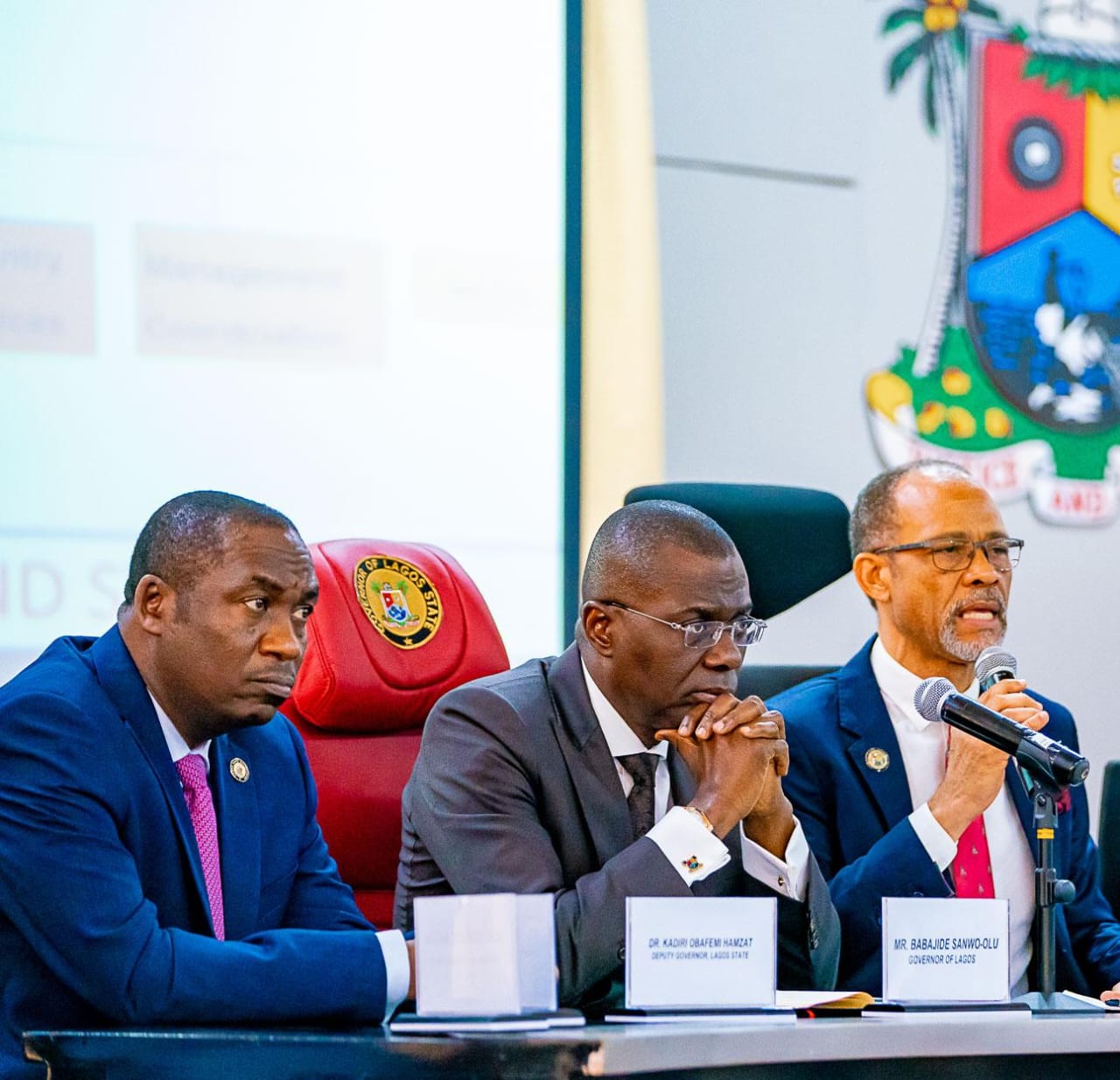
LAGOS HEALTHCARE UNDER PRESSURE AS POPULATION GROWTH STRAINS PUBLIC FACILITIES
Read Time:4 Minute, 22 Second
By: Fasasi Hammad
Unlike many other states in Nigeria, virtually every sector in Lagos is under enormous pressure due to the state’s rapidly growing population. Every day, thousands of people from different parts of Nigeria, Africa and the world move to Lagos in search of better opportunities.
This steady influx continues as Governor Babajide Sanwo-Olu’s administration works to expand the state’s economy and create more opportunities for residents and newcomers, particularly in the commercial megacity.
However, the economic growth that has made Lagos one of Africa’s largest economies, second only to Cairo, Egypt, has also placed significant pressure on the city’s infrastructure. Like bees drawn to a hive, more people continue to flock to Lagos in pursuit of economic opportunities.
Without special allocations from the Federal Government to support the constant maintenance and upgrading of its infrastructure, Lagos faces considerable challenges. Nevertheless, the situation is not entirely hopeless, as the state government continues to explore innovative ways to maximise available resources. These sustained efforts have helped keep critical infrastructure functioning despite mounting pressure from various directions.
Recently, some residents have expressed dissatisfaction with the state’s healthcare sector following isolated incidents at one or two public health facilities. Like education, transportation and housing, healthcare is experiencing significant strain. Despite the establishment of additional medical facilities, the pressure persists, largely because of the growing population and the widespread emigration of healthcare professionals from Nigeria.
The limited number of available doctors and other medical personnel are consequently burdened with heavy workloads, making the situation increasingly challenging.
Many Lagos residents understand these realities, but critics, including some who do not use public healthcare facilities, often fail to appreciate the scale of the challenges.
Although the World Health Organisation (WHO) has clarified that there is no single doctor-to-patient ratio suitable for every country, given differences in healthcare organisation, funding and workforce capacity, the Nigerian Association of Resident Doctors (NARD) estimates that Nigeria has approximately one doctor for more than 9,000 patients. The ratio in Lagos could be even more strained because of its rapidly expanding population.
An estimated 15,692 Nigerian-trained medical doctors currently practise in the United Kingdom, making Nigeria the third-largest source of foreign-trained doctors there after Pakistan and India. The United States is also reported to have about 20,000 Nigerian doctors, while thousands more work in Canada, France and other European countries.
These figures highlight the scale of the brain drain affecting Nigeria’s healthcare system, further weakening the country’s ability to strengthen an already struggling sector.
Without continued investment by the Sanwo-Olu administration in healthcare infrastructure, hospital expansion, modern medical equipment and professional training, the state’s health system would face even greater difficulties in meeting residents’ needs.
The government has committed substantial resources to upgrading general hospitals across Lagos. One notable project is the newly constructed Massey Street Children’s Hospital, built on a 4,000-square-metre site to improve access to quality healthcare for children. The facility is described as the largest children’s hospital in West Africa.
The newly developed Ojo General Hospital is another addition to the state’s healthcare infrastructure. Its strategic location is expected to improve access to medical services for residents of Ojo and neighbouring communities, including those along the Badagry axis.
The administration has also commenced construction of a major psychiatric healthcare facility in Epe, marking a significant investment in mental health services and specialised treatment.
In addition, facilities at the Lagos State University Teaching Hospital (LASUTH) in Ikeja have continued to be developed and upgraded to strengthen the institution’s capacity to provide advanced and specialised medical care.
Earlier projects included extensive renovation and upgrading works at the general hospitals in Somolu, Odan-Lagos and Isolo, as well as the Ebute-Meta and Ketu-Ejinrin health centres, among others.
The government also established 10 triage and oxygen centres and activated COVID-19 oxygen treatment and sample collection centres. Furthermore, approximately one million Lagos residents have been covered under the state’s health insurance scheme, alongside other investments aimed at improving healthcare delivery.
Investment in the sector has also extended to human-capacity development and professional training for healthcare workers. These initiatives demonstrate that healthcare improvement involves more than constructing hospitals; it also requires developing skilled personnel and strengthening service delivery.
Under the supervision of the Commissioner for Health, Professor Akinola Abayomi, Lagos has reportedly recorded considerable progress in healthcare development during the seven years of the Sanwo-Olu administration.
Nevertheless, the challenges confronting healthcare in a densely populated and cosmopolitan state such as Lagos should not automatically be interpreted as evidence of government inaction.
Rather than resorting to sweeping and destructive criticism that overlooks the administration’s efforts, residents should identify specific shortcomings, provide evidence and draw the government’s attention to areas requiring improvement.
Criticism should be objective, constructive and made in good faith.
When concerns are presented in this manner, Sanwo-Olu, Abayomi and other senior officials, who the writer says have demonstrated responsiveness on previous occasions, can be better positioned to address them.
As Indian Prime Minister Narendra Modi once stated, “People’s participation is the essence of good governance.”
Governance, therefore, should be viewed as a shared responsibility involving both the government and the people it serves.
AUTHOR ACKNOWLEDGED: STEVE OMOLALE.


Happy
0 %

Sad
0 %

Excited
0 %

Sleepy
0 %

Angry
0 %

Surprise
0 %
 0
0
 0
0