
NIGERIA, 14 OTHER COUNTRIES ELECTED TO UN HUMAN RIGHTS COUNCIL
Read Time:2 Minute, 18 Second
Agency report
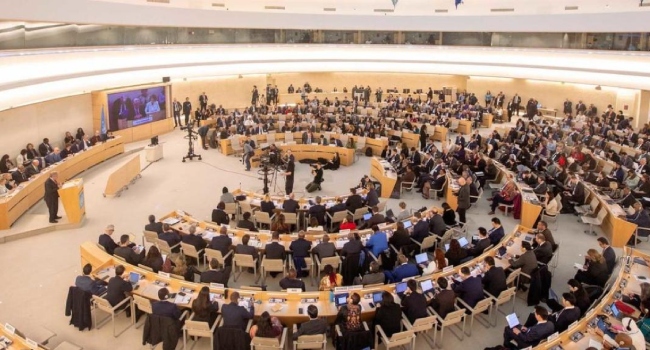
Nigeria has been elected to the United Nations Human Rights Council for the 2027–2029 term after securing 172 votes in an election conducted by the UN General Assembly on Tuesday.
The country will serve on the 47-member council alongside 14 other newly elected members from January 1, 2027, to December 31, 2029.
“In a single round of voting, the Assembly elected Brazil, Burundi, Dominican Republic, Germany, Ghana, Ireland, Japan, Jordan, Kuwait, Nepal, Nigeria, Republic of Moldova, Ukraine, Uruguay, and Zambia to the Council for the next three years, with their terms commencing on 1 January 2027,” the UN wrote on its website.
“They will replace 15 members whose terms expire on 31 December.”
FG Hails Nigeria’s Election
Nigeria Elected to the United Nations Human Rights Council for the term 2027-2029 https://t.co/QoCVPZ15Pi
— Ministry of Foreign Affairs, Nigeria (@NigeriaMFA) October 14, 2026
Reacting to the development, the Federal Government described Nigeria’s election to the council as a reflection of the “international confidence in its commitment to advancing human rights and improving human rights conditions across the world”.
In a statement by its spokesman, Oluwafemi Adeniyi, the Ministry of Foreign Affairs expressed the government’s appreciation to UN member states for supporting Nigeria’s candidature.
“Nigeria reaffirms its commitment to sustaining dialogue, cooperation and mutual respect with Member States and looks forward to working closely with Council Members in advancing the mandate of the Council and strengthening international efforts towards the promotion and protection of human rights,” the ministry’s statement read in part.
The Federal Government reiterated its commitment to constructive multilateral engagement and supporting initiatives that uphold human dignity, justice and respect for fundamental freedoms.
Nigeria’s previous membership of the UN Human Rights Council ended in 2020. In February, the country declared its interest in securing another seat, expressing its commitment to cooperating with the council’s mechanisms.
“We’re also strengthening accountability through ongoing reforms and regional and international cooperation to ensure international human rights and humanitarian standards are mainstreamed into all internal security operations with the primary focus of protecting civilians,” then-Minister of Foreign Affairs Yusuf Tuggar said.
“Nigeria remains resolute in its commitment to freedom of religion and belief. We view the peaceful coexistence of all faith communities as the essential foundation of our national unity. Nigeria remains resolute in ensuring a society where every citizen, regardless of creed or tribe, stands protected under the shield of justice.”
Established in 2006, the UN Human Rights Council is responsible for promoting and protecting human rights worldwide. It “renews a third of its membership every year across the organisation’s five regional groupings on an equitable basis.”
Each council member serves a three-year term, renewable only once.


Happy
0 %

Sad
0 %

Excited
0 %

Sleepy
0 %

Angry
0 %

Surprise
0 %
 0
0
 0
0