
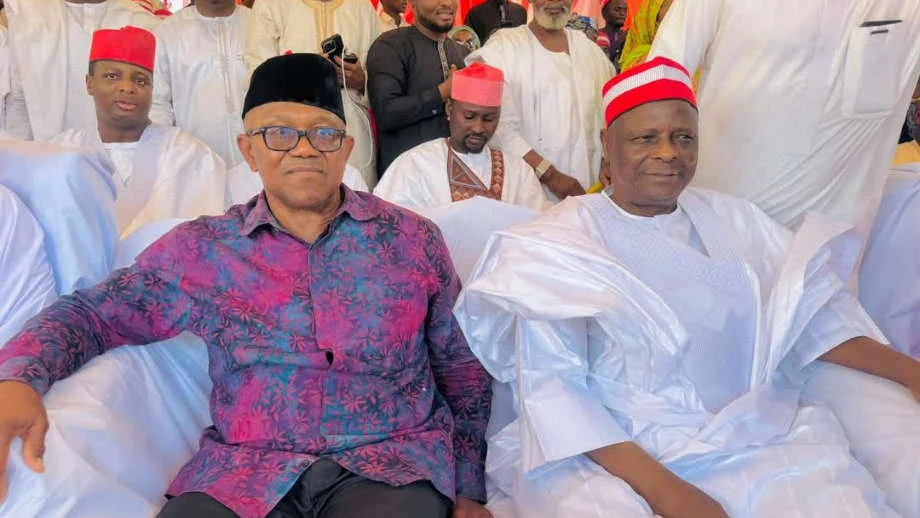
2027: NDC CHAIRMANSHIP CRISIS DEEPENS OVER OBI-KWANKWASO CAMPAIGN STRUCTURE
Read Time:4 Minute, 45 Second
By: Fasasi Hammad
State chairmen of the Nigeria Democratic Congress have reaffirmed the authority of the party’s formal structures amid disagreements over the activities of the Obi-Kwankwaso Movement ahead of the 2027 general elections.
While some state chairmen accused the movement of sidelining established party structures, others said there was no disagreement in their states and that steps were being taken to accommodate the various support groups.
The NDC leaders, who spoke with Sunday PUNCH across 10 states, described the Obidient and Kwankwasiyyah movements as support groups and maintained that they could not establish parallel campaign structures or carry out activities in the party’s name without approval.
The disagreement followed concerns over the relationship between the NDC’s formal structures and the support groups mobilising for the party’s presidential candidate, Peter Obi, and his running mate, Rabiu Kwankwaso.
The dispute intensified after the NDC, on September 19, disowned a 59-member Presidential Campaign Council announced by the Obi-Kwankwaso Movement, also known as the OK Movement. The party said the structure had not been authorised by its National Working Committee.
The NDC subsequently warned that no individual, candidate or support group could constitute or announce a campaign council or structure in the party’s name without approval from the National Working Committee.
The NDC National Leader, Seriake Dickson, also criticised the activities of support groups affiliated with the party, urging them not to operate as parallel structures or compete with the party for control.
However, the Director-General of the OK Movement, John Ughulu, rejected the position, insisting that the movement would not surrender or collapse its existing structures into the NDC.
Some NDC state chairmen rejected the OK Movement’s position, maintaining that support groups could not override the party’s formal structures.
The NDC Chairman in Osun State, Charles Omidiji, said no movement or group was superior to the party.
He said candidates could organise separate campaigns provided they obtained the party’s approval and involved the relevant party structures.
Omidiji argued that campaign activities conducted without the involvement of the party could create problems for the party, which would ultimately be held responsible for matters arising from such activities.
He maintained that the party was responsible for the composition and supervision of campaign structures.
According to him, support groups could campaign independently on a limited basis but were expected to work with and refer back to the party structure.
Omidiji added that the NDC was working with various support and interest groups to develop a comprehensive campaign structure.
The Ogun State NDC Chairman, Femi Alao, similarly said no movement could conduct a campaign without the approval of the party.
He said there was no dispute between the NDC and the OK Movement in the state, stressing that the party was working towards bringing all interest groups together.
According to Alao, the party had established a mechanism to accommodate the various groups and ensure a common front.
The Kano State NDC Chairman, Hussaini Meriga, said the Obi-Kwankwaso Movement must comply with the party’s rules and regulations.
He described the movement as operating under the NDC and said its structures were subject to the party’s authority.
However, the NDC Chairman in Anambra State, David Chukwudifu, alleged that the Obidient Movement had sidelined him and the 326 ward chairmen in the state.
Chukwudifu said he was relying on the party’s national leadership to intervene and resolve the disagreement.
He also alleged that the situation had affected political activities in the state.
In Edo State, however, NDC Chairman David Olukoga described the Obi and Kwankwaso movements as support groups operating alongside other interest groups within the party.
He said the party would soon inaugurate its campaign structure and include the various groups.
The NDC National Vice Chairman for the South-East, Teddy Obey, called on party stakeholders and the OK Movement to work together ahead of the 2027 election.
Obey said it would not be beneficial for candidates or support groups to operate separately from the party.
He said the NDC was working with both movements to establish a common front while reiterating the party’s position that the groups were support organisations.
The National Convener of the OK Movement, Jackie Wayas, rejected allegations that the movement was operating independently of the party.
Wayas said the movement remained committed to the NDC and its presidential ticket.
She said the group was working to promote the party and would support whatever the party was doing to advance its electoral campaign.
Meanwhile, the NDC Chairman in Adamawa State, Ibrahim Bebetu, dismissed reports of a division between the party and the OK Movement.
Bebetu said the campaign structure to be released by the national headquarters would accommodate all interest groups.
The NDC Chairman in the Federal Capital Territory, Haruna Pai, also said the disagreement had been resolved after a meeting with leaders of the Kwankwasiyyah and Obidient movements in Abuja.
In Plateau State, the NDC created a Directorate of Support Groups to coordinate the various support organisations and promote a common front.
The state chairman, Ndam Solomon, said the directorate would screen and register the support groups under a single structure.
The NDC chapters in Enugu and Akwa Ibom also said they were working harmoniously with the Obidient and OK movements.
The Niger State NDC Secretary, Joseph Mamman, similarly described the relationship between the party and the Obidient Movement in the state as cordial.
The development comes as the NDC works towards inaugurating its official Presidential Campaign Council. The party has said Peter Obi and Rabiu Kwankwaso have been given the opportunity to nominate key officers for the council in consultation with the party leadership.


Happy
0 %

Sad
0 %

Excited
0 %

Sleepy
0 %

Angry
0 %

Surprise
0 %
 0
0
 0
0