
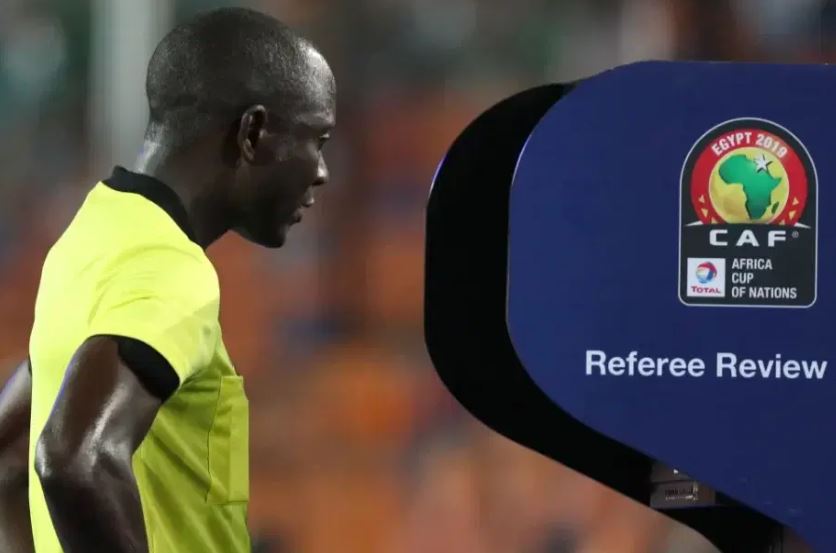
AFCON QUALIFIERS: WHY CAF DOES NOT USE VAR TECHNOLOGY DESPITE CONTROVERSIAL DECISIONS
Read Time:2 Minute, 33 Second

By ‘Balogun Ibrahim
The absence of Video Assistant Referee (VAR) technology in the Africa Cup of Nations (AFCON) qualifiers has come under scrutiny following Ghana’s 2-0 defeat to Côte d’Ivoire in Bouaké on Thursday.
Ghana coach Carlos Queiroz was particularly unhappy with the decision that resulted in Côte d’Ivoire’s second goal after referee Mustapha Ghorbal awarded the hosts a penalty for Abdul Fatawu Issahaku’s challenge on Malick Yalcouyé.
Franck Kessié converted the spot kick to double Côte d’Ivoire’s lead, but the decision became a major talking point after the match. After reviewing television replays, Queiroz described the penalty decision as “a joke.”
READ MORE…
EDO IJAWS ACCUSE STATE GOVT OF MARGINALISATION, DEMAND THREE DEVELOPMENT CENTRES
Questions over VAR also emerged during Madagascar’s match against Nigeria, with some fans suggesting that Madagascar’s opening goal could have been reviewed if the technology had been available. However, subsequent replays indicated that Ehsan Kari was not offside.
The incidents have renewed debate over why VAR is not used during AFCON qualifying matches.
Why VAR is not used in AFCON qualifiers
The absence of VAR from AFCON qualifiers is not simply a decision to avoid the technology. Its deployment requires significant technical and operational infrastructure.
Stadiums need appropriate camera systems, communication facilities, trained VAR officials and other equipment to support the review process. Ensuring that all these requirements are available across every venue used during a continental qualifying campaign can be challenging.
Unlike the AFCON finals, which are held at a limited number of selected stadiums, the qualifiers involve teams from all 54 CAF member associations and are played at venues with varying levels of infrastructure.
The Stade de la Paix in Bouaké, where Ghana played Côte d’Ivoire, is capable of hosting VAR operations. The stadium was used during the 2023 Africa Cup of Nations, when VAR was deployed throughout the tournament.
However, the bigger challenge for CAF is maintaining the same technological and operational standards across all qualifying venues.
CAF’s stadium regulations set different requirements for different competitions, meaning venues approved for qualifiers may not necessarily meet all the standards required for the AFCON final tournament.
Where a country does not have a stadium approved for a particular competition, CAF can require its home matches to be played at another approved venue, including outside the country.
The wider use of VAR during AFCON qualifiers therefore involves questions of consistency as well as technology. If VAR were available at some qualifying venues but unavailable at others, teams could face different officiating conditions depending on where their matches are played.
For VAR to be introduced across the entire AFCON qualifying campaign, CAF would need to ensure that participating venues have the necessary infrastructure, trained personnel and operational systems to support the technology.
Ultimately, the challenge is achieving uniformity, as not every country currently has the infrastructure required to operate VAR. This makes it difficult for CAF to have VAR at some qualifying stadiums while leaving it unavailable at others.


Happy
0 %

Sad
0 %

Excited
0 %

Sleepy
0 %

Angry
0 %

Surprise
0 %
 0
0
 0
0