
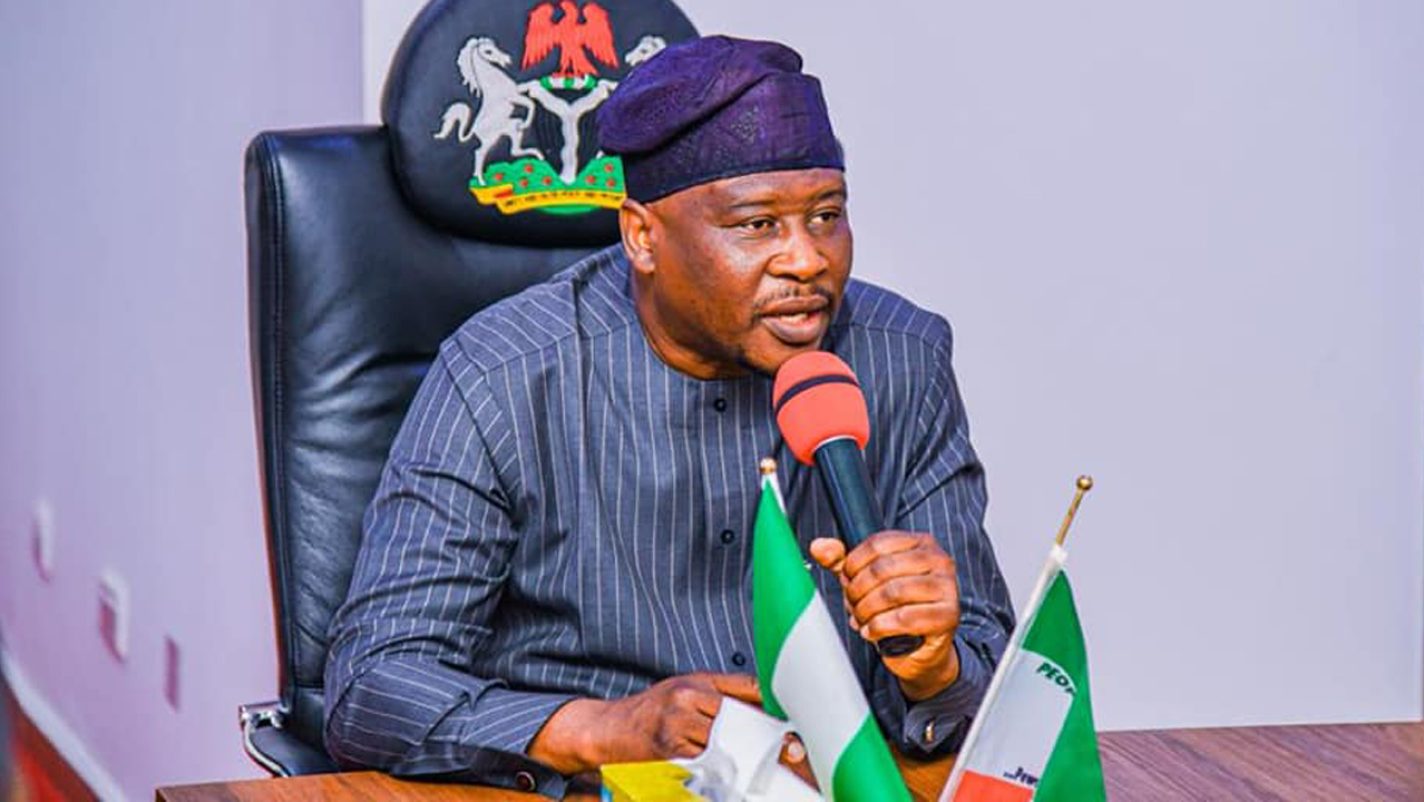
HOW FINTIRI’S DEFECTION COULD INFLUENCE THE 2027 RACE IN ADAMAWA
Read Time:4 Minute, 6 Second
By: Fasasi Hammad
Long regarded as a stronghold of the Peoples Democratic Party, Adamawa State now finds itself at the centre of shifting political dynamics following Governor Ahmadu Fintiri’s decision to leave the party that shaped his career and join the All Progressives Congress.
With the 2027 governorship election approaching, his defection—framed as a move driven by “developmental pragmatism” and “political sagacity”—raises a critical question: will the realignment strengthen the APC’s foothold in the state, or could it disrupt the party’s existing structures and trigger fresh political tensions?
Many political observers in Adamawa describe Fintiri as one of the state’s most fortunate political figures. His rise began in 2007 when, despite limited popularity and no influential political backer, he secured a seat in the Adamawa State House of Assembly under the then-unpopular Action Congress, now the APC. In a surprise victory, he defeated a sitting PDP lawmaker backed by the state’s then governor, Boni Haruna.
Fintiri later gained national attention as Speaker of the Adamawa State House of Assembly when he led the impeachment of former Governor Murtala Nyako over alleged financial misconduct. He further enhanced his political standing after assuming office as acting governor and clearing three months of salary arrears owed to workers within a single month.
READ MORE…
ALCARAZ DOMINATES TO REACH INDIAN WELLS THIRD ROUND WHILE DJOKOVIC EDGES THROUGH
By 2019, now a member of the PDP, Fintiri contested the governorship election and defeated incumbent Governor Jibrila Bindow of the APC.
His re-election in 2023, however, came amid intense political controversy. APC candidate Hajiya Aisha Binani declared herself the winner while voting was still ongoing in some local government areas. Yet prominent APC figures—including National Security Adviser Nuhu Ribadu, former Vice President Atiku Abubakar, former First Lady Aisha Buhari, and many party supporters—ultimately rallied in defence of Fintiri.
Relations between Fintiri and Atiku later deteriorated. Reports suggested the governor accused the former vice president of interfering in state affairs despite having appointed Atiku’s son, Adamu Atiku, as Commissioner for Works and Energy Development.
The tension escalated when Fintiri aligned politically with the camp of the Minister of the Federal Capital Territory, Nyesom Wike, a move widely interpreted as a direct challenge to Atiku’s presidential ambitions. The governor subsequently distanced himself from Atiku’s activities in the state and stopped the customary Sallah homage visits.
In another strategic move, Fintiri appointed one of Atiku’s loyalists, Ibrahim Mijinyawa, as Commissioner for Local Government and Chieftaincy Affairs, weakening Atiku’s influence as several of his supporters began accepting roles in the state government.
Atiku later dismissed Fintiri’s defection as being motivated by personal interests rather than the welfare of Adamawa State. However, the former vice president himself had recently moved to the African Democratic Congress after several previous party switches in pursuit of his presidential ambitions.
Political analysts say Atiku’s influence in his home state has waned significantly, particularly after the PDP in Adamawa reportedly stopped inviting him to key stakeholder meetings.
Meanwhile, efforts to lure Fintiri into the APC had reportedly begun years earlier. Former President Muhammadu Buhari had praised him with a “Best Infrastructure Governor” award, a gesture widely seen as an attempt to build political goodwill. After Buhari’s death, President Bola Tinubu reportedly continued the courtship by presenting Fintiri with a similar recognition.
In 2024, the APC Publicity Secretary in Adamawa, Mohammed Abdullahi, confirmed that the party was in discussions with the governor about a potential defection ahead of the 2027 elections. The APC National Vice Chairman for the North-East, Mustapha Salihu, later reaffirmed the party’s interest in bringing him into its fold.
After two years of speculation, the governor officially announced his defection last Friday during a statewide broadcast from Government House.
Addressing residents, Fintiri said the decision to join the APC—along with members of his cabinet, PDP officials, and supporters—was taken in the long-term interest of Adamawa State.
He explained that the move followed extensive consultations and was aimed at aligning the state more closely with the federal government to accelerate development. According to him, the shift would enable Adamawa to better benefit from national programmes, including President Tinubu’s Renewed Hope Agenda.
Fintiri described the move as a strategic political calculation rather than a personal ambition, arguing that aligning with the ruling party at the centre would help the state secure greater developmental opportunities.
Despite the significance of the defection, analysts warn that it does not automatically guarantee APC dominance in Adamawa. The state’s political history suggests that party alignments alone do not determine electoral outcomes.
For instance, in 2015, former President Goodluck Jonathan’s decision to hand the PDP governorship ticket to Nuhu Ribadu failed to deliver victory for the party in the state, demonstrating the unpredictable nature of Adamawa’s political landscape.


Happy
0 %

Sad
0 %

Excited
0 %

Sleepy
0 %

Angry
0 %

Surprise
0 %
 0
0
 0
0