

INEC CHAIRMAN: “WE MUST BE FULLY PREPARED PHYSICALLY, PSYCHOLOGICALLY, MATERIALLY AND INFRASTRUCTURALLY FOR 2027”
Read Time:2 Minute, 26 Second
By:Tajudeen Aminat
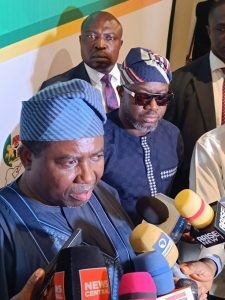
The Chairman of the Independent National Electoral Commission (INEC), Prof. Joash Amupitan, SAN, has commenced a zonal assessment of the Commission’s level of preparedness in the Southwest ahead of the 2027 General Election.
The exercise is aimed at evaluating INEC’s administrative, human and logistical readiness and identifying areas that require attention before the elections.
Speaking during an engagement with Electoral Officers and other officials in the zone, Amupitan said the assessment marked the beginning of a series of zonal engagements through which the Commission’s leadership would directly evaluate its preparedness for the forthcoming elections.
He said INEC had now shifted its focus entirely to preparations for the 2027 General Election, with the Presidential and National Assembly elections scheduled for January 16, 2027, followed by the Governorship and State Houses of Assembly elections.
According to the INEC chairman, the decision to adopt a zonal assessment approach instead of the traditional state-by-state engagements was necessitated by the limited time remaining before the elections.
He said the exercise would enable the Commission’s leadership to engage directly with Resident Electoral Commissioners, Electoral Officers and other officials responsible for implementing its policies and decisions at the state and local government levels.
“It is very critical for me to go and see for myself and be sure that we are physically, psychologically, materially and infrastructurally ready for the 2027 General Election,” Amupitan said.
The chairman stressed the importance of INEC’s administrative structure to the successful conduct of credible elections, describing Electoral Officers and other officials at the local government level as the Commission’s “foot soldiers.”
He explained that the officials were responsible for translating policies and decisions made at the national level into effective implementation at the grassroots.
Amupitan noted that Electoral Officers operate within a chain of responsibility under the supervision of Resident Electoral Commissioners, who report directly to the Commission.
He acknowledged that the administrative aspect of election management had not always received adequate attention but stressed that every component of the electoral structure was essential to the success of the process.
“Their role has always not been emphasised before now. But we know that if the chain is broken, then the election will run into crisis,” he said.
The INEC chairman said the readiness assessment would cover various aspects of the electoral process, with the aim of identifying and addressing potential operational gaps ahead of the elections.
He added that the Commission was engaging its officials and relevant partners to clarify responsibilities and improve coordination, particularly in the areas of administration, staff management and implementation of its decisions.
Amupitan assured participants that INEC would continue to address each component of the election preparations systematically to minimise operational challenges and facilitate a smooth electoral process.
“We want to address every chain, every aspect of the election, and ensure that we have a seamless general election in 2027,” he said.


Happy
0 %

Sad
0 %

Excited
0 %

Sleepy
0 %

Angry
0 %

Surprise
0 %
 0
0
 0
0