
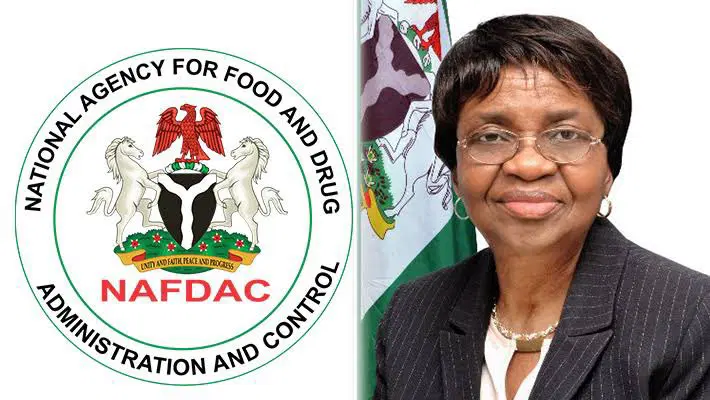
NAFDAC DESTROYS COUNTERFEIT, SUBSTANDARD PRODUCTS WORTH N1.5TN IN LAGOS, SOUTH-EAST
Read Time:4 Minute, 21 Second
By Aishat Momoh. O.
The National Agency for Food and Drug Administration and Control has destroyed counterfeit and substandard regulated products valued at more than N1.5tn in a coordinated operation across Lagos and the South-East, as part of an intensified crackdown on fake products nationwide.
The Director-General of NAFDAC, Prof. Mojisola Adeyeye, disclosed this on Monday in Lagos, saying the agency had destroyed or seized more than N1.54tn worth of fake and substandard regulated products across the country since 2023.
Adeyeye, who expressed concern over the recent public outcry over counterfeit and substandard products, described those involved in the trade as “merchants of death” and declared that the agency would maintain zero tolerance for counterfeiting.
She said simultaneous raids carried out at Idumota Market in Lagos, Onitsha Market and Ariaria International Market in Aba, Abia State, between February and March 2025 resulted in the seizure and destruction of more than 137 40-foot truckloads of counterfeit and substandard products.
“Between February and March 2025, across Idumota, Onitsha and Ariaria Market, Aba, NAFDAC coordinated and simultaneously executed major raids which led to seizure and destruction of over 137 40-foot truckloads of counterfeit and substandard products valued at more than N1.5tn,” Adeyeye said.
The agency also highlighted several other enforcement operations targeting fake, expired, banned and unregistered medicines and other regulated products.
In February 2026, NAFDAC said it destroyed more than N15bn worth of fake, expired, counterfeit and banned medicines in Ibadan, Oyo State. The products included Analgin, Co-codamol, codeine-based syrups, Tramadol, Oxytocin and expired vaccines.
The agency also said it arrested a suspect linked to a smuggled container during the operation.
In December 2024, NAFDAC destroyed expired and unregistered drugs worth N11bn in Ibadan, while in March 2026, it destroyed another N1.8bn worth of counterfeit medicines, banned sachet alcohol below 200ml, narcotics, antibiotics, antimalarials, counterfeit milk, skin-lightening creams, fake insecticides and medical devices in Kuje, Abuja.
NAFDAC said the three pharmaceutical-related operations alone accounted for N27.8bn worth of destroyed products.
In Aba, Abia State, the agency said it destroyed counterfeit beverages, spirits and revalidated foods worth N5bn in December 2023 after shutting down 150 shops.
A repeat operation in December 2024 led to the closure of 250 shops and the discovery of similar products worth N7bn, bringing the combined value of products destroyed during the two Aba operations to N12bn.
Adeyeye added that products destroyed nationwide in 2024 alone had a street market value of more than N120bn.
The NAFDAC boss, alongside the agency’s Director of Investigation and Enforcement, Iluyomade Martins, disclosed that the agency had secured 64 convictions for counterfeiting offences across the country.
According to Adeyeye, the convictions resulted in prison sentences ranging from one to seven years without the option of a fine.
She cited cases between June 2025 and June 2026, including a five-year sentence for faking Global Fund Artemether, five years for a cough and cold syrup containing codeine, 12 months for fake ointments and condoms, and seven years for producing fake antibiotics.
“NAFDAC’s record for 2023-present shows it has responded with billions in seizures, hundreds of arrests, dozens of convictions, and trillion-naira destructions,” she said.
Adeyeye also disclosed that NAFDAC’s Post-Market Surveillance Directorate visited 6,233 facilities and mopped up 7,210 brands and products nationwide between May and July 2026.
The exercise covered food and water, drugs and herbal products, medical devices, vaccines and biologics, cosmetics, healthcare products and chemicals.
Food and Water accounted for the highest number of products mopped up, with 3,633 products recovered from 1,808 facilities, while Drugs and Herbals recorded the highest number of facilities visited, with 2,084 facilities yielding 2,459 products.
The agency also revealed that it uncovered the counterfeiting of CWAY dispenser bottles by three companies allegedly involved in refilling empty 19-litre bottles bearing the identity of a registered water company.
According to Adeyeye, the companies filled the bottles with water from unapproved sources and supplied them to hotels and supermarkets without authorisation.
She said the operators had been heavily sanctioned by the agency.
Adeyeye, however, clarified that NAFDAC’s regulatory mandate did not cover every food product sold in the country, noting that fresh farm produce such as apples, grapes and oranges falls under the responsibility of the Nigeria Agricultural Quarantine Service.
She also said the agency did not have direct and absolute regulatory oversight over unbranded palm oil, fufu and other traditionally packaged staple foods sold in open markets.
The NAFDAC boss called on state and local authorities to collaborate with the agency in ensuring the safety of such products.
“Fakers are not ghosts; they exist within our communities, neighbourhoods, and business premises,” Adeyeye said, describing the fight against counterfeiting as a collective responsibility involving regulatory agencies and the public.
She urged Nigerians to report suspected non-compliant products through NAFDAC’s official Call Centre rather than relying solely on social media.
Adeyeye said the agency had previously advocated stricter penalties under the NAFDAC Act and the Counterfeit and Fake Drugs Act, including life imprisonment or the death penalty for those involved in the production and sale of fake regulated products.


Happy
0 %

Sad
0 %

Excited
0 %

Sleepy
0 %

Angry
0 %

Surprise
0 %
 0
0
 0
0