
NAPTIP URGES ENHANCED EDUCATION SYSTEM TO TACKLE HUMAN TRAFFICKING
Read Time:3 Minute, 10 Second
By; Sunmola Ganiyat
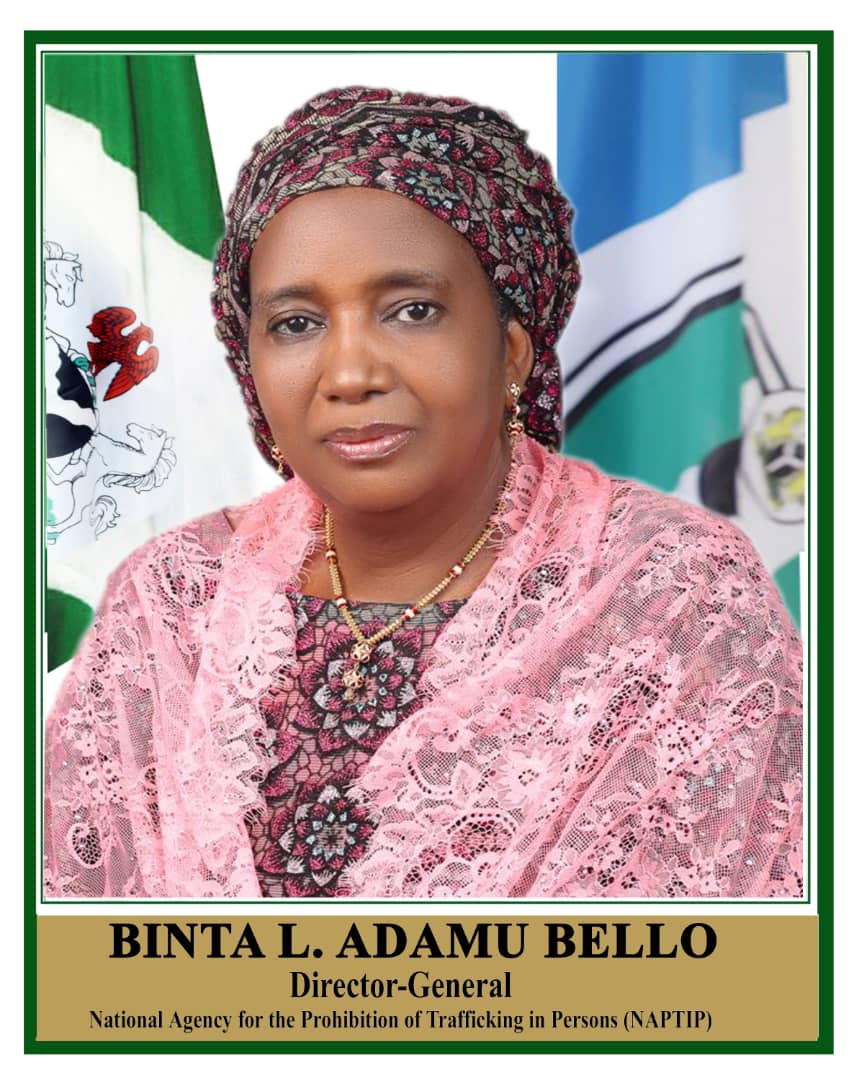
The Director-General of the National Agency for the Prohibition of Trafficking in Persons, Binta Bello, has emphasised the importance of continuous education and teacher capacity development in the fight against human trafficking in Nigeria.
Bello noted that preventing trafficking through education and awareness campaigns remains more effective than dealing with the consequences after victims have already been exploited.
Represented by NAPTIP’s Director of Training and Manpower Development, Ebele Ulasi, the DG spoke on Tuesday in Abeokuta during the opening of a two-day training workshop for 150 selected secondary school teachers from across Ogun State.
The workshop, themed “Mainstreaming Trafficking in Persons Content Into The Revised National Curriculum,” was organised to train teachers on integrating anti-human trafficking education into primary and secondary school curricula.
The programme is part of the School Anti-Trafficking Education and Empowerment Project funded by the Netherlands government and implemented by the International Centre for Migration Policy Development in partnership with NAPTIP and the Ogun State Government.
Bello described teachers as vital partners in combating trafficking, especially at the grassroots level, adding that the training was aimed at equipping them with updated knowledge and practical skills on trafficking-related content recently incorporated into Nigeria’s revised basic education curriculum.
According to her, education remains one of the strongest tools for preventing trafficking, particularly among children and teenagers who are often targeted by traffickers.
She pointed out that trafficking in persons remains one of the most serious human rights violations both in Nigeria and globally, with children accounting for more than 55 per cent of identified victims.
Bello stressed that many victims are school-age children who should ordinarily be safe within learning environments but instead become vulnerable to exploitation.
She explained that the initiative seeks to create widespread awareness among young people and equip them with the right information to protect themselves and others from traffickers.
The DG recalled that NAPTIP’s partnership with the education sector began in July 2014 with the signing of a Memorandum of Understanding with the Nigerian Educational Research and Development Council.
She added that the second phase of curriculum enhancement was concluded in 2025 to update trafficking-related content and address emerging trends in human trafficking.
Bello said the training would help teachers transfer anti-trafficking knowledge to pupils and students through classroom teaching, thereby empowering children early enough to identify and resist trafficking risks.
She further noted that schools could serve as early warning centres and safe spaces for vulnerable children if teachers are properly equipped.
The NAPTIP boss also commended the media for its continued support in raising public awareness against human trafficking.
In his remarks, the Ogun State Commissioner for Education, Prof. Abayomi Arigbabu, urged teachers to take active roles in safeguarding children from trafficking and other forms of exploitation by fully integrating trafficking education into classroom instruction.
Represented by the Permanent Secretary of the Ministry of Education, Science and Technology, Mrs Tosin Oloko, the commissioner described the initiative as a strategic step toward protecting children through education.
He noted that teachers now play an even more critical role as young people face increasing risks of deception, abuse, exploitation, and trafficking in a rapidly changing society.
Also speaking, ICMPD Project Manager, Mrs Rhoda Dia-Johnson, said the training was designed to provide teachers with effective teaching methods for delivering trafficking-related content recently introduced into the curriculum.
She added that participants were expected to become anti-trafficking advocates in their various schools and extend the knowledge gained to other teachers across the state.
Officials of ICMPD, Mr Samuel Okorojie and Mr Favour Simeon, also stressed the need to adequately equip teachers with the skills and knowledge required to educate and protect learners against trafficking risks, noting that human trafficking continues to spread across communities.


Happy
0 %

Sad
0 %

Excited
0 %

Sleepy
0 %

Angry
0 %

Surprise
0 %
 0
0
 0
0