
PLASTIC POLLUTION OVERTAKES FISHING LIVELIHOODS ALONG CONGO RIVER IN DRC
Read Time:2 Minute, 25 Second
Agency Report
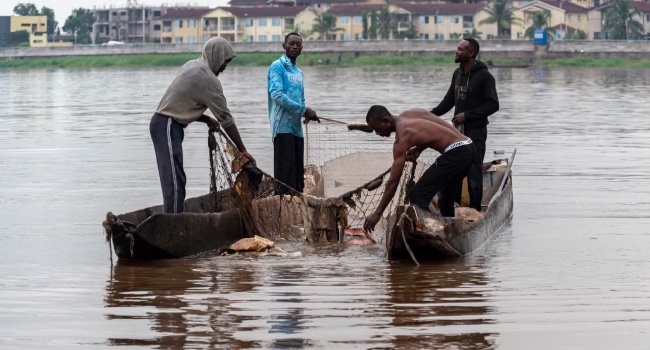
Fishermen along the Congo River near the Democratic Republic of Congo’s capital, Kinshasa, say they are increasingly hauling in more plastic waste than fish, as pollution continues to degrade one of the world’s largest river systems.
The Congo River, which stretches over 4,300 kilometres and sustains millions of people, is now facing mounting environmental pressure from plastic waste flowing out of the rapidly expanding capital city.
According to government estimates, about 60,000 tonnes of fish are harvested annually from the river. However, fishermen operating along the outskirts of Kinshasa say their catches have drastically reduced in recent years, forcing many to reconsider their livelihoods.
“A few years ago, I used to catch big fish like captains and catfish, but because of the pollution, they’ve moved further out,” fisherman Gilby Mwana-Fioti said while speaking to AFP.
Other fishermen described a worsening situation, with nets frequently filled with plastic bottles, waste materials, and discarded items instead of fish. Some now earn more from collecting and selling plastic waste than from fishing itself.
Kinshasa, a city of more than 17 million people, generates at least 10 tonnes of plastic waste daily, according to environmental experts. Much of this waste is poorly managed, ending up in drainage channels that feed into the Congo River.
Environmental experts warn that plastic debris breaks down into microplastics when exposed to sunlight, contaminating fish populations and entering the food chain. A 2023 study by the University of Kinshasa also linked plastic pollution to reduced fish growth, reproduction failure, and rising mortality rates among aquatic species.
“Plastic pollution has reached alarming levels,” said Vincent Kunda, head of the Kongo River environmental NGO, noting that less than 20 percent of waste in the city is properly processed.
Although the Democratic Republic of Congo introduced a ban on plastic bags and bottles in 2017, enforcement has remained weak due to limited waste management infrastructure and funding challenges.
In fishing communities such as Kimpoko island near Kinshasa, where over 600 families depend on fishing, incomes have sharply declined. Fishermen say weekly earnings have dropped from around $100 a decade ago to as low as $10–$20 today.
One elderly fisherman, 71-year-old Charles Moluwa Nzeni Masela, now collects plastic waste along riverbanks to sell to recycling firms, describing it as a painful but necessary survival strategy.
“It’s a shame it’s come to this, but we have no choice,” he said.
Some residents report gathering as much as 50 kilogrammes of waste weekly, with plastic now forming floating “islands” along parts of the river.
While many have resigned themselves to the environmental decline, others are calling on authorities to provide better fishing equipment, including motorised canoes, to allow fishermen access to cleaner, deeper waters where fish populations remain.
For now, however, the river that once sustained generations is increasingly becoming a source of plastic rather than livelihood.


Happy
0 %

Sad
0 %

Excited
0 %

Sleepy
0 %

Angry
0 %

Surprise
0 %
 0
0
 0
0