
EXPERTS CALL FOR STRONGER ENFORCEMENT, CONSUMER VIGILANCE AT 2026 LAGOS FOOD SAFETY CONFERENCE
Read Time:5 Minute, 23 Second
By ‘Sefiu Ajape
Experts and stakeholders in the food sector have called for stronger enforcement of food-safety regulations and greater consumer vigilance to curb food fraud, adulteration and other threats to public health.
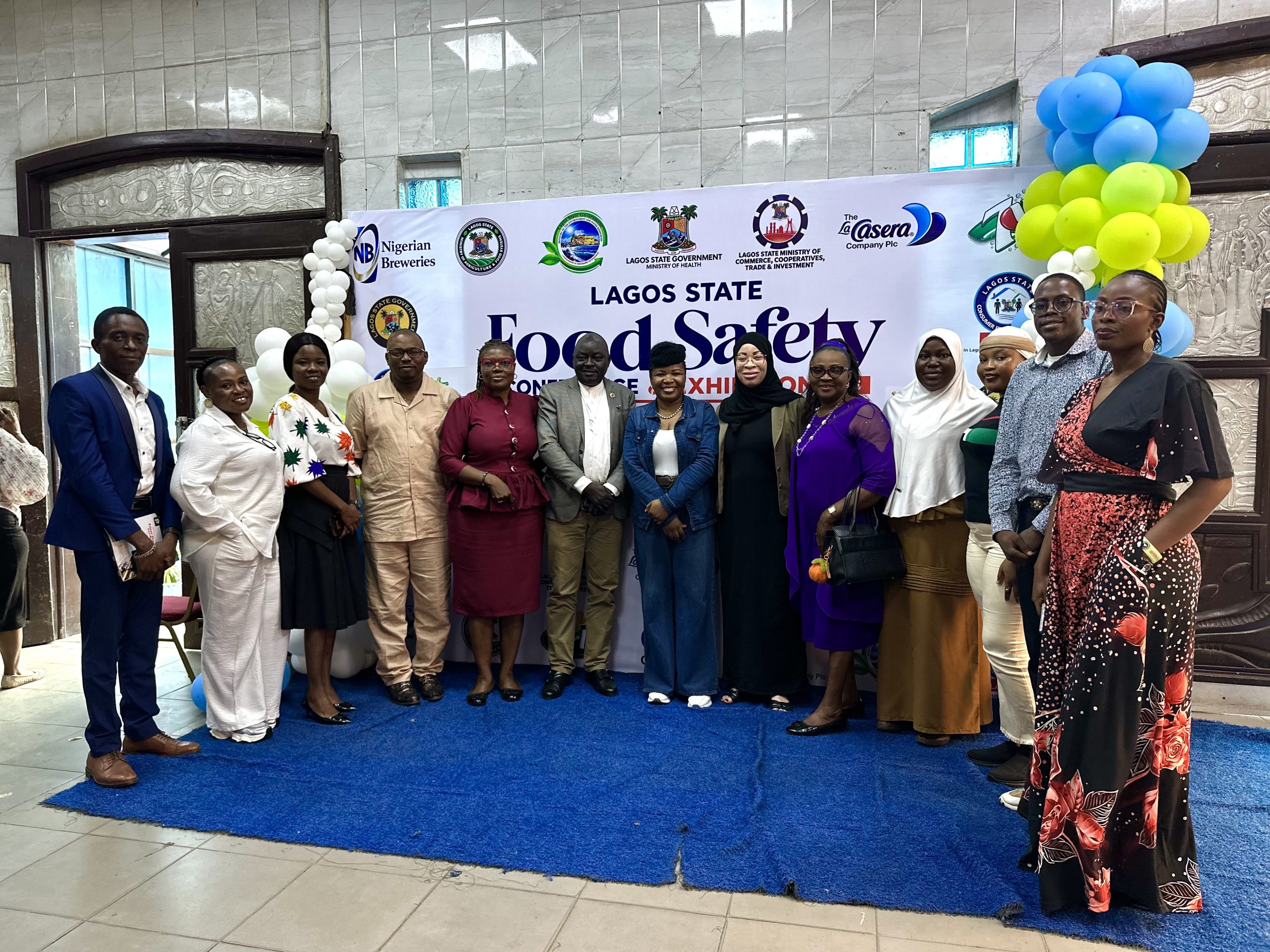
The call was made on Tuesday at the fourth Lagos State Food Safety Conference and Exhibition organised by the Lagos State Consumer Protection Agency (LASCOPA) at NECA House, Alausa, Ikeja, Lagos.
The conference, themed “From Burden to Solutions – Safe Food Everywhere,” brought together regulators, food industry operators, professionals, consumer groups and other stakeholders to discuss practical measures for improving food safety across the food value chain.

Delivering the keynote address, Global Director, Quality and Food Safety, ADM, USA, Dr. Adeniyi A. Odugbemi, declared that food safety could not be treated as the responsibility of one institution, stressing the need for collaboration among government, industry, academia and consumers.
He said, “If it is not safe, it is not food, then if it is not food, it is not consumable.”
Odugbemi identified food security, food sustainability and food safety as three major challenges confronting the food supply chain, noting that millions of people still face hunger while large quantities of agricultural produce are wasted because of inadequate processing capacity.
He called for the modernisation and mechanisation of Nigeria’s food supply chain to improve the processing of agricultural produce and reduce wastage.
On food safety enforcement, Odugbemi was emphatic.
“Enforcement! Enforcement!!” he said, arguing that Nigeria already had laws and regulations capable of addressing food fraud and adulteration, but that the challenge was ensuring that the rules were effectively enforced.
Speaking in an interview with Hotjist, he called for perpetrators of food fraud, adulteration and counterfeiting to be made examples of, saying this would serve as a deterrent to others.
Odugbemi also urged consumers to reject unsafe food products instead of allowing their purchasing power to determine the quality and safety of what they eat.
“The amount of money in your pocket should not determine how long you live,” he said, stressing that everyone should have access to affordable and safe food regardless of income.
Also speaking at the conference, the Coordinator of the Southwest Zonal Office of the Federal Competition and Consumer Protection Commission (FCCPC), Dr. Olubunmi Otti, who represented the Commission’s Executive Vice Chairman/Chief Executive Officer, Mr. Tunji Bello, said no single institution could guarantee food safety alone.
According to Otti, food safety is simultaneously a consumer protection, public health, economic and trust issue, with unsafe food capable of undermining household welfare, putting additional pressure on the health system, damaging legitimate businesses and eroding public confidence.
She said stakeholders needed to build an ecosystem where “regulators enforce, businesses comply, consumers remain vigilant, and the media informs, civil society advocates, and all stakeholders collaborate.”
Otti urged businesses across the food value chain to embrace fair, responsible and ethical practices, warning that those who deliberately compromise safety, mislead consumers or violate the law should face regulatory action.
“Businesses that deliberately cut corners, mislead consumers, compromise safety, or violate the law should expect appropriate regulatory action and the full weight of the law,” she said.
Consumers, she added, also have a responsibility to protect themselves by checking product labels, expiry dates and ingredients, purchasing from reputable vendors and reporting violations to regulatory authorities.
Earlier, LASCOPA General Manager/Chief Executive Officer, Afolabi Solebo, said food safety was not merely a regulatory requirement but a matter of “public health, economic stability and moral duty.”

Solebo said unsafe food could undermine public health, erode consumer confidence, damage legitimate businesses and place unnecessary pressure on the healthcare system.
He disclosed that LASCOPA had strengthened its enforcement mechanisms, expanded consumer education and public enlightenment campaigns and deepened collaboration with relevant government agencies and stakeholders.
The LASCOPA boss, however, said regulation and enforcement alone could not guarantee food safety.
“Rules on paper can only achieve their purpose when every player in the food chain takes responsibility from the farmer and processor to the transporter, retailer and, ultimately, the consumer,” he said.
Solebo reaffirmed the agency’s commitment to ensuring that every consumer in Lagos State has access to food that is “safe, wholesome and accurately labelled.”
At the conference, Food and Cosmetics Consultant, Dr. Nurah T. Oseni, raised concerns over palm oil adulteration, warning consumers against relying on a widely circulated claim that adulterated palm oil can be detected simply by using water.
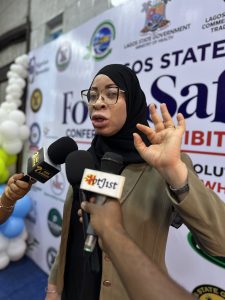
Speaking on “Palm Oil Adulteration: Emerging Risks, Detection Strategies and Regulatory Control,” Oseni said adulteration was a complex issue requiring scientific testing and stronger regulatory surveillance.
In an interview with Hotjist, she said, “You cannot physically know an adulterated oil. You also cannot use water test to know an adulterated oil.”
According to her, the water test could provide an indication of degradation but could not confirm whether palm oil had been adulterated.
She advised consumers to examine the appearance and characteristics of palm oil before purchase, while stressing that laboratory analysis remained necessary for confirmation.
Oseni also called for the registration and traceability of palm-oil traders and products, stronger surveillance and appropriate sanctions for traders who sell unapproved products.
“Without traceability, we cannot curb adulteration,” she said.
She further claimed that “out of every 10 oil in the market today, probably 7 is adulterated,” while highlighting the potential dangers of adulterated oil and calling for stronger regulation of the palm-oil trade.
Meanwhile, the Association of Professional Food Service Providers in Nigeria (APFSPN), represented by its Welfare Director, Mrs. Bolanle Atanda, reaffirmed the association’s commitment to continuous capacity development, responsible sourcing, sound hygiene practices, regulatory compliance, traceability and ethical practices.

The association’s President, Mr. Tobi Fletcher, described food safety as indispensable to public health, consumer protection, enterprise credibility and sustainable development of the food-service sector.
Representing the Permanent Secretary, Ministry of Commerce, Cooperatives, Trade and Investment, Mr. Tunde Onigbanjo, Mr. Asiribo Rasaq commended LASCOPA for what he described as its positive impact on food safety and consumer protection in Lagos State.
Rasaq also praised Solebo’s leadership of the agency, describing his efforts, wisdom and knowledge as acknowledged.
The conference featured testimonials, food-safety riddles, poetry recitation, cultural displays and a panel session, while participants also toured exhibition stands showcasing products, services and solutions related to food safety.
The stakeholders ultimately called for stronger collaboration across the food value chain, with emphasis on effective enforcement, responsible business practices, consumer vigilance and practical measures capable of making safe food accessible to everyone.


Happy
0 %

Sad
0 %

Excited
0 %

Sleepy
0 %

Angry
0 %

Surprise
0 %
 0
0
 0
0