
FG TO STOP IMPORTATION OF DEFENCE EQUIPMENT
Read Time:3 Minute, 19 Second
HOTJIST NEWS
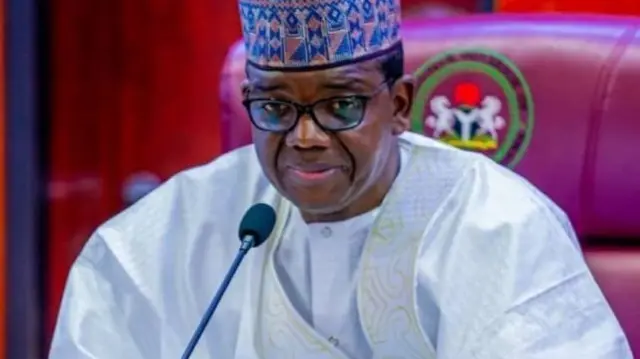
With intentions to develop all necessary assets locally within the next two to five years, the Federal Government has stated that it is laying the groundwork to stop importing defense and security equipment. Bello Matawalle, the Minister of State for Defense, made this statement on Thursday in Abuja during the launching of a number of Nigerian-made civilian armored vehicles as well as the DICON X-Shield light tactical armored vehicle. Major General Babatunde Alaya, the Director-General of the Defence Industries Corporation of Nigeria, attended the event on behalf of Matawalle, who stated that the current initiatives in indigenous defense manufacturing were merely the beginning of a larger plan to produce all military and security equipment locally. “This is only the start. We will take additional steps to guarantee that all necessary defense and security equipment is manufactured domestically, and in two to five years there will not be any more imports,” he stated.
He said the future of Nigeria’s defence and security capability would be built locally through indigenous innovation and strategic partnerships.
“The future of Nigeria’s defence and security capability will be built at home by Nigerian hands through trusted partnerships such as the one we celebrate today.
“By localising production, it will open pathways for export and regional leadership in defence manufacturing. It creates skilled jobs, transfers technical knowledge and conserves foreign exchange,” he said.
The display of the armored vehicles, he said, was not merely a product event but also a demonstration of rising trust in Nigeria’s technical competency, demonstrating the intersection of security needs, indigenous capacity, industrial experience, and economic opportunity. He claims that DICON was founded to promote domestic defense production, lessen dependency on international supply chains, and establish Nigeria as a reliable manufacturer of security and military hardware. He emphasized that relationships with private sector organizations that have the technical know-how, discipline, and long-term vision to support sustainable local production were necessary to fulfill this task.
Matawalle commended X-Shield for its role in advanced vehicle armour, ballistic engineering, systems integration and quality assurance, describing the company as a worthy partner in Nigeria’s defence industrial drive.
He said the locally produced tactical armoured vehicle was designed to meet the realities of modern operations, including mobility, protection, adaptability and survivability, while remaining cost-effective and suitable for local production and maintenance.
The minister also noted that the collaboration between DICON and X-Shield would strengthen Nigeria’s defence industrial base, create skilled jobs, facilitate technology transfer, conserve foreign exchange and open opportunities for exports.
He reiterated the government’s resolve to deepen similar partnerships that align national security interests with industrial growth and commercial sustainability.
Speaking at the event, the Chief Executive Officer of X-Shield, Charles Ibanga, said the company was positioning itself as a dependable indigenous solution provider in a market where demand for armoured mobility continues to grow.
“In a market where the demand for armoured mobility continues to rise—across defence and security agencies, critical infrastructure operators and the private sector—X-Shield has positioned itself as a credible and dependable indigenous solution provider,” Ibanga said.
He cited data from the National Bureau of Statistics to underscore the urgency of local manufacturing.
“The opportunity before us is immense. According to data from the National Bureau of Statistics, in the last quarter of 2023 alone, Nigeria’s spending on armoured vehicles exceeded its spending on fuel. The country imported over ₦5.06tn worth of armoured vehicles, compared to ₦1.81tn spent on petrol—a difference of ₦3.25tn, with armoured vehicles accounting for 35.87 per cent of total imports,” he said.
Nigeria’s renewed push for indigenous defence manufacturing comes amid rising security challenges and growing concerns over the high cost and sustainability of importing military and security equipment.
For decades, the country has relied heavily on foreign suppliers for critical defence assets, exposing it to supply chain disruptions, foreign exchange pressure and delayed procurement.


Happy
0 %

Sad
0 %

Excited
0 %

Sleepy
0 %

Angry
0 %

Surprise
0 %
 0
0
 0
0