
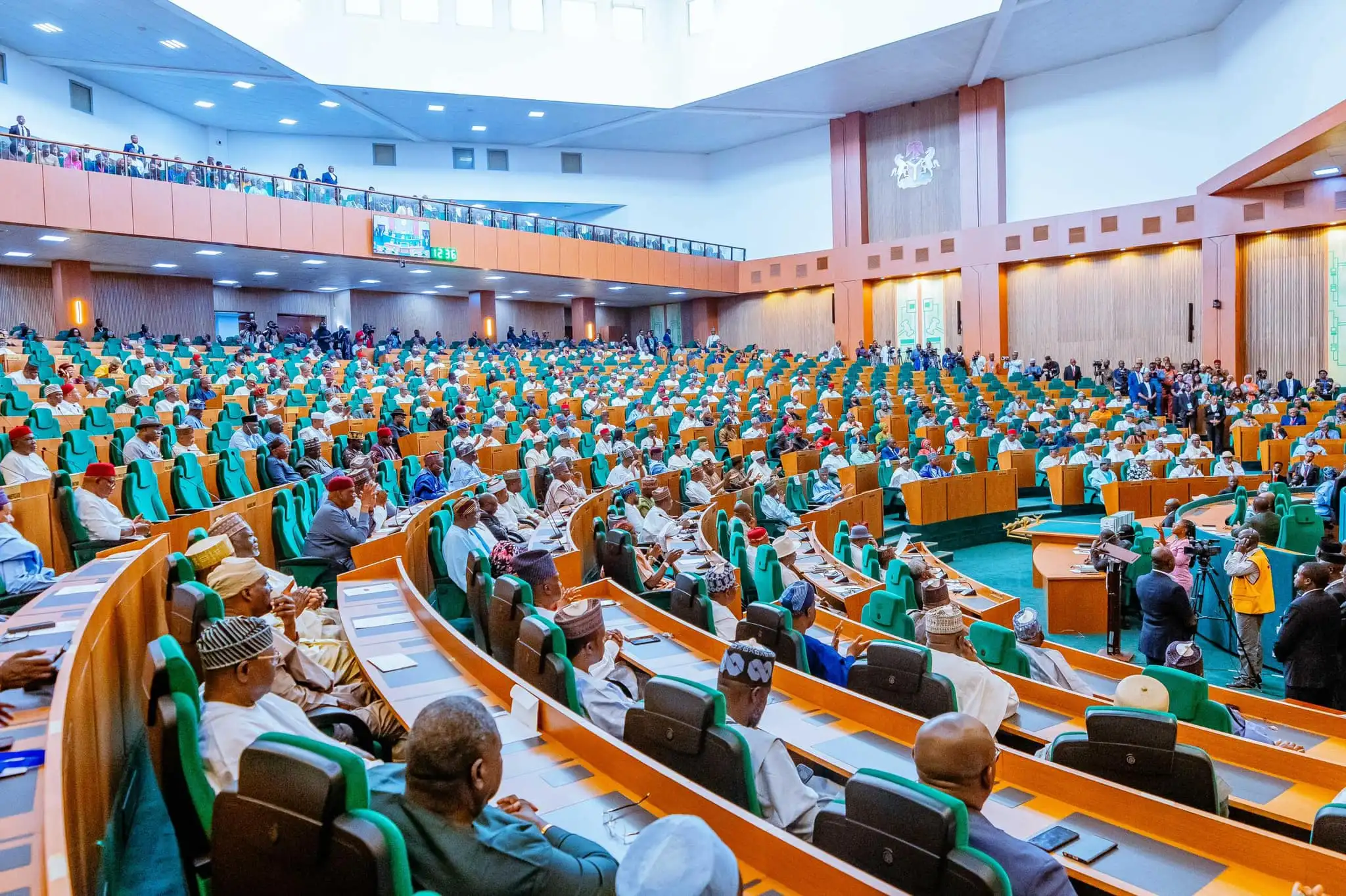
REPS PANEL CALLS FOR SPECIAL COURT TO TACKLE CRUDE OIL THEFT
Read Time:3 Minute, 25 Second
By; Ganiyat Sunmola
The House of Representatives Special Committee on Crude Oil Theft has called for the establishment of a special court to fast-track the prosecution of crude oil theft cases, warning that weak laws and prolonged judicial processes continue to undermine efforts to curb the crime.
The proposal was made during a stakeholders’ meeting in Abuja, where lawmakers, security agencies and officials from the Office of the National Security Adviser reviewed Nigeria’s legal framework for tackling crude oil theft, pipeline vandalism and other related offences.
The meeting is part of the committee’s ongoing efforts to strengthen legislative and institutional measures aimed at addressing crude oil theft, a persistent challenge that has reduced government revenue, lowered oil production, discouraged investment and threatened the country’s energy security.
Chairman of the committee, Alhassan Doguwa, said participants agreed that existing laws governing the oil and gas sector require urgent review, noting that many of them were enacted during the military era and no longer provide sufficient deterrence against increasingly sophisticated criminal activities.
He said the committee had previously proposed legislation for the creation of a special court to handle crude oil theft and related offences, stressing that such cases should not be subjected to the delays associated with the conventional judicial system.
“We have recommended the establishment of a special court because these crimes are unique. If such cases continue to pass through the regular court system, many will remain unresolved due to prolonged delays, allowing offenders to evade justice,” Doguwa said.
He added that the committee would work closely with relevant stakeholders to remove legal and institutional obstacles hindering the fight against crude oil theft.
According to him, Nigeria must modernise its legal framework in line with global best practices, noting that many oil-producing countries have adopted stronger laws to protect their petroleum resources.
Doguwa also observed that courts still rely on outdated legislation enacted during military rule to prosecute oil and gas-related offences, stressing that new laws are needed to effectively tackle emerging forms of criminality in the sector.
He assured Nigerians that the House of Representatives would collaborate with the Office of the National Security Adviser and other relevant agencies to strengthen efforts against crude oil theft and related crimes.
The lawmaker noted that Nigeria’s crude oil production remains below budget projections due to persistent oil theft and pipeline vandalism, adding that addressing the challenge is essential to improving government revenue and restoring investor confidence.
He disclosed that representatives of the Nigerian Army, Nigerian Navy, Nigerian Air Force, Nigeria Police Force and the Nigeria Security and Civil Defence Corps participated in the meeting, describing inter-agency collaboration as critical to achieving lasting results.
Doguwa, however, criticised the absence of the Nigerian Upstream Petroleum Regulatory Commission (NUPRC), describing the agency’s failure to attend the meeting or send representatives as disappointing.
He directed the committee’s clerk to formally invite the commission to appear before the committee, stressing that it remains a key stakeholder in the fight against crude oil theft.
A member of the committee, Cyril Hart, said the committee’s responsibilities extend beyond combating crude oil theft to ensuring that Nigeria’s oil assets are properly developed for the country’s benefit. He added that operators who fail to develop oil blocks within the stipulated timeframe should be held accountable.
Also speaking, the Director of Energy Security in the Office of the National Security Adviser, Goodluck Ilajufi, said stronger legislation had become necessary because existing penalties no longer serve as effective deterrents.
The Assistant Commandant General (Operations) of the Nigeria Security and Civil Defence Corps, David Idowu, also backed the proposal for a special court, saying it would ensure speedy prosecution and appropriate punishment for offenders.
Nigeria has continued to battle crude oil theft, illegal refining and pipeline vandalism, particularly in the Niger Delta, where the activities have significantly reduced oil production, damaged infrastructure, worsened environmental pollution and cost the country billions of dollars in lost revenue.
Although security agencies have recorded periodic successes against oil theft, industry stakeholders have consistently argued that weak prosecution and lenient penalties have reduced the effectiveness of enforcement efforts.


Happy
0 %

Sad
0 %

Excited
0 %

Sleepy
0 %

Angry
0 %

Surprise
0 %
 0
0
 0
0