
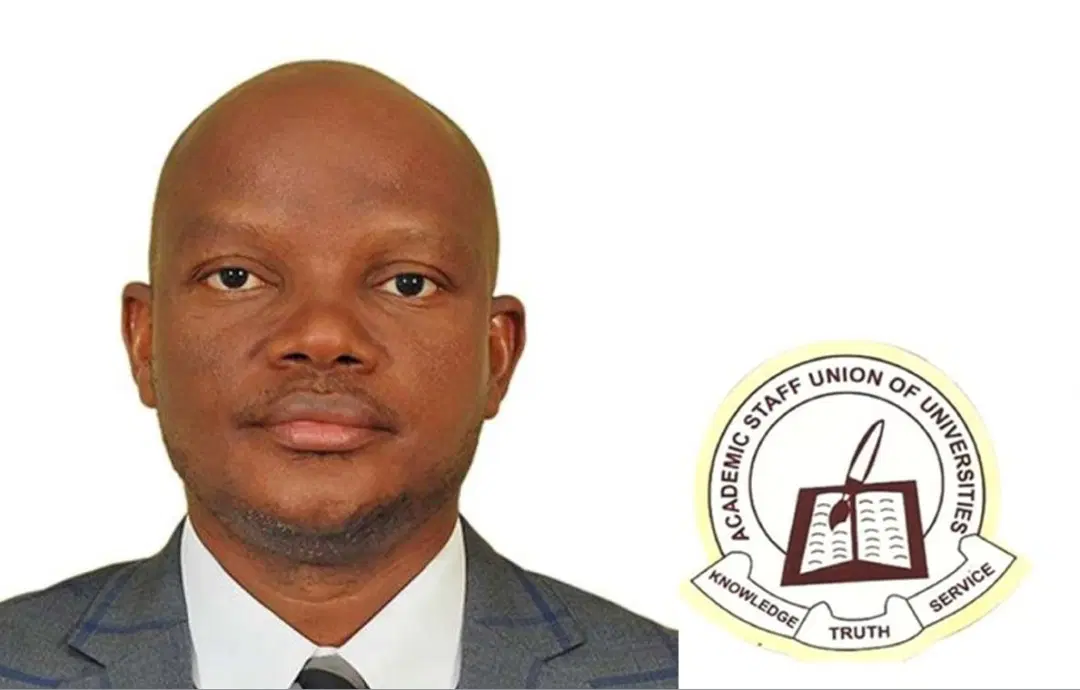
ASUU THREATENS ACTION IF FG DELAYS RENEGOTIATION TALKS
Read Time:3 Minute, 8 Second
The National Executive Council (NEC) of the Academic Staff Union of Universities (ASUU) has voiced its concerns regarding what it characterizes as the federal government’s inconsistent approach to the ongoing negotiations, cautioning that this situation could result in “serious ramifications” for the nation’s education system.
The union’s NEC convened on November 8–9, 2025, at Taraba State University in Jalingo, to evaluate the advancement of discussions with the government’s negotiation team and expressed disappointment at the sluggish pace and lack of commitment being exhibited in the renegotiation process.
In a communiqué released at the conclusion of the meeting and endorsed by its president, Prof. Chris Piwuna, ASUU recalled that during its emergency session on October 21, 2025, it had resolved to suspend its warning strike as an act of good faith, despite deeming the government’s offers as “grossly inadequate. ”
The suspension, the union clarified, was a gesture of respect for the substantial goodwill demonstrated by students, parents, the Nigeria Labour Congress (NLC), the media, and other citizens who intervened during the strike.
ASUU highlighted that the decision to suspend the strike was based on the anticipation that the government would effectively utilize the one-month timeframe to meaningfully conclude the renegotiation process.
However, the union lamented the lack of impressive progress since then.
“It is now the duty of the government to capitalize on this opportunity to swiftly address all unresolved issues to ensure our children remain in school,” the statement asserted.
The NEC expressed its disappointment that the government continues to regard education as a commercial enterprise rather than a fundamental social good essential for sustainable national development.
In reviewing developments following the strike suspension, the union dismissed the proposed salary increase put forward by government negotiators, describing it as “a mere drop in the ocean” incapable of reversing the brain drain crisis that has afflicted the university system for decades.
While acknowledging some modest advancement in non-monetary aspects of the discussions, ASUU maintained that the salary and conditions of service elements are vital and must be urgently and sincerely addressed.
The union also criticized what it termed misrepresentation by certain government officials concerning the negotiation outcomes and the implementation of agreements.
It cautioned that incremental gestures, such as partial payments of promotion arrears dating back to 2017 and the release of third-party deductions, should not be portrayed as significant achievements.
“The government’s goal must not be to shape the narrative but to resolve the issues,” ASUU stated, warning that the current communication strategy could erode trust and jeopardize the entire renegotiation process.
The union urged the government to utilize the remaining days of the one-month window “wisely” to achieve a comprehensive resolution that enhances the welfare of Nigerian academics.
ASUU stressed that investment in education remains the most effective strategy to secure the nation’s future. It deemed the stagnation of academics and university infrastructure as “unacceptable” given the considerable increases in government revenue.
Referencing statistics from the Federation Accounts Allocation Committee (FAAC), ASUU observed that state administrations received ₦3.92 trillion in 2022 and ₦5.81 trillion in 2024, indicating a 62% increase, whereas federal disbursements escalated from ₦3.42 trillion in 2022 to ₦4.65 trillion in 2024, a 70% rise.
“Contrary to the assertion of insufficient funds, the data unequivocally demonstrates that the issue is not financial but political, characterized by an absence of commitment to prioritize education,” the union expressed.
ASUU consequently reiterated its call to traditional leaders, labor unions, students, civil society organizations, and all conscientious Nigerians to persist in urging the government to act responsibly and provide university educators with a living wage.
“The most effective method to safeguard the future of our nation is to invest in education,” ASUU concluded.


Happy
0 %

Sad
0 %

Excited
0 %

Sleepy
0 %

Angry
0 %

Surprise
0 %
 0
0
 0
0