
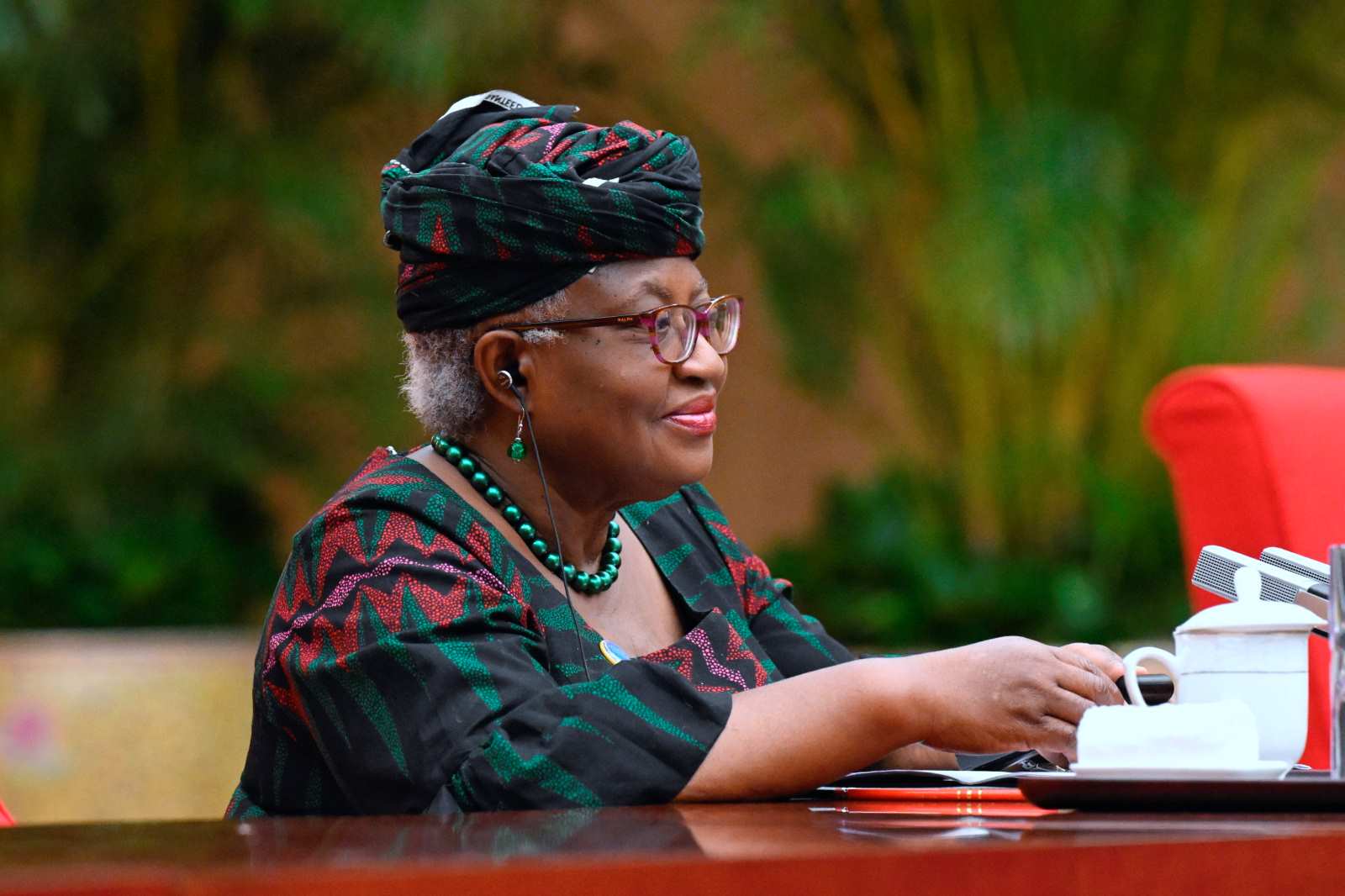
OKONJO-IWEALA ADVISES FG TO PRIORITISE JOBS AND ATTRACT GLOBAL INVESTMENTS
Read Time:1 Minute, 33 Second

By: Fasasi Hammad
Ngozi Okonjo-Iweala, Director-General of the World Trade Organisation (WTO), has urged Nigeria to shift its economic focus from stabilisation to job creation and the attraction of global investments.
Okonjo-Iweala made the call on Wednesday during a fireside chat at the Nigeria House on the sidelines of the ongoing World Economic Forum (WEF) in Davos.
She acknowledged that important reforms are currently underway but stressed that they must translate into meaningful employment opportunities.
“Some good reforms are being pursued, but they need to result in job creation. I have also conveyed this to Mr President — that Nigeria must move beyond stabilisation to creating jobs, which is where the gap lies,” she said.
The WTO chief noted that while reforms take time to yield results, the federal government is on the right path and should focus on clearly identifying areas of opportunity.
She emphasised the need for Nigeria to aggressively attract foreign direct investment, particularly as global supply chains are being restructured.
“There is an opportunity now to attract supply chains into the country. Everything possible should be done to position Nigeria as an attractive investment destination,” Okonjo-Iweala said.
She called for a deliberate investment strategy that targets global investors, including outreach to countries such as China, as well as international institutions, to encourage them to invest in Nigeria.
READ MORE…
NSA: MILITARY COOPERATION WITH US STRENGTHENING NIGERIA’S FIGHT AGAINST INSECURITY
According to her, as companies diversify supply chains away from China and toward other parts of Asia and India, Nigeria should position itself to attract a significant share of those investments.
Okonjo-Iweala highlighted sectors such as renewable energy, textiles, fashion, and pharmaceuticals as areas with strong potential. She noted that Nigeria currently imports many products it has the capacity to manufacture locally, including solar panels and textiles.


Happy
0 %

Sad
0 %

Excited
0 %

Sleepy
0 %

Angry
0 %

Surprise
0 %
 0
0
 0
0